Educational Resources
Top Instrumentation Software for Engineers: Your Essential Toolkit
For engineers and consultants w...
TAMFIS NIG LTDRC 8067447CAC ACTIVEFinima, Bonny Island, Rivers State

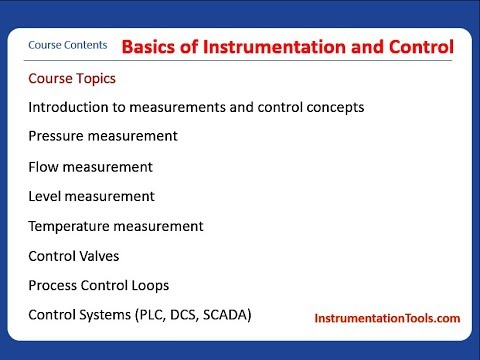
Instrumentation and process control form the backbone of modern industrial automation, ensuring efficient, safe, and reliable operations across various sectors such as manufacturing, oil and gas, and chemical processing. Understanding instrumentation basics is essential for engineers and technicians aiming to optimize system performance and troubleshoot effectively. This 16-hour masterclass offers an in-depth exploration of core concepts, practical tools, and advanced techniques to empower professionals with the knowledge necessary to excel in process control and instrumentation.
Instrumentation refers to the devices and systems used to measure, monitor, and control physical quantities such as temperature, pressure, flow, and level within industrial processes. These instruments provide critical data that enable operators to maintain optimal conditions and ensure product quality and safety. The integration of instrumentation with control systems creates a feedback loop essential for automating complex processes.
Process control utilizes the data collected by instrumentation to regulate variables and maintain process parameters within desired limits. This regulation is achieved through control loops, which consist of sensors, controllers, and final control elements like valves or actuators. Together, these components adjust process conditions dynamically to respond to changes and disturbances.
The synergy between instrumentation and process control enhances operational efficiency by minimizing downtime, reducing waste, and improving energy consumption. Professionals equipped with a solid understanding of these fundamentals can design, implement, and maintain systems that meet stringent industrial standards and regulations.
Pressure instruments measure the force exerted by fluids or gases in a system. Common devices include pressure gauges, transmitters, and switches. Pressure transmitters convert pressure readings into electrical signals for monitoring and control, while switches activate alarms or safety shutdowns when pressure thresholds are exceeded.
Temperature measurement is critical in many processes to ensure reactions occur under controlled conditions. Thermocouples, resistance temperature detectors (RTDs), and infrared sensors are widely used temperature instruments. Each device has unique advantages in accuracy, response time, and environmental tolerance.
Flow measurement instruments quantify the rate of fluid movement through pipes or channels. Devices such as differential pressure flow meters, magnetic flow meters, and ultrasonic flow meters provide real-time flow data essential for process optimization and energy management.
Control systems are designed to maintain process variables at set points by comparing measured values with desired values and making necessary adjustments. They can be classified into open-loop and closed-loop systems. Closed-loop systems, also known as feedback control systems, automatically correct deviations, ensuring higher accuracy and stability.
The primary components of a control system include the sensor, which measures the process variable; the controller, which compares the measured value to the set point and determines corrective action; and the final control element, which implements the controller’s commands to adjust the process.
Controllers can be pneumatic, electronic, or digital (PLC or DCS-based). Modern control systems often employ proportional-integral-derivative (PID) controllers, which use algorithms to fine-tune responses and minimize errors, enhancing process stability and performance.
Instrumentation signals can be pneumatic, analog electrical, or digital. Pneumatic signals use air pressure variations to transmit information, common in older systems. Analog electrical signals, typically 4-20 mA current loops, provide robust and noise-resistant communication between field instruments and control systems.
Digital communication protocols such as HART, FOUNDATION Fieldbus, and Profibus have revolutionized instrumentation by enabling two-way communication, device diagnostics, and remote configuration. These networks enhance system integration and facilitate predictive maintenance.
Understanding signal types and communication methods is crucial for troubleshooting instrumentation issues and ensuring reliable data flow. Proper cable selection, shielding, and grounding are also essential to minimize electromagnetic interference and signal degradation.
Calibration ensures that instrumentation devices provide accurate and reliable measurements by comparing their output against known standards. Regular calibration is vital to maintain process control integrity and comply with industry regulations.
Maintenance practices include routine inspections, cleaning, and functional testing to detect wear, corrosion, or drift in instrument performance. Predictive maintenance techniques, supported by digital diagnostics, help identify potential failures before they impact operations.
Documenting calibration and maintenance activities is essential for traceability and quality assurance. A well-maintained instrumentation system reduces downtime, extends equipment life, and improves overall process safety.
Safety is paramount in process control environments, where instrumentation plays a critical role in hazard detection and mitigation. Instruments such as safety interlocks, emergency shutdown systems (ESD), and gas detectors protect personnel and equipment from dangerous situations.
Designing instrumentation systems with fail-safe principles and redundancy ensures continued operation or safe shutdown during faults. Safety Instrumented Systems (SIS) are specialized control systems designed to prevent accidents by taking automatic corrective actions when critical limits are breached.
Compliance with international safety standards like IEC 61508 and IEC 61511 guides the development and implementation of safety instrumentation. Professionals must understand these standards to design, operate, and maintain compliant and effective safety systems.
In the oil and gas industry, instrumentation monitors pressure, flow, and temperature to optimize production and prevent leaks or explosions. Advanced process control enhances refinery efficiency and product quality.
The chemical industry relies on precise instrumentation to control reaction conditions, ensuring product consistency and safety. Automation reduces human error and enhances scalability.
Food and beverage manufacturing utilizes instrumentation for temperature control, flow measurement, and level detection to maintain hygiene standards and comply with regulatory requirements. Instrumentation also supports batch processing and quality assurance.
The integration of IoT (Internet of Things) and Industry 4.0 technologies is transforming instrumentation by enabling real-time data analytics, remote monitoring, and predictive maintenance. Smart sensors with embedded intelligence provide enhanced diagnostics and adaptability.
Artificial intelligence and machine learning algorithms are increasingly applied to process control to optimize operations dynamically and identify anomalies before they escalate.
Sustainability and energy efficiency are driving innovation in instrumentation design, focusing on low-power devices, wireless communication, and environmentally friendly materials. Professionals must stay current with these trends to maintain competitive advantages.
Mastering the basics of instrumentation and process control is indispensable for professionals working in industrial automation. This 16-hour masterclass offers a comprehensive foundation covering essential instruments, control systems, communication protocols, and safety considerations. By deepening your understanding of these core concepts and staying abreast of technological advancements, you can enhance operational efficiency, ensure safety, and contribute significantly to your organization's success. Continuous learning and practical application of these principles will empower you to excel in the dynamic field of process control and instrumentation.
Keep reading
Educational Resources
For engineers and consultants w...
Educational Resources
Modern industrial landscapes, from vast petrochemical complexes and power generation plants to intricate manufacturing facilities, are ...
Educational Resources
Instrumentation engineering has evolved significantly with advancements in electronics, digital technologies, control theory, and artif...
TAMFIS NIG LTD
Electrical and instrumentation engineering, bid preparation and consulting, IT and software.