
Business
Liverpool’s Injury Dilemma: Gakpo and Isak Setbacks Highlight Squad Depth Challenges
Liverpool manager Andoni Iraola is confronting a significant selection headache as two key forwards, Cod...
TAMFIS NIG LTDRC 8067447CAC ACTIVEFinima, Bonny Island, Rivers State

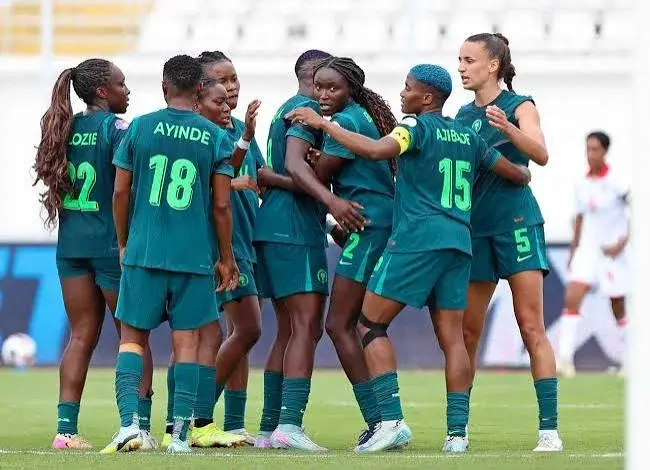
Nigeria's Super Falcons have commenced their bid for a second consecutive appearance at the Olympic Women's Football Tournament with a significant test of squad resilience. The 10-time African champions face Comoros in a two-legged second-round qualifier at the Remo Stars Stadium in Ikenne-Remo on 9 and 13 October, but must do so without three established internationals. Asisat Oshoala, Ashley Plumptre and Oluwatosin Demehin have all withdrawn from the squad, presenting interim head coach Augustine Eguavoen with an early examination of his management credentials. The fixture carries additional logistical significance: both legs are being staged in Nigeria because Comoros lacks a stadium meeting Confederation of African Football standards for Olympic qualifying matches.
The withdrawals represent a substantial loss of experience and attacking threat. Oshoala, widely regarded as one of Africa's greatest female footballers, has been the team's talismanic figure for over a decade. Plumptre, a versatile defender with English top-flight experience, and Demehin, a reliable presence at the back, complete a trio whose combined international caps run into three figures. Their absence would destabilise most squads on the continent, yet Eguavoen has adopted a notably measured public stance.
"It is true that we have several withdrawals, notably Asisat Oshoala, Ashley Plumptre, and Oluwatosin Demehin," Eguavoen acknowledged. "However, I have confidence in their replacements, as these also have the quality and experience to contribute meaningfully to the team's success against Comoros." The coach's language suggests a deliberate effort to frame the situation as an opportunity rather than a crisis, emphasising that the incoming players possess both quality and tournament experience.
Only Belarus-based forward Blessing Okpe, who received a late invitation, remains to join the camp in Ijebu-Ode. The fact that the squad has achieved what Eguavoen describes as a "full house" with the vast majority of players already integrated speaks to the organisational efficiency of the Nigeria Football Federation's preparatory work.
Rasheedat Ajibade assumes the captain's armband for this qualifying campaign, a natural progression for the Atlético Madrid forward who has long been viewed as a leader within the group. Ajibade's appointment signals continuity; she was a key figure in the Paris 2024 Olympic campaign and brings European club experience that commands respect in the dressing room. Her leadership will be tested immediately in a tie where Nigeria are overwhelming favourites but cannot afford complacency.
The captaincy also carries commercial weight. Ajibade's profile in Spain's Liga F enhances the Super Falcons' visibility in European markets, a factor that sponsors and broadcasters monitor closely. Nigeria's women's team has cultivated a growing international following, and the captain's club affiliation provides a tangible link to one of the world's most competitive domestic leagues.
The decision to host both legs in Nigeria underscores a persistent infrastructure gap within African football. Comoros, an island nation in the Indian Ocean, does not possess a venue meeting CAF's minimum standards for Olympic qualifying matches. This arrangement, while not unprecedented, places additional scrutiny on Nigerian facilities. The Remo Stars Stadium in Ikenne-Remo, a privately owned ground in Ogun State, has been selected over more traditional national stadiums in Lagos or Abuja.
The choice reflects a broader trend in Nigerian football administration: leveraging private-sector stadium investments to meet international fixture requirements. Remo Stars FC, a Nigeria Professional Football League club, have developed their facility to a standard that satisfies continental governing bodies. This public-private dynamic merits attention from stakeholders monitoring sports infrastructure development across the continent.
The African qualifying series for the 2028 Los Angeles Olympics comprises five rounds. Nigeria's entry at the second round — a consequence of their ranking — means three further two-legged ties stand between the Super Falcons and a place at the Games. Victory over Comoros on aggregate would advance the team to the third round, scheduled for March 2027. The extended timeline offers both opportunity and risk: time to integrate new players, but also an extended window for injuries, form fluctuations and administrative disruption.
Qualification for consecutive Olympics would represent a historic achievement for Nigerian women's football. The team's participation at Paris 2024 ended in the group stage, but the experience gained at a major tournament is difficult to quantify in purely sporting terms. Sponsors, broadcasters and the Nigeria Football Federation all derive commercial value from Olympic exposure — broadcast rights, merchandise sales, and the enhanced profile that attracts corporate partnership. A second consecutive appearance would consolidate that commercial trajectory.
The Super Falcons' situation mirrors challenges facing women's national teams globally: balancing club-versus-country demands, managing player welfare across congested calendars, and developing depth beyond a handful of stars. Oshoala's withdrawal, while unexplained in the source material, highlights the leverage elite players increasingly exert over their international commitments — a dynamic familiar to federations worldwide.
Nigeria's response — promoting from within the domestic and diaspora player pool rather than seeking emergency naturalisations or short-term fixes — suggests a commitment to sustainable squad building. The players called up as replacements have, in Eguavoen's assessment, "the quality and experience to contribute meaningfully." If validated on the pitch, this approach could serve as a case study for other African federations navigating similar transitions.
The Super Falcons' Olympic qualification campaign opens under unusual circumstances: a favourites tag reinforced by history, yet a squad reshaped by notable absences and a fixture list dictated by an opponent's infrastructure limitations. Eguavoen's calm public posture reflects a coach who understands that tournament football rewards preparation over reputation. The coming fortnight in Ikenne-Remo will reveal whether Nigeria's depth — cultivated across domestic leagues and the diaspora — can sustain the programme's ambitions. For administrators, sponsors and observers of African women's football, the tie offers more than a sporting contest; it provides a live case study in squad management, facility strategy and the commercial calculus of Olympic participation. A professional two-legged victory would keep the 2028 dream alive and reinforce the Super Falcons' status as the continent's benchmark. Anything less would invite questions that no press conference can deflect.
Originally reported by businessday.ng. Adapted for our readers with AI assistance.
Keep reading
Business
Liverpool manager Andoni Iraola is confronting a significant selection headache as two key forwards, Cod...
Breaking News
Formula 1 qualifying rarely fails to entertain, but the battle for pole at the Spanish Grand Prix in Mad...
Sports
Pakistan’s cricket team has taken extraordinary measures in response to their poor showing in the ongoin...
TAMFIS NIG LTD
Electrical and instrumentation engineering, bid preparation and consulting, IT and software.