Breaking News
Lando Norris Clinches Stunning Pole at Spanish Grand Prix: What This Means for F1 Fans and Business Stakeholders
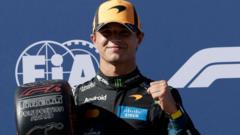
Formula 1 qualifying rarely fails to entertain, but the battle for pole at the Spanish Grand Prix in Madrid delivered genuine theatre. Lando Norris produced what he described as a 'gorgeous' final lap to put his McLaren at the front of the grid, ahead of Mercedes' Kimi Antonelli and the reigning champion Max Verstappen. Lewis Hamilton, in his first season with Ferrari and having topped the timesheets early on, was forced to settle for fourth.
For McLaren, the result is another marker of a resurgent campaign. Norris already has two Grand Prix victories this season and is now challenging the established order. Yet the significance of a Saturday afternoon in Madrid extends beyond the paddock. F1 continues to grow its audience, attract new host cities, and reshape how brands, retailers and technology providers engage with a global fan base.
A Fraction of a Second Decides the Front Row
Norris's qualifying margin was breathtakingly slender. His best lap was 0.011 seconds quicker than Antonelli's, while Verstappen trailed by 0.140 seconds. In a sport measured in milliseconds, such gaps underline how fine the line is between pole and an also-ran start, and how much pressure rests on a single lap.
Hamilton's slip from provisional pole to fourth also tells a story. Ferrari showed genuine one-lap pace, yet converting speed into a front-row lockout proved elusive. The mixed-up grid promises a race rich in strategy, and a reminder that raw speed must be matched by execution across every phase of qualifying.
For Norris, this is not isolated brilliance. With two race wins already banked, he is building a record as a consistent title contender. McLaren's ability to provide a race-winning car is the latest evidence that its technical programme has closed the gap to Red Bull and Mercedes.
McLaren's Momentum and the Fan Experience
Norris's popularity is a commercial asset in its own right. His accessible social media presence makes him attractive to younger demographics that consume sport through phones and short-form video, a shift that matters for brands wanting long-term affinity with motorsport audiences.
Race weekends now function as content festivals. Fans expect live timing, interviews and behind-the-scenes footage through team apps and social platforms. McLaren's recent form gives those channels a compelling narrative of a team on the rise, capable of winning from the front.
That emotional connection drives purchasing behaviour. Licensed teamwear, caps and collectibles sell briskly around race weekends. Retailers and e-commerce platforms that time promotions and social campaigns to qualifying and race results can capture demand while sentiment is at its peak.
The Business of Race Week: Sponsorship, Merchandise and E-Commerce
Formula 1's expanding calendar is turning each race into a multi-day commercial showcase. Madrid, a city synonymous with football, now gives sponsors access to a crossover audience that may not have engaged with motorsport before. Brands attached to McLaren, Mercedes or Red Bull benefit whenever the championship battle tightens.
Digital viewership, app downloads and social engagement spike during close sessions. Advertisers can use these signals to refine targeting and allocate spend across markets where F1's popularity is climbing, including parts of Africa and Asia. This is particularly valuable in emerging markets where smartphone adoption and streaming subscriptions are rising quickly.
E-commerce operators should note the merchandise opportunity. Team gear, driver apparel and fan experiences can be bundled into race-week campaigns, while augmented reality features and virtual pit-lane tours deepen engagement and help convert casual viewers into paying customers. For digital merchants, the lesson is to align inventory, logistics and marketing with the F1 calendar.
Procurement, Tendering and Technology Opportunities Around F1
Behind the glamour lies a complex supply chain. Hosting a Grand Prix requires event management, logistics, security, hospitality and broadcasting infrastructure, each delivered through competitive procurement. Vendors that understand F1's exacting standards can position themselves for recurring contracts across the season.
Technology providers have a strong opening. Teams and organisers need data analytics, cybersecurity, connectivity and timing systems. Bidders offering reliable, innovative solutions that align with F1's efficiency and sustainability goals stand out in tender evaluations.
Sustainability is no longer peripheral. From biofuels to carbon-neutral hospitality, the sport is creating demand for green technologies and consulting expertise. Businesses offering energy management or logistics analytics can use F1 as both a client and a credibility-building case study.
Madrid as a Motorsport-Meets-Football Commercial Hub
Madrid's decision to welcome Formula 1 reflects a deliberate effort to diversify its sporting identity. By adding motorsport to a calendar already dominated by football, the city exposes new audiences to racing while giving existing fans a reason to travel to a world-class destination.
The economic spillover is substantial. Hotels, restaurants and transport providers benefit from the influx of visitors. For international businesses, Madrid functions as a gateway to European markets, with F1 providing a natural setting for product launches and corporate hospitality.
The cultural crossover also matters for marketers. Campaigns that respect both football and motorsport traditions can resonate more deeply than generic messaging. Madrid's approach offers a template for how sport, tourism and commerce can reinforce one another.
What this means
Norris's pole position at the Spanish Grand Prix is more than a Saturday highlight; it is a window into how modern motorsport operates as a business ecosystem. Close racing, digital engagement, merchandising and hospitality create value far beyond the teams on the grid. For business consumers, procurement professionals and e-commerce operators in Nigeria and other growing markets, F1 is a predictable calendar of commercial opportunity. As McLaren and Norris continue to challenge at the front, the ripple effects will be felt in boardrooms, online checkouts and tender documents for the rest of the season. The key is to move quickly, because in Formula 1 the narrative can change within a single lap.
Originally reported by bbc.co.uk. Adapted for our readers with AI assistance.