Is Gianni Infantino Still Backed by African Football Federations? An In-Depth Analysis
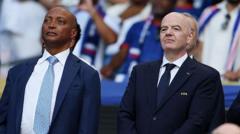
Gianni Infantino, FIFA’s president since 2016, has faced increasing scrutiny over his leadership style and controversial proposals, particularly his plan to sell stakes in FIFA’s global competitions to private investors. While this plan was ultimately withdrawn amid opposition, especially from regional governing bodies, Infantino retains significant support from African football federations. This backing is closely linked to the financial and developmental assistance provided through FIFA’s Forward programme, which has become vital for many African associations. This article examines the current landscape of Infantino’s support across Africa, highlighting the perspectives of major footballing nations and regional leaders.
Is Gianni Infantino Still Backed by African Football Federations? An In-Depth Analysis
The Foundation of Support: FIFA’s Forward Programme
A key reason for the sustained support for Gianni Infantino among African football federations is the FIFA Forward programme, introduced early in his presidency in 2016. This funding initiative has provided essential financial resources to many African associations that face limited commercial and government investment in football.
The programme has enabled numerous football development projects, including infrastructure upgrades, youth development, coach education, and the promotion of women’s football. For many federations, this funding forms a critical lifeline, allowing them to sustain and grow the sport despite broader economic challenges.
Infantino’s approach has been seen as prioritizing the needs of less wealthy football associations, which contrasts with the opposition his commercial proposals have faced from some more established football bodies worldwide.
Morocco: A Strategic Partner and Vocal Supporter
Morocco stands out as one of Africa’s football success stories, driven by strong government backing and a close partnership with FIFA. The country hosts FIFA’s Africa regional office in Rabat and has been a venue for major FIFA tournaments, including the Club World Cup and the women’s U17 World Cup. Morocco is also set to co-host the 2030 men’s World Cup alongside Spain and Portugal.
Fouzi Lekjaa, president of Morocco’s football federation (FRMF), publicly endorsed Infantino following the withdrawal of the controversial FIFA Forward Enterprise proposal. Lekjaa praised Infantino’s decision as a wise move that preserved unity among FIFA’s 211 member associations.
Morocco’s senior football executives reaffirmed their support for Infantino during a recent meeting, underscoring the country’s strategic alignment with FIFA’s leadership despite recent turbulence.
Egypt: Institutional Loyalty Coupled with Calls for Broader Engagement
Egypt, home to the Confederation of African Football (CAF) headquarters, remains one of Infantino’s strongest institutional allies on the continent. The Egyptian Football Association (EFA) has benefited significantly from the FIFA Forward programme, receiving funding for infrastructure, youth initiatives, coach education, and women’s football development.
Hany Abo Rida, a FIFA Council member and influential figure in African football, has maintained close ties with Infantino since his election. Egypt’s support is reinforced by these longstanding relationships and the tangible benefits derived from FIFA’s expanded investment strategy.
However, there is a growing expectation among Egyptian officials and observers that FIFA’s engagement with Africa should evolve beyond financial support. Increasingly, there are calls for greater emphasis on good governance, transparency, sustainable development, and empowering CAF to set its own priorities.
Democratic Republic of Congo: Endorsing Infantino Amid Institutional Stability
The Congolese Football Federation (FECOFA) welcomed Infantino’s withdrawal of the Forward Enterprise proposal, describing it as a prudent decision. FECOFA highlighted Infantino’s decade-long commitment to promoting football globally, with particular support for African federations.
The federation emphasized that the controversy should not overshadow the positive impact of FIFA’s programmes, which have led to significant investments in football development and infrastructure within the country.
Under the leadership of Véron Mosengo-Omba, elected in May 2026, FECOFA has pledged continued support for Infantino beyond 2027, signaling alignment with FIFA’s leadership during a period of broader divisions in world football.
Nigeria: Support Rooted in Financial Necessity and Development Needs
Nigeria’s football federation (NFF) has largely aligned with Infantino’s leadership despite global criticism. Facing chronic funding shortages and pressing infrastructure needs, the NFF sees the financial boost from FIFA’s programmes as indispensable.
Amaju Pinnick, former NFF president and deputy chairman of FIFA’s Men’s National Teams Competitions Committee, argued that Infantino’s plans would provide vital funding to member associations without overburdening local governments.
Nigeria is eligible for up to $8 million under the current FIFA Forward funding cycle, even though the national team has missed the last two men’s World Cup tournaments. A flagship project is the redevelopment of the NFF Technical Centre in Abuja, which includes modern training facilities and accommodation for national teams.
Voices Across Africa: Broad Support with Some Reservations
Beyond the major footballing nations, other African voices have expressed support for Infantino. South Africa’s Minister of Sports, Arts and Culture, Gayton McKenzie, praised Infantino’s contributions to African football and cautioned against joining the global backlash without recognizing his positive impact.
Officials from Malawi and Uganda highlighted the transformative effect of FIFA investment on their football infrastructure and development, emphasizing the importance of such funding given their governments’ limited capacity to support the sport.
The Gambia’s football federation president, Lamin Kaba Bajo, expressed a personal commitment to support Infantino’s re-election in 2027, reflecting a broader sentiment among some African members.
However, support is not unanimous. Former Sierra Leone FA president and ex-FIFA Council member Isha Johansen warned against over-commercializing African football and urged caution regarding the long-term implications of Infantino’s proposals.
CAF president Patrice Motsepe publicly lauded Infantino’s work, describing him as loyal to Africa and emphasizing the importance of mutual loyalty between FIFA leadership and African football.
What this means
Gianni Infantino’s presidency remains a complex and contested subject within global football, but in Africa, his leadership continues to enjoy substantial backing. The continent’s federations have benefited considerably from FIFA’s financial support and development initiatives, which have helped address longstanding resource gaps. However, this support is accompanied by growing calls for FIFA to deepen its engagement beyond funding, focusing on governance, transparency, and empowering African football authorities to shape their own futures. As FIFA approaches its next leadership election in 2027, the African continent’s stance will be pivotal, reflecting both gratitude for past assistance and aspirations for sustainable, autonomous football development.
Originally reported by bbc.co.uk. Adapted for our readers with AI assistance.
Following heavy defeats in the first two Tests against England, Pakistan has made sweeping changes by dropping seven players, calling up five newcomers, and…
Manchester City’s proposed £80 million transfer for Liverpool forward Cody Gakpo is on the brink of collapse as Liverpool struggles to secure a suitable…