
AI Trends & News
Surface Laptop Ultra Pre-orders Open: Price, Release Date and AI Features
Microsoft opens Surface Laptop Ultra pre-orders from US$2,599.99. Explore its launch date, NVIDIA RTX Spark features and implications for Nigerian businesses.
TAMFIS NIG LTDRC 8067447CAC ACTIVEFinima, Bonny Island, Rivers State

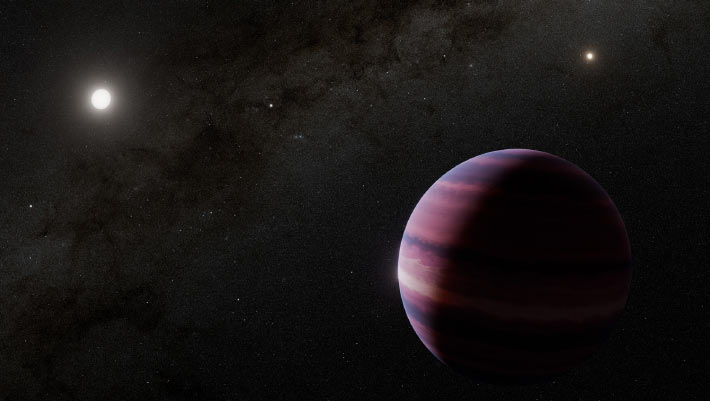
The closest stellar system to Earth has yielded a tantalising hint of a new world. Data from the James Webb Space Telescope (JWST) suggests the presence of a possible gas giant planet orbiting Alpha Centauri A, situated within the star's habitable zone. While this discovery excites scientists due to its proximity and potential for detailed study, the planet's likely gaseous composition means it would not harbour life similar to Earth's. This article examines the findings, their implications for exoplanet research, and what they mean for our understanding of planetary formation in binary star systems.
Initial observations in August 2024 using the Mid-Infrared Instrument (MIRI) aboard JWST revealed an object over 10,000 times fainter than Alpha Centauri A. A coronagraphic mask blocked the star's glare, enabling the search for faint companions. The object appeared separated by roughly one to two times the Earth-Sun distance, placing it within the conservative habitable zone where liquid water could theoretically exist on a rocky planet.
Analysis was complicated by the proximity of Alpha Centauri B, requiring careful subtraction of its light to isolate the potential planetary signal. Researchers extracted data suggesting a genuine celestial body rather than instrumental noise or background interference.
Subsequent campaigns in February and April 2025 failed to rediscover the August 2024 object. The research team, led by Caltech Ph.D. student Aniket Sanghi, described this as 'a case of a disappearing planet.' Non-detections triggered deeper investigation into the planet's potential orbital characteristics.
Scientists used computer modelling to simulate millions of potential orbits, incorporating constraints from the initial Webb detection, later non-detections, a 2019 VLT sighting candidate, and the gravitational influence of Alpha Centauri B. The goal was to identify stable orbits despite gravitational tugs from both stars.
Modelling revealed that in approximately half of simulated orbits matching initial data, the planet's path brought it sufficiently close to Alpha Centauri A during February and April 2025 observation windows. At these closer distances, the planet would be lost in the star's glare, even with Webb's coronagraph, making it undetectable despite physical presence.
This suggests the candidate planet, if real, follows a highly elliptical (eccentric) orbit around Alpha Centauri A, causing significant separation variations over time and accounting for visibility in August 2024 but not several months later. Orbit stability in the presence of Alpha Centauri B was key, ensuring the planet would not be ejected.
Based on Webb's mid-infrared brightness and orbital modelling constraints, researchers estimate the object could be a gas giant with mass comparable to Saturn. Its estimated orbit varies between approximately one and two times the Earth-Sun distance (1-2 AU), placing it within Alpha Centauri A's habitable zone. For context, Earth orbits at 1 AU from the Sun, while Mars orbits at about 1.5 AU.
If confirmed, this would be the closest directly imaged exoplanet to its host star ever discovered, offering unprecedented study opportunities. Its estimated temperature and age are remarkably similar to Solar System gas giants Jupiter and Saturn, making it a valuable comparative object for understanding planetary evolution.
Although astronomers emphasise that a gas giant would not support life as we know it due to lack of solid surface and extreme atmospheric conditions, the discovery holds profound scientific value. Its existence in a tightly packed binary star system challenges existing planet formation theories. The gravitational dynamics of two stars orbiting every 80 years create a complex environment previously thought to hinder stable planet formation and retention, particularly at close distances.
Dr. Charles Beichman of NASA's Jet Propulsion Laboratory highlights that if confirmed, this object could become a 'touchstone' for exoplanet science. Its proximity—just 4.35 light-years away—means exceptional accessibility for follow-up observations with JWST, future ground-based extremely large telescopes, and potentially dedicated space missions. Detailed characterisation of its atmosphere, orbit, and physical properties could yield insights into planetary system diversity and shaping processes.
The scientific community awaits further observations to confirm or refute the existence of Alpha Centauri Ab. Future Webb observing campaigns, strategically timed based on predicted orbital models, will be crucial. Additionally, next-generation ground-based instruments designed for极高的 contrast imaging may soon enable independent detection or refutation.
Regardless of outcome, the search process has advanced technical capabilities for observing exoplanets around bright, nearby stars. Techniques developed to suppress starlight and extract faint signals in the Alpha Centauri system are directly applicable to the ongoing quest to find and characterise potentially habitable worlds elsewhere in the galaxy. For now, the closest star system to Earth continues to captivate astronomers and the public, holding promise of more revelations about our cosmic neighbourhood.
The potential detection of a gas giant in the habitable zone of Alpha Centauri A represents a fascinating development in the exploration of our nearest stellar neighbours. Though the 'disappearing planet' phenomenon complicates immediate confirmation, orbital modelling offers a scientifically coherent explanation for inconsistent observations. Whether this candidate proves to be a real world or a sophisticated false positive, the endeavour has already pushed the boundaries of what is possible in exoplanet imaging. It underscores the immense value of studying our cosmic backyard, where proximity enables detailed scrutiny that can inform the search for life-bearing planets much farther afield. As technology advances, systems like Alpha Centauri will remain prime targets, not necessarily for finding a second Earth, but for understanding the rich diversity of planetary outcomes and the fundamental processes governing how worlds are born and evolve.
Originally reported by sci.news. Adapted for our readers with AI assistance.
Keep reading
AI Trends & News
Microsoft opens Surface Laptop Ultra pre-orders from US$2,599.99. Explore its launch date, NVIDIA RTX Spark features and implications for Nigerian businesses.
Science & Technology
DJI’s IBC recognition puts pocket gimbal and panoramic capture in the spotlight. Here is how creators can assess framing, editing effort and recording workflows.
Business News
App store steering is about more than permission to add a link. Explore fees, renewal terms, customer experience and the UK consultation.
TAMFIS NIG LTD
Electrical and instrumentation engineering, bid preparation and consulting, IT and software.

