Science & Technology, Top Stories

Artemis II begins journey home following record-breaking lunar flyby

The crew of NASA's Artemis II mission is en route back to Earth after breaking the record for the furthest distance travelled by humans from our planet. An image of the Moon taken from Orion, including parts of the far side (to the left of the picture) which cannot be seen from Earth - NASA On Monday, 6 April, the Orion spacecraft carrying the four astronauts achieved its furthest point from Earth, having travelled 252,756 miles. Earlier in the day, the crew had broken the previous distance record of 248,655 miles, set by the historic Apollo 13 mission in 1970. The Artemis II crew was in radio blackout for approximately 40 minutes as it travelled around the far side of the Moon, out of reach from NASA's Deep Space Network. Related content Artemis II Moon mission underway with successful launch Lunar...
Continue reading
Browse a 3D map of the world’s 2.75 billion buildings
Science & Technology

Browse a 3D map of the world’s 2.75 billion buildings

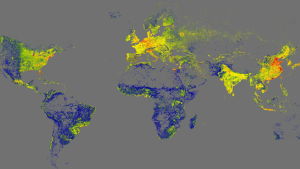
GlobalBuildingAtlas is based on data collected up to 2019. Credit: Earth System Science Data Get the Popular Science daily newsletter💡 Breakthroughs, discoveries, and DIY tips sent every weekday.Researchers in Germany recently accomplished a truly audacious feat of cartography. Using a diverse array of datasets, a team at the Technical University of Munich released GlobalBuildingAtlas, the first high-resolution mapping model featuring every structure in the world at a given point in time. However, the open-source project isn’t about bragging rights. With over 2.75 billion buildings detailed in the map, the endeavor will help create accurate analyses of urban structures, volume calculations, and infrastructure planning around the planet. “3D building information provides a much more accurate picture of urbanization and poverty than traditional 2D maps,” research lead Xiaoxiang Zhu said in a statement. “With 3D models, we see not...
Continue reading
“Alien: Earth”: This is what Alien’s creature looks most in nature
Science & Technology

“Alien: Earth”: This is what Alien’s creature looks most in nature

It is one of the most emblematic antagonists in the history of science fiction, the xenomorphe ofAlien has terrified us for decades. Researchers have tried to know what he could look like if he really existed. It has been almost half a century that he makes us scream, even if in space " No one hears us ». The XénomorpheXénomorphe of the saga Alien again returns this year on screens with the new series Alien : Earthwhich depicts events taking place a few years before the 1979 original film by Ridley Scott. Ferocious beast from the macabre imagination of Hr Giger, the xenomorph is a kind of parasiteparasite au skullskull Lying whose different stages of evolution are revealed to us as the saga progresses. And if this enemy has become one of the symbols of science fiction,...
Continue reading
NASA’s Earth Information Center at the Smithsonian
Science & Technology

NASA’s Earth Information Center at the Smithsonian

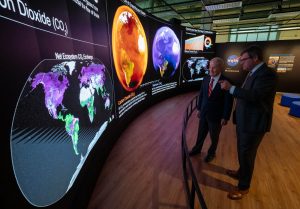
NASA Space Technology Monika LuabeyaOct 08, 2024NASA Administrator Bill Nelson and Kirk Johnson, Sant Director of the Smithsonian’s National Museum of Natural History in Washington, preview the agency’s new Earth Information Center exhibit on Monday, Oct. 8, 2024. This new exhibit is the Earth Information Center’s second physical location.The exhibit at the Smithsonian includes a 32-foot-long, 12-foot-high video wall displaying Earth science data visualizations and videos, interpretive panels showing Earth’s connected systems, information on our changing world, and an overview of how NASA and the Smithsonian study our home planet. It opens to the public Tuesday, Oct. 8, and will remain on display through 2028.Image Credit: NASA/Bill Ingalls
Continue reading