AI Trends & News
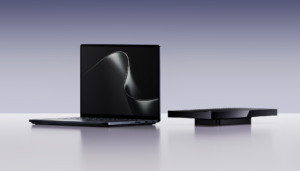
Surface Laptop Ultra Pre-orders Open: Price, Release Date and AI Features
Microsoft opens Surface Laptop Ultra pre-orders from US$2,599.99. Explore its launch date, NVIDIA RTX Spark features and implications for Nigerian businesses.
TAMFIS NIG LTDRC 8067447CAC ACTIVEFinima, Bonny Island, Rivers State

DJI’s cameras attracted attention at IBC 2026 in Amsterdam, but an exhibition award is most useful when it prompts a practical question: would the equipment improve the work you actually produce? The Osmo Pocket 4P and Osmo 360 II represent different answers to that question. One concentrates on stabilised, deliberately framed footage; the other records the scene around the camera so that framing can be chosen later. Their recognition offers a starting point for comparing those approaches, rather than a reason to replace a working production setup immediately.
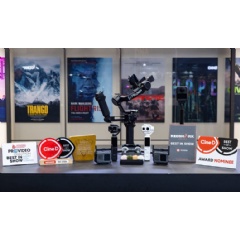
In its September announcement, DJI said the Pocket 4P received Best of Show recognition from CineD, TVTech and ProVideo Coalition, while RedShark News recognised the Osmo 360 II. The company also named transmission, microphone and stabiliser products among nominees. Those distinctions should remain separate: being nominated is not the same as winning an award.
DJI describes the Pocket 4P as a dual-lens pocket gimbal camera, combining a wide view with a longer portrait lens. The Osmo 360 II is designed for panoramic recording, with the company advertising 8K capture at up to 60 frames per second. These are manufacturer claims, and this article is an analysis of the announcement rather than a hands-on test.
A small gimbal camera suits a creator who knows what the viewer should watch. During an interview, a product demonstration or a walk through a location, the operator can point the camera at the subject and concentrate on movement, timing and composition. A longer lens can help change the visual relationship between a person and the background.
A panoramic camera makes a different trade-off. Recording around the camera can preserve a moment when the action moves unpredictably or when one take must support several later edits. That flexibility shifts decisions into post-production. Someone still has to select viewpoints, control movement between them and ensure the final sequence feels intentional.
The resolution of a full panoramic recording does not translate directly into the resolution of every cropped view. Creators should examine sample exports in the aspect ratios they intend to deliver. A social clip, a widescreen interview and an immersive presentation place different demands on framing and perceived detail.
Storage and editing capacity deserve the same attention as capture specifications. A camera that produces attractive files can still slow a small team if the workstation struggles to process them. Before changing equipment, test how quickly footage can be transferred, previewed, edited and archived using the software and computers already available.
The camera is only one part of a useful recording system. Speech that is difficult to understand can make a technically impressive image unusable. For interviews and demonstrations, decide how microphones will be positioned, how levels will be checked and how backup audio will be recorded before focusing on the headline video specification.
Handling matters when the crew is small. Consider where the camera can be mounted, whether controls can be reached during a take and how batteries will be managed across a working day. An unfamiliar device should be rehearsed before an important assignment. A short practice recording can expose problems that a specification table will never reveal.
An effective comparison uses the same scene and delivery target for each candidate. Record a moving subject, an indoor conversation and a scene with bright and dark areas. Keep the editing time limited to what the project budget permits. Then judge the finished clips, rather than comparing unprocessed files in conditions that flatter one device.
Invite the person who will edit the material to take part. A feature that looks convenient during capture may require extra processing or conversion later. Conversely, a file format that seems demanding may fit an established colour workflow. The best choice depends on the complete route from recording to delivery.
Trade-show recognition can identify products worth investigating, especially when several specialist publications notice the same device. It does not establish that every advertised feature performs equally well, that the camera fits every assignment or that it offers the best value in a particular market. Independent demonstrations and your own production requirements remain important.
For a creator deciding between these Osmo approaches, the clearest question is where they want to make their creative choices. A pocket gimbal emphasises composition during the shoot. Panoramic capture preserves more options for the edit. The useful outcome is a workflow that produces dependable finished work with manageable effort, whether that involves new equipment or better use of the camera already owned.
Sources: DJI’s IBC announcement. Production comparisons and evaluation suggestions are original editorial analysis.
Originally reported by webwire.com. Adapted for our readers.
Keep reading
AI Trends & News
Microsoft opens Surface Laptop Ultra pre-orders from US$2,599.99. Explore its launch date, NVIDIA RTX Spark features and implications for Nigerian businesses.
Business News
App store steering is about more than permission to add a link. Explore fees, renewal terms, customer experience and the UK consultation.
Science & Technology
Explore M33’s spiral arms, star-forming regions and role in measuring cosmic distance through an original guide to the Triangulum Galaxy.
TAMFIS NIG LTD
Electrical and instrumentation engineering, bid preparation and consulting, IT and software.