
AI Trends & News
Surface Laptop Ultra Pre-orders Open: Price, Release Date and AI Features
Microsoft opens Surface Laptop Ultra pre-orders from US$2,599.99. Explore its launch date, NVIDIA RTX Spark features and implications for Nigerian businesses.
TAMFIS NIG LTDRC 8067447CAC ACTIVEFinima, Bonny Island, Rivers State

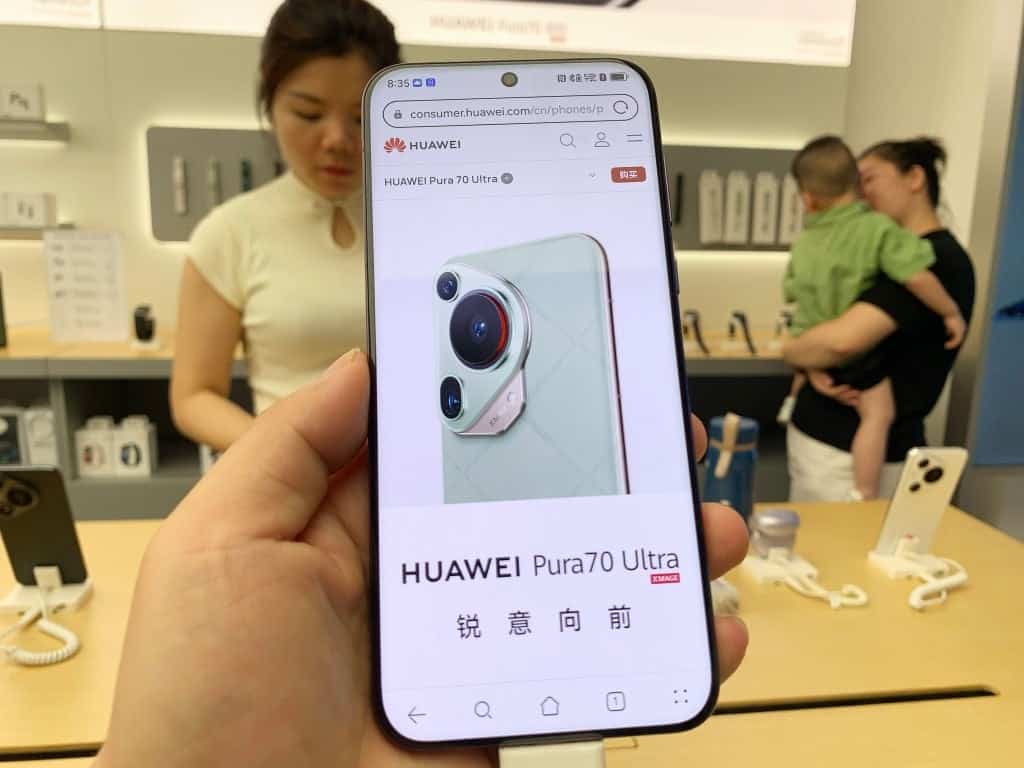
Huawei Technologies has recently unveiled its Pura 70 series smartphones, marking a notable advancement in the company’s efforts to increase the use of Chinese-made components in its high-end devices. A detailed teardown analysis by iFixit and TechSearch Worldwide reveals that over 90% of the parts in the Pura 70 series are sourced from Chinese suppliers, including a newly introduced NAND flash memory chip likely packaged by Huawei’s in-house chip unit, HiSilicon. This move underscores China’s broader ambition to achieve greater self-sufficiency in critical technology sectors, particularly in the face of ongoing U.S. sanctions targeting the Chinese tech giant. The following article explores the significance of these developments, the technological details uncovered, and the implications for the global smartphone market and U.S.-China tech relations.
The Pura 70 series, launched in late April 2024, represents Huawei’s latest flagship smartphone lineup. It quickly sold out upon release, signaling strong consumer demand despite the company’s four-year struggle under U.S. trade restrictions. The teardown conducted by iFixit and TechSearch Worldwide revealed that more than 90% of the components used in the Pura 70 devices are manufactured by Chinese suppliers. This is a marked increase compared to previous models, reflecting Huawei’s strategic focus on reducing reliance on foreign technology.
One of the standout findings from the teardown was the identification of a NAND flash memory chip that appears to be packaged by HiSilicon, Huawei’s semiconductor unit. This chip consists of NAND dies with a capacity of 1 terabit each, suggesting advanced storage capabilities. While the exact wafer manufacturer remains unidentified due to unusual markings, the NAND dies are believed to be sourced from leading flash memory producers such as SK Hynix, Kioxia, or Micron, but repackaged domestically by Huawei.
The discovery of a NAND flash memory chip packaged by HiSilicon is a significant milestone for Huawei. It indicates progress toward producing critical smartphone components domestically rather than relying on foreign suppliers. Previously, Huawei’s Mate 60 series, released in August 2023, was found to use DRAM and NAND chips from South Korea’s SK Hynix, which later confirmed it had ceased business with Huawei following U.S. sanctions. Analysts speculated that those chips were likely drawn from existing stockpiles.
In contrast, the Pura 70 series still uses a DRAM chip from SK Hynix, but the NAND flash memory component is now domestically packaged, showcasing a shift in Huawei’s supply chain strategy. iFixit’s lead teardown technician, Shahram Mokhtari, emphasized that this development is about achieving self-sufficiency, with the goal of maximizing the proportion of Chinese-made parts inside the smartphone.
The Pura 70 Pro is powered by an upgraded version of Huawei’s Kirin 9010 chipset, which is an evolution of the processor used in the Mate 60 series. This chip is manufactured by Semiconductor Manufacturing International Corporation (SMIC), China’s leading chip foundry, using a 7-nanometer (nm) N+2 process technology. This is notable because it demonstrates that despite U.S. export controls aimed at limiting China’s access to advanced semiconductor manufacturing, SMIC continues to produce competitive chips at the 7nm node.
While the Kirin 9010 represents only incremental improvements over the earlier Kirin 9000S, its existence signals that Huawei and its Chinese partners are maintaining steady progress in chip fabrication capabilities. iFixit noted that the 7nm process is still a significant achievement given the geopolitical and technological constraints. Moreover, SMIC is reportedly planning to transition to a more advanced 5nm process by the end of 2024, which could further enhance Huawei’s chip performance and competitiveness.
Huawei’s resurgence in the high-end smartphone market with the Pura 70 series has attracted attention from competitors and policymakers alike. The company’s ability to integrate a high percentage of Chinese-made components challenges the effectiveness of U.S. sanctions designed to curb China’s technological advancement. Analysts predict that the Pura 70 series could capture additional market share from rivals such as Apple, especially within China’s large consumer base.
From a geopolitical perspective, Huawei’s progress exemplifies the broader competition between the U.S. and China over technological leadership. The U.S. government has imposed restrictions on Huawei and other Chinese tech firms to prevent access to advanced semiconductor technologies. However, Huawei’s continued innovation and supply chain localization suggest that these measures have not fully halted China’s development in this critical sector.
Huawei declined to comment on the teardown findings, while SK Hynix reaffirmed its compliance with U.S. regulations and stated it has not conducted business with Huawei since the sanctions were implemented. SMIC did not respond to requests for comment regarding its manufacturing processes.
Huawei’s Pura 70 series represents a significant step forward in China’s pursuit of technological self-reliance, particularly in the smartphone sector. By integrating a high proportion of domestically produced components, including a newly packaged NAND flash memory chip and an upgraded Kirin processor, Huawei is demonstrating resilience amid ongoing U.S. sanctions. While these developments indicate incremental rather than revolutionary progress in chip manufacturing, they underscore China’s growing capabilities and determination to reduce dependence on foreign technology. As Huawei continues to innovate and expand its market presence, the global technology landscape and U.S.-China relations will likely remain closely intertwined, with supply chain localization and semiconductor advancements at the forefront of this competition.
Originally reported by news24.com. Adapted for our readers with AI assistance.
Keep reading
AI Trends & News
Microsoft opens Surface Laptop Ultra pre-orders from US$2,599.99. Explore its launch date, NVIDIA RTX Spark features and implications for Nigerian businesses.
Science & Technology
DJI’s IBC recognition puts pocket gimbal and panoramic capture in the spotlight. Here is how creators can assess framing, editing effort and recording workflows.
Business News
App store steering is about more than permission to add a link. Explore fees, renewal terms, customer experience and the UK consultation.
TAMFIS NIG LTD
Electrical and instrumentation engineering, bid preparation and consulting, IT and software.

