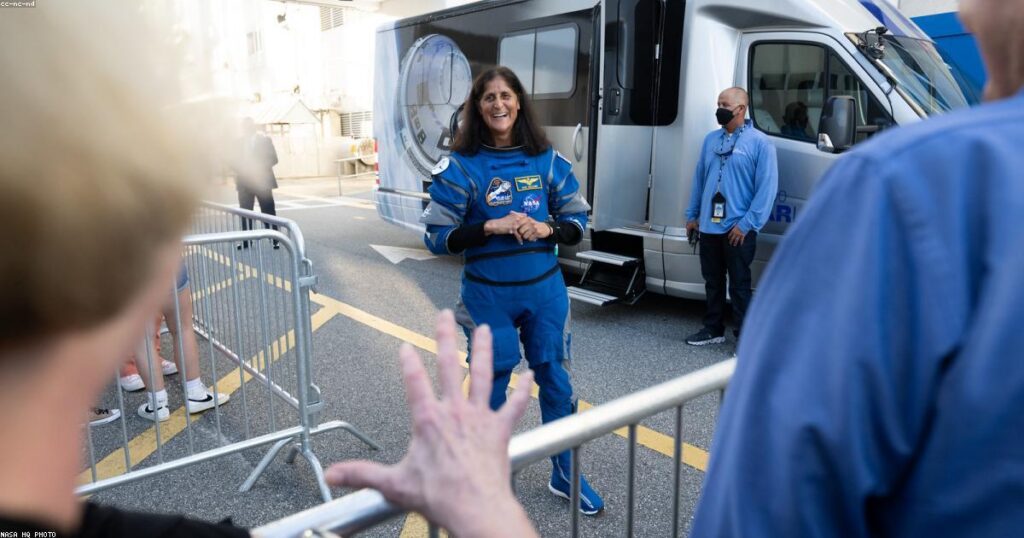
NASA says no return date yet for astronauts and troubled Boeing capsule at space station
NASA’s partnership with Boeing to ferry astronauts to and from the International Space Station has encountered significant hurdles following technical issues with Boeing’s CST-100 Starliner spacecraft. The space agency has recently confirmed that there is no definitive timeline for the return of astronauts currently on the ISS, citing unresolved problems with the capsule designed to bring them home. This announcement brings to light the complexities and risks involved in modern space missions, especially those involving commercial partners. As NASA continues to work closely with Boeing to address these challenges, the safety of crew members remains the paramount concern, even if it means delaying schedules and extending missions aboard the orbiting laboratory.
Overview of NASA’s Commercial Crew Program and Boeing’s Role
NASA’s Commercial Crew Program (CCP) was initiated to develop reliable and cost-effective spacecraft capable of transporting astronauts to and from the International Space Station. Boeing, alongside SpaceX, was awarded contracts to build these commercial vehicles, with Boeing developing the CST-100 Starliner. This program represents a significant shift from NASA’s reliance on Russian Soyuz spacecraft, aiming to restore American crew launch capabilities from domestic soil.
Boeing’s Starliner was designed to be a reusable spacecraft capable of carrying up to seven astronauts or a mix of crew and cargo. It features advanced safety systems and an innovative design intended to streamline station access and reduce costs. Despite these ambitions, Boeing’s development process has faced several technical challenges, including software glitches and hardware malfunctions, which have delayed its operational status.
The partnership between NASA and Boeing is critical for maintaining continuous human presence in low Earth orbit. However, the recent setbacks with the Starliner capsule have raised concerns about the readiness and reliability of Boeing’s spacecraft, prompting NASA to take a cautious approach in scheduling astronaut returns.
The CST-100 Starliner has experienced multiple technical issues, particularly related to its propulsion and avionics systems. One notable problem involved valve malfunctions that could potentially impact the capsule’s ability to safely execute critical maneuvers such as docking and deorbit burns. These issues have necessitated extensive testing and troubleshooting to ensure the spacecraft’s operational integrity.
Software errors have also plagued the Starliner during test flights. For example, during an uncrewed Orbital Flight Test (OFT) in 2019, a timing error in the spacecraft’s mission clock caused it to burn fuel unnecessarily, preventing it from reaching the ISS. Although Boeing and NASA addressed these issues in subsequent tests, the incident highlighted the complexity and risks inherent in spaceflight software.
More recently, concerns about the capsule’s parachute system and other landing hardware have emerged. These systems are vital for ensuring the safe return of astronauts to Earth, and any uncertainty requires NASA to delay or reconsider crewed missions until full confidence is established through rigorous verification and validation processes.
Current Status of Astronauts Aboard the International Space Station
As of now, astronauts currently aboard the ISS are on extended missions due to the delay in their scheduled return. NASA has emphasized that the health and safety of crew members are continuously monitored, with all necessary life support and medical resources available on the station to support longer stays if required.
Extended missions aboard the ISS are not unprecedented, but they do require careful planning and coordination to manage supplies, psychological well-being, and scientific activities. NASA is working closely with international partners to ensure that the astronauts’ time in orbit remains productive and safe despite the uncertainty surrounding their return.
Communication between the ISS crew and ground control remains robust, allowing ongoing assessment of the astronauts’ condition and readiness for eventual departure. NASA’s decision to delay the return is a testament to its commitment to prioritizing astronaut safety over rigid timelines.
NASA’s Response and Safety Protocols in Place
NASA has adopted a cautious and methodical approach in response to the issues with Boeing’s capsule. The agency has convened expert panels and increased oversight on Boeing’s testing and certification processes to ensure that all safety standards are met before permitting crewed returns using the Starliner spacecraft.
Safety protocols include redundant systems checks, simulation exercises, and contingency planning for various scenarios that could arise during reentry and landing. NASA’s rigorous standards reflect lessons learned from past spaceflight incidents and underscore the importance of avoiding any compromise on crew safety.
In addition, NASA is leveraging partnerships with other commercial providers, such as SpaceX, which has demonstrated reliable crew transportation capabilities with its Dragon capsule. This diversification helps mitigate risks associated with any single spacecraft or contractor.
Implications for the International Space Station and Future Missions
The delay in astronaut return schedules has operational implications for the ISS, including adjustments in crew rotations, scientific experiment timelines, and maintenance activities. NASA and its partners must continuously adapt to these changes to maintain station functionality and research productivity.
Longer missions can provide additional opportunities for scientific research in microgravity, but they also require careful management to prevent crew fatigue and resource depletion. The ISS program’s flexibility is essential to accommodate such unexpected changes without compromising mission objectives.
Looking ahead, the challenges faced with Boeing’s Starliner highlight the importance of robust testing and validation in commercial crew development. NASA’s ongoing collaboration with Boeing aims to overcome these hurdles to ensure the spacecraft’s future role in supporting sustainable human spaceflight.
The Broader Context of Commercial Spaceflight Challenges
The difficulties with Boeing’s Starliner are emblematic of broader challenges in the rapidly evolving commercial spaceflight sector. Developing safe, reliable crew transportation systems involves complex engineering, rigorous testing, and significant financial investment, often leading to unforeseen delays and technical setbacks.
Competition and collaboration among commercial providers drive innovation but also introduce risks as companies push to meet ambitious timelines and performance goals. NASA’s role as a regulator and partner is to balance these dynamics to achieve safe and effective space access.
Public and governmental scrutiny of commercial crew programs remains high, given the stakes involved in human spaceflight. Transparency and effective communication about challenges and progress are critical to maintaining trust and support for these endeavors.
Looking Forward: Steps Toward Resolving Boeing Capsule Issues
Boeing is actively working with NASA to identify and rectify the technical problems affecting the Starliner capsule. This includes comprehensive testing of hardware components, software updates, and simulation of mission scenarios to validate solutions before resuming crewed flights.
NASA has outlined a cautious timeline that prioritizes safety reviews and certification milestones, rather than fixed launch or return dates. This approach allows flexibility to address any emerging issues without pressure to meet arbitrary deadlines.
The successful resolution of these challenges will be a significant milestone for Boeing and NASA, enabling the Starliner to fulfill its intended role in the Commercial Crew Program. It will also contribute valuable experience to the ongoing development of human-rated spacecraft for future deep space missions.
Conclusion
NASA’s announcement of no set return date for astronauts due to the Boeing Starliner capsule’s technical challenges underscores the complexities of modern human spaceflight. While the delays present operational and logistical hurdles, NASA’s unwavering commitment to astronaut safety guides every decision. The collaboration between NASA and Boeing continues to focus on resolving the spacecraft’s issues through rigorous testing and validation. This cautious approach not only protects the current crew aboard the ISS but also lays a stronger foundation for the future of commercial crewed missions, advancing humanity’s pursuit of safe and sustainable space exploration.
Originally reported by chron.com. Adapted for our readers.
Recent advances in machine perfusion technology are not only preserving donated livers but also making them biologically younger at a molecular level. This breakthrough…
What happens when human imagination, artificial intelligence, art and technology come together? From September 1 to 6, Samsung Electronics presented a special exhibition themed…