When we think of black holes we tend to picture enormous cosmic monsters like stellar-mass black holes with masses tens to hundreds of times that of the Sun. We might also picture supermassive black holes with masses millions (or even billions) of times that of the Sun sitting at the hearts of galaxies and dominating their surroundings.
Yet, scientists theorize that the universe could also be populated with vastly less massive, relatively featherweight black holes with masses around that of Earth. These black holes could potentially have masses as low as that of a large asteroid. Scientists also suggest such black holes would have existed since the dawn of time, some 13.8 billion years ago.
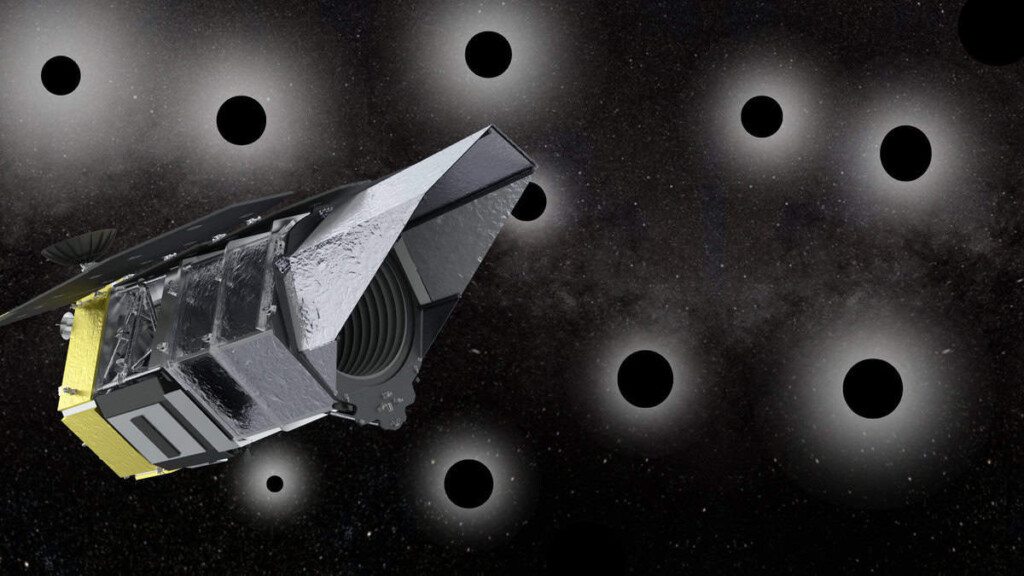
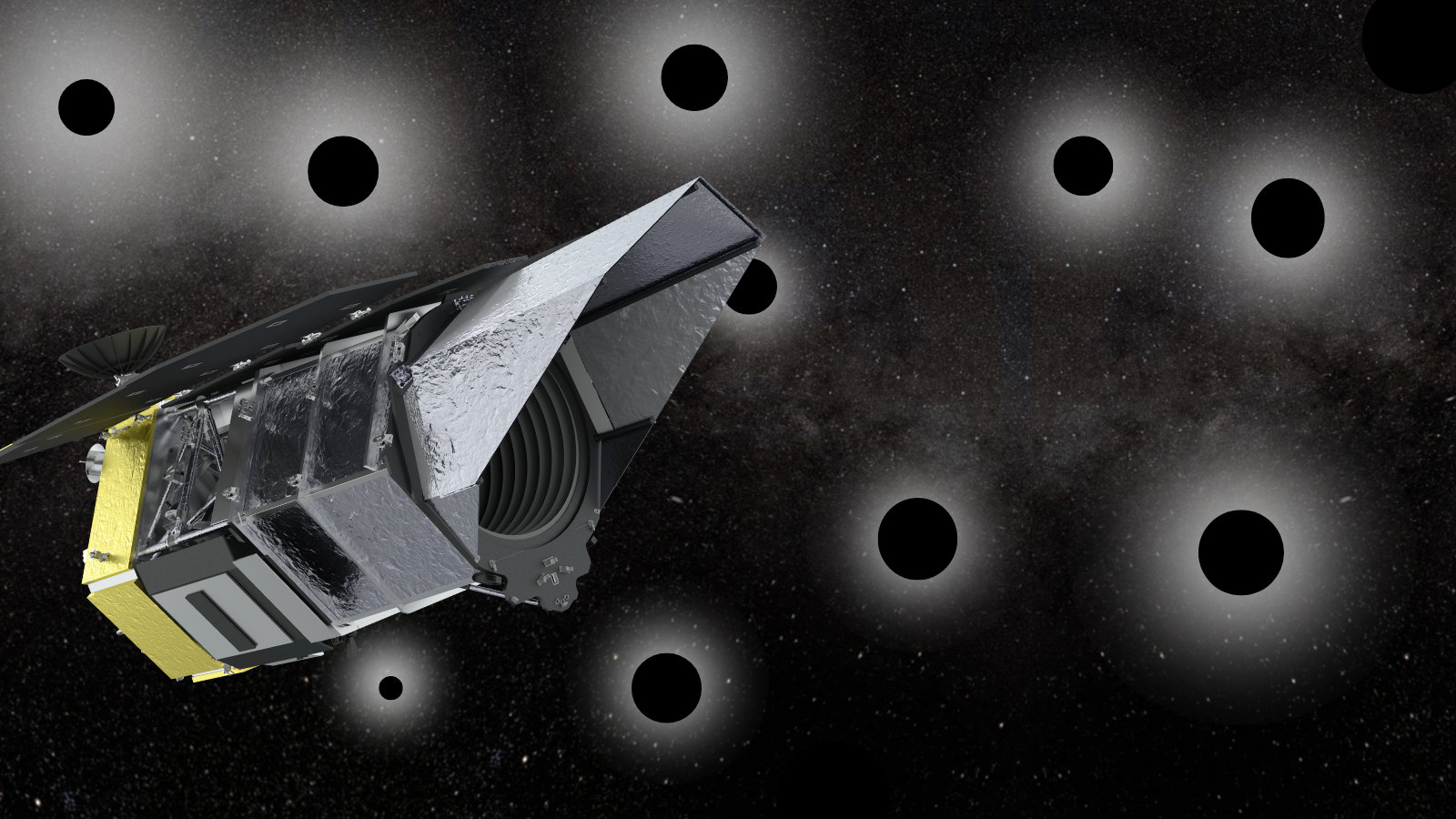
Aptly named “primordial black holes,” these black holes have remained purely theoretical, but Roman, which is set to launch in late 2026, could change that.
Connected:
“Detecting a population of Earth-mass primordial black holes would be a major advance for both astronomy and particle physics because these objects cannot be formed by any known physical process,” William DeRocco, a postdoctoral researcher at the University of California Santa Cruz who led a team studying how Roman could detect these ancient tiny black holes, said in a statement “If we find them, this would shake up the field of theoretical physics.”
In relation to event horizons, mass matters
The smallest black holes ever confirmed to exist are stellar-mass black holes, which are created when massive stars run out of the fuel needed for nuclear fusion in their cores. Once such fusion ceases, these stars collapse under the influence of their own gravity. In general, the minimum mass a star needs to have to end up as a stellar-mass black hole is about eight times that of the Sun — any lighter, and a star will end its life as neutron star or a cooling white dwarf.
However, conditions in the universe at its onset were very different from those of the present epoch. When the cosmos was in a hot, dense and turbulent state, it could have allowed much smaller clumps of matter to collapse and form black holes.
All black holes “begin” at an outer boundary called the “event horizon,” the point beyond which not even light can escape their gravitational influence. The distance an event horizon is from the black hole’s central singularity, the infinitely dense point at which the known laws of physics break down, is determined by the mass of the black hole.
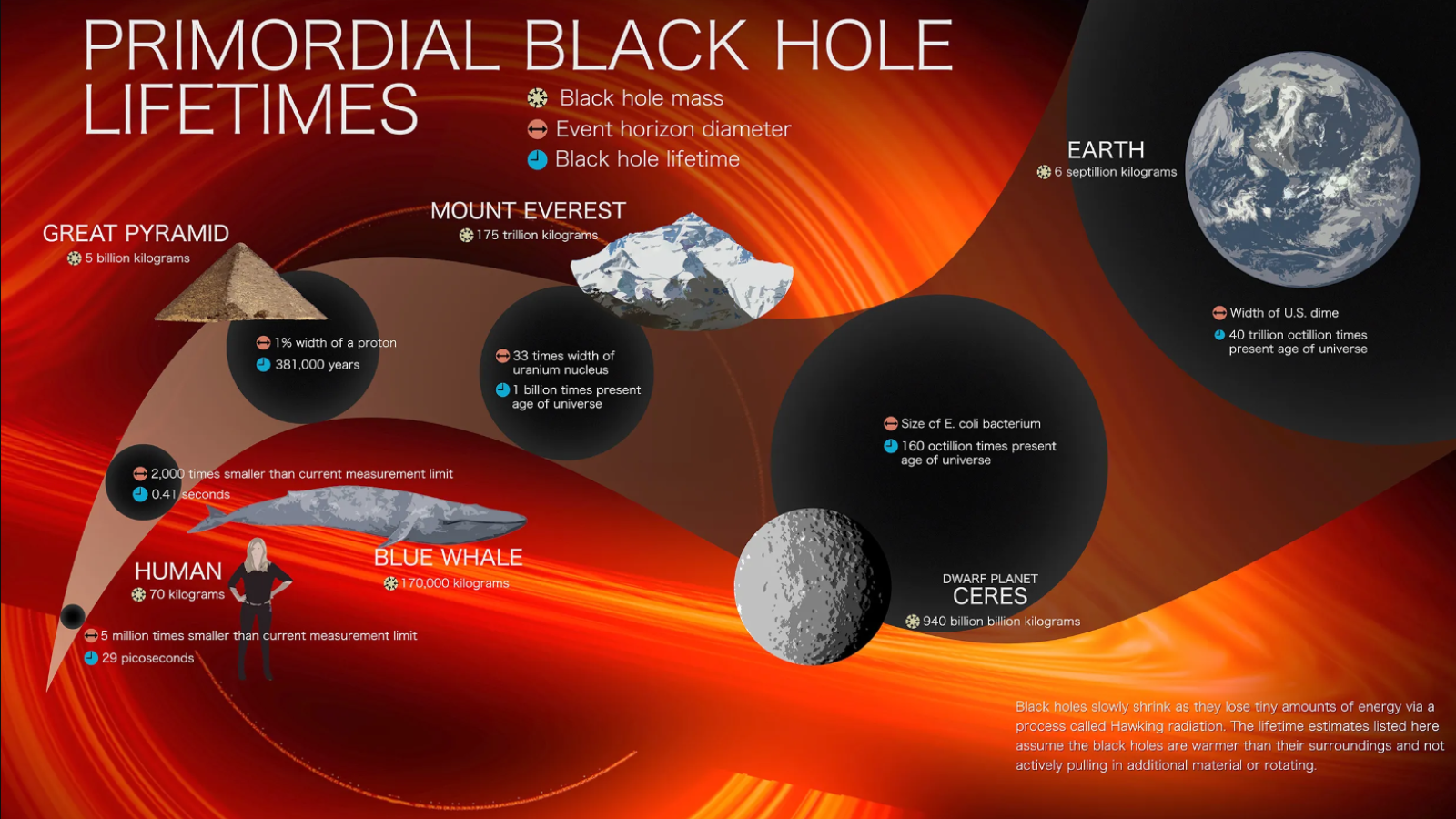
That arrangement, whereas the event horizon of the supermassive black hole M87*which has a mass of about 2.4 billion times that of the Sun, has a diameter of about 15.4 billion miles (24.8 billion kilometers), a stellar-mass black hole with the mass of 30 suns would fill an event horizon about 110 miles wide (177 kilometers wide). An Earth-mass primordial black hole, on the other hand, would fill an event horizon no wider than a dime. A primordial black hole with the mass of an asteroid would fill an event horizon with a width smaller than a proton.
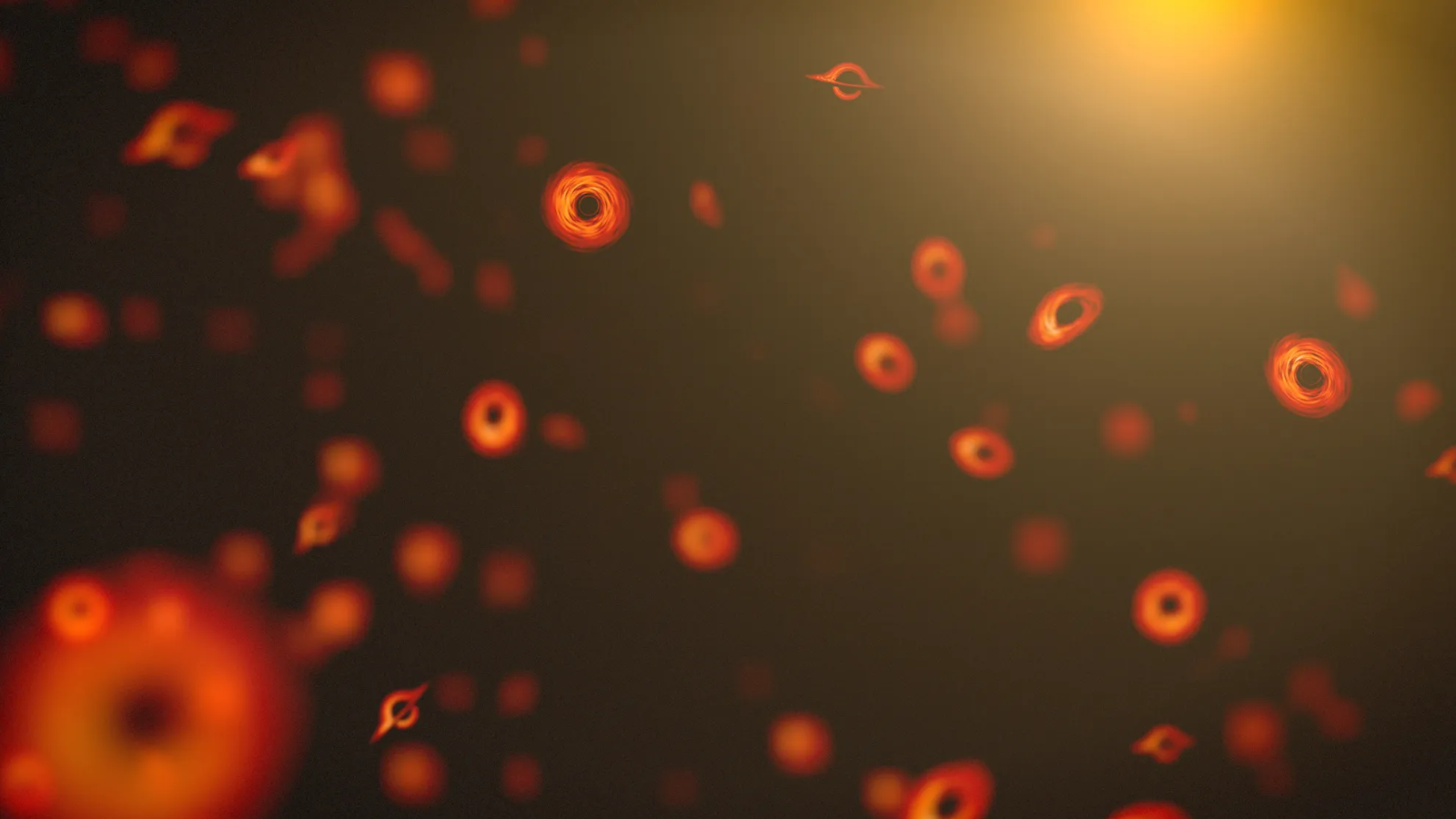
Scientists who reinforce the belief of primordial dark holes mediate they’d had been born because the universe underwent a bout of initial inflation that we called the Worthy Bang. As the cosmos raced out at a flee better than light (here is that which probabilities are you’ll well be ready to imagine because though nothing can switch faster than light inner region, region itself can), scientists suggest areas denser than their atmosphere could well fill collapsed to initiating low-mass dark holes.
However, many researchers do not support the idea that primordial black holes exist in the present-day universe, and this is due to Stephen Hawking.
Set up dark holes die?
One of Stephen Hawking’s most influential theories proposed that not even black holes can last forever. The renowned physicist suggested that black holes “emit” a form of thermal radiation, a concept later named “Hawking radiation” in his honor.
As black holes leak Hawking radiation, they lose mass and eventually explode. The smaller a black hole’s mass, the faster it will leak Hawking radiation. That means, for supermassive black holes, this process would take longer than the lifetime of the universe. Nonetheless, tiny black holes would leak significantly faster and thus must die significantly sooner.
It is thus a question of how primordial black holes could have persisted for 13.8 billion years without going “poof.” If Roman manages to seek these cosmic fossils, it could well constitute a major rethink of many ideas in physics.
“It could have an impact on everything from galaxy formation to the universe’s dark matter content to cosmic history,” Kailash Sahu, an astronomer at the Space Telescope Science Institute in Baltimore who was not involved in the study, said in the statement. “Confirming their identities will be hard work, and astronomers will need a lot of convincing, but it could well be worth it.”
Detecting primordial black holes could well be no mean feat, either. Like every black hole, these voids could be traversed by an event horizon and neither emit nor reflect light. That means the only way to detect them could be to make use of a concept developed by Albert Einstein in his 1915 theory of gravity known as general relativity.
Teaming up with Einstein
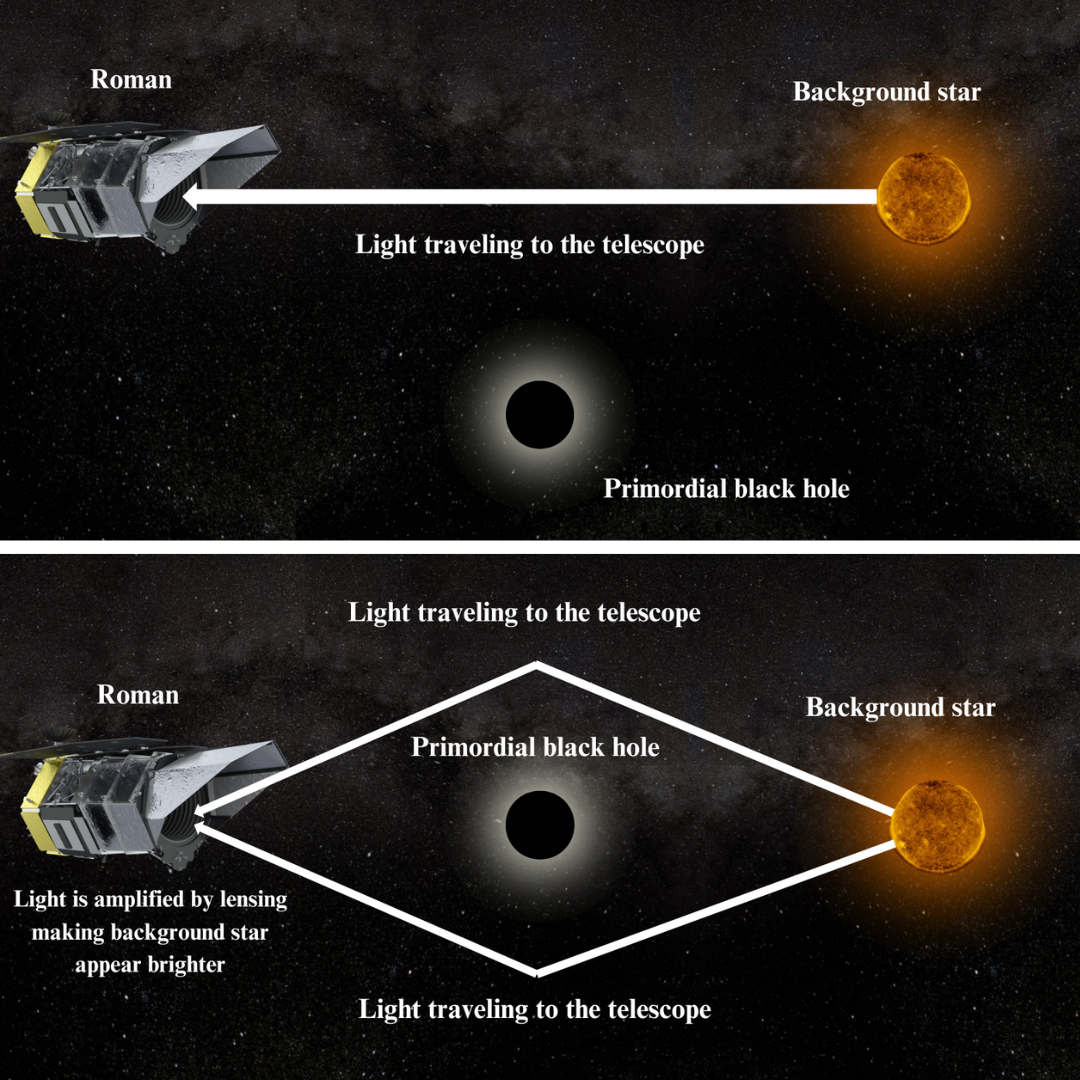
General relativity predicts that all objects with mass cause a curvature in the very fabric of space and time, united as a single four-dimensional entity called “spacetime.” When light from a background source passes the warp, its path is bent. The closer to a lensing object that light passes, the more its path is bent. This means that light from the same object can arrive at a telescope at different times. This is known as gravitational lensing.
When the lensing object is extremely massive, like a galaxy, the background source can appear to shift to an apparent position or even appear at multiple locations in the same image. If the lensing object is smaller in mass, like a primordial black hole, the lensing effect is smaller, but it could still cause a brightening of background sources that could be detected. This is an effect called microlensing.
For the time being, microlensing is used to conduct large-scale surveys to detect rogue planets or worlds that drift through the Milky Way without a parent star. This has revealed a large population of roughly Earth-mass rogues — more than theoretical models predict, in fact. With this sample, scientists predict Roman will amplify detections of Earth-mass rogues tenfold.
The abundance of these objects has led to speculation that these forms of Earth-mass objects could in fact be primordial black holes. “There is no way to tell between Earth-mass black holes and rogue planets on a case-by-case basis,” DeRocco said. “Roman will be extremely useful in differentiating between the two statistically.”
“This is an exciting example of something more scientists could do with data Roman is already going to collect as it searches for planets,” Sahu said. “And the results are interesting whether or not scientists find evidence that Earth-mass black holes exist. It could enhance our understanding of the universe either way.”
The team’s analysis was published in January in the journal Physical Review D.