
AI Trends & News
Surface Laptop Ultra Pre-orders Open: Price, Release Date and AI Features
Microsoft opens Surface Laptop Ultra pre-orders from US$2,599.99. Explore its launch date, NVIDIA RTX Spark features and implications for Nigerian businesses.
TAMFIS NIG LTDRC 8067447CAC ACTIVEFinima, Bonny Island, Rivers State

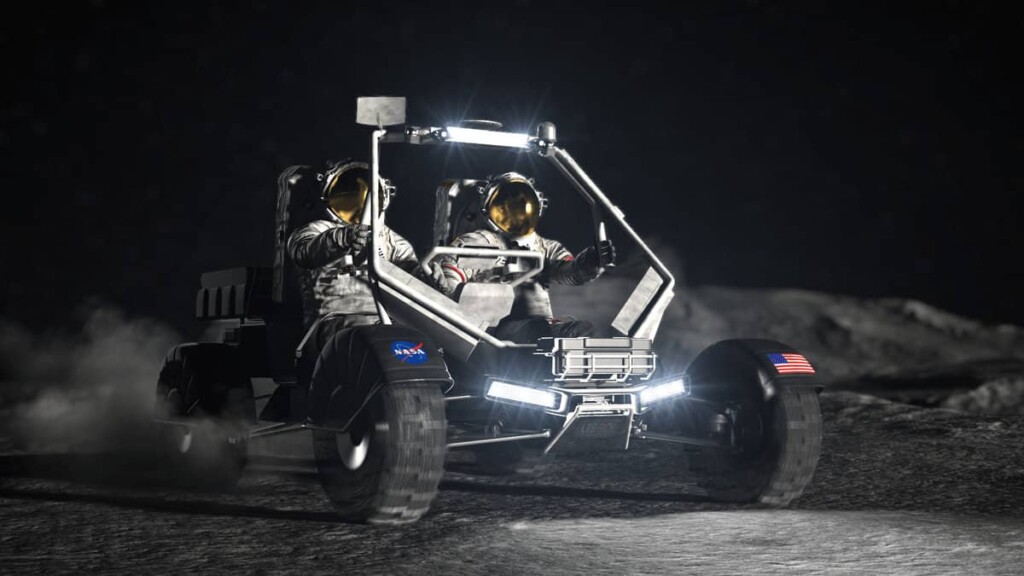
NASA’s Artemis program aims to return humans to the Moon and establish a sustainable presence by the end of the decade, paving the way for future Mars missions. A crucial component of this effort is the development of lunar terrain vehicles (LTVs) that will enable astronauts to traverse the Moon’s challenging landscape efficiently and safely. Recently, NASA announced contracts awarded to three innovative companies—Intuitive Machines, Lunar Outpost, and Venturi Astrolab—to design and develop these next-generation rovers. This article explores the significance of this initiative, the capabilities expected of the LTVs, and how these advancements will support Artemis missions and lunar exploration as a whole.
Lunar mobility is essential for expanding the scope and depth of scientific exploration on the Moon. NASA envisions lunar terrain vehicles that can transport astronauts across vast distances, carry scientific instruments, and enable the collection of valuable lunar samples. These vehicles will dramatically increase the range and efficiency of crewed missions, allowing explorers to reach previously inaccessible regions, especially near the Moon’s South Pole, where permanently shadowed craters hold clues to water ice and the Moon’s geological history.
The Artemis program’s goal is not only to land astronauts on the Moon but to create a sustainable human presence. This requires vehicles that are reliable, versatile, and capable of supporting extended missions. The LTVs will be equipped with advanced energy management, autonomous navigation, and communication systems to operate effectively in the Moon’s harsh environment. These capabilities will help astronauts conduct scientific research more effectively and prepare for future missions to Mars and beyond.
By leveraging commercial partnerships, NASA seeks to stimulate innovation and reduce development risks. Awarding contracts to multiple firms encourages diverse technology approaches and competition, which can accelerate the timeline for developing operational lunar vehicles and ensure the best possible solutions for Artemis missions.
NASA has chosen Intuitive Machines, Lunar Outpost, and Venturi Astrolab to lead the development of lunar terrain vehicles. Each company brings unique expertise and innovative designs tailored to meet NASA’s rigorous technical and safety requirements. Intuitive Machines is known for its experience in lunar payload delivery and autonomous systems, positioning it well for developing a robust and reliable LTV.
Lunar Outpost focuses on sustainable lunar exploration technologies, with designs emphasizing modularity and adaptability to various mission profiles. Their approach includes integrating scientific payloads and advanced mobility features to maximize the vehicle’s utility during surface operations. Venturi Astrolab combines aerospace engineering and advanced robotics, aiming to create an LTV that excels in energy efficiency and autonomous navigation capabilities.
These companies will first undertake a feasibility study phase to validate their designs against NASA’s requirements. This phase will last approximately one year and culminate in a preliminary design maturity milestone. Following this, NASA will select one company for a demonstration mission to deliver the LTV to the lunar surface and validate its performance ahead of Artemis V.
NASA’s LTVs must meet stringent technical requirements to operate effectively on the Moon’s surface. These include the ability to withstand extreme temperature fluctuations, rugged terrain navigation, and reliable communication with orbiting spacecraft and Earth. Energy management is a critical factor, with vehicles expected to incorporate advanced power systems such as rechargeable batteries or fuel cells to support extended operations.
Autonomous driving capabilities are another key innovation. The LTVs will be equipped with sophisticated sensors and software to enable semi-autonomous or fully autonomous navigation, reducing the cognitive load on astronauts and enhancing mission safety. This autonomy also allows the vehicles to conduct scientific operations remotely between crewed missions, maximizing their utility.
Communication and navigation systems will be designed to maintain continuous contact with astronauts and mission control. The vehicles will use advanced radio frequency technologies and possibly laser communication to transmit data, ensuring real-time updates on location, health status, and scientific findings. These features collectively enhance the operational effectiveness and safety of Artemis lunar missions.
The LTVs will be integral to crewed Artemis missions starting with Artemis V, facilitating extended surface exploration beyond the lunar lander’s immediate vicinity. Astronauts will use the vehicles to reach scientifically significant sites, transport tools and samples, and conduct experiments across diverse lunar environments. This mobility expands the scope of exploration and enables more comprehensive scientific investigations.
Beyond crewed missions, the LTVs will operate remotely during periods when astronauts are not on the Moon. This continuous operation supports year-round scientific activities, such as monitoring environmental conditions, researching lunar geology, and scouting potential sites for future missions. The vehicles’ ability to function autonomously ensures that valuable data collection and exploration persist uninterrupted.
The flexibility of the LTVs also opens opportunities for commercial lunar activities. Companies may deploy these vehicles for private scientific research, resource prospecting, or infrastructure development unrelated to NASA’s direct missions, fostering a broader lunar economy and accelerating the development of sustainable human presence on the Moon.
NASA has structured the Lunar Terrain Vehicle Services contract as an indefinite-delivery/indefinite-quantity (IDIQ) agreement with milestone-based, firm-fixed-price task orders. This flexible contract model incentivizes performance and innovation while managing financial risk. The total maximum value for all awards under this contract is projected to be up to $4.6 billion, reflecting the program’s scale and ambition.
Each company will initially receive funding for a feasibility study lasting about one year to develop preliminary designs and demonstrate compliance with NASA’s requirements. Subsequent task orders will support detailed design, testing, and ultimately the delivery of the LTV to the Moon for Artemis V. NASA anticipates selecting one provider for the demonstration mission, ensuring focused development and integration.
Further task orders will be issued through 2039 to continue developing unpressurized rover capabilities that support Artemis’ long-term lunar exploration and scientific goals. This extended timeline underlines NASA’s commitment to sustained lunar presence and incremental advancement of surface mobility technologies.
The introduction of advanced LTVs in Artemis missions will significantly increase the scientific returns from lunar exploration. By enabling astronauts to travel farther and carry more equipment, these vehicles facilitate access to diverse geological sites, including permanently shadowed regions rich in volatile compounds like water ice. Such samples are essential for understanding the Moon’s history and potential resources for future missions.
Enhanced mobility also supports a broader range of experiments and in-situ analyses, allowing scientists to conduct more complex investigations directly on the lunar surface. The vehicles serve as mobile science platforms, equipped with instruments to analyze soil composition, radiation levels, and other environmental factors critical for human survival and habitat development.
The data collected through these missions will not only deepen our knowledge of the Moon but also inform the design of habitats, life support systems, and exploration strategies for Mars. The LTVs thus act as critical enablers in NASA’s overarching goal of expanding human presence beyond Earth.
Designing vehicles for the lunar environment presents unique challenges, including extreme temperature swings, abrasive dust, and rugged terrain. Engineers must ensure that LTVs are durable, reliable, and capable of autonomous operation under these conditions. Power management is particularly challenging due to the Moon’s 14-day night cycle, necessitating innovative energy storage and generation solutions.
Safety is paramount, as the vehicles must protect astronauts during extravehicular activities and operate seamlessly with other mission components. NASA’s rigorous testing and validation processes will ensure that the chosen designs meet these standards before deployment. Additionally, the integration of autonomous systems requires robust software and sensor suites to prevent malfunctions and ensure mission success.
Looking ahead, the technology and experience gained from developing these LTVs will inform future planetary rovers and surface mobility systems. As NASA and its partners plan for Mars exploration, lessons learned from lunar vehicles will be invaluable in addressing the complexities of operating in even more challenging environments.
NASA’s decision to involve commercial companies in developing lunar terrain vehicles reflects a broader shift toward public-private partnerships in space exploration. This approach leverages private sector innovation, reduces costs, and accelerates development timelines. It also fosters a competitive ecosystem that drives technological breakthroughs and expands market opportunities for space technologies.
Collaboration with industry partners enables NASA to focus resources on mission planning and scientific objectives while benefiting from cutting-edge engineering and design expertise. These partnerships also help cultivate a sustainable lunar economy by encouraging commercial ventures related to lunar transportation, resource utilization, and infrastructure development.
The Artemis program’s success in integrating commercial capabilities will serve as a model for future exploration initiatives. By demonstrating effective collaboration, NASA strengthens the foundation for international partnerships and commercial activities that will shape humanity’s presence in the solar system for decades to come.
NASA’s selection of Intuitive Machines, Lunar Outpost, and Venturi Astrolab to develop lunar terrain vehicles marks a pivotal advancement in Artemis mission capabilities. These vehicles will not only expand the reach and efficiency of astronaut exploration on the Moon but also provide continuous scientific operations during crewed and uncrewed periods. Through innovative designs and commercial partnerships, NASA is building the foundation for sustainable lunar exploration and preparing for humanity’s future ventures to Mars. The Lunar Terrain Vehicle program exemplifies the synergy of technology, science, and collaboration driving the next era of space exploration.
Originally reported by miragenews.com. Adapted for our readers.
Keep reading
AI Trends & News
Microsoft opens Surface Laptop Ultra pre-orders from US$2,599.99. Explore its launch date, NVIDIA RTX Spark features and implications for Nigerian businesses.
Science & Technology
DJI’s IBC recognition puts pocket gimbal and panoramic capture in the spotlight. Here is how creators can assess framing, editing effort and recording workflows.
Business News
App store steering is about more than permission to add a link. Explore fees, renewal terms, customer experience and the UK consultation.
TAMFIS NIG LTD
Electrical and instrumentation engineering, bid preparation and consulting, IT and software.

