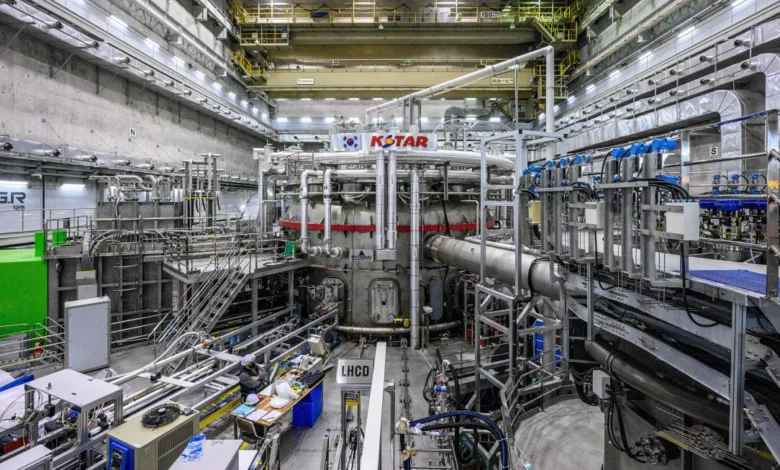
‘Man made solar’ objects file for time at 100 million levels in most up-to-date near for nuclear fusion
Nuclear fusion, often hailed as the holy grail of clean energy, mimics the process powering the sun and stars, promising an almost inexhaustible source of carbon-free power. Despite decades of research, achieving and sustaining the extreme conditions necessary for fusion on Earth has remained a formidable challenge. Recently, scientists in South Korea have made a groundbreaking advancement by maintaining plasma at temperatures exceeding 100 million degrees Celsius for an unprecedented length of time. This achievement, accomplished within the KSTAR tokamak—dubbed the “man-made sun”—marks a pivotal milestone in fusion research and offers renewed hope for the future of sustainable energy.
Understanding Nuclear Fusion and Its Potential
Nuclear fusion is the process by which two light atomic nuclei merge to form a heavier nucleus, releasing vast amounts of energy. This reaction powers the sun and other stars, where immense gravitational pressure and temperature allow fusion to occur naturally. Replicating this process on Earth promises a near-limitless energy source with minimal environmental impact, as fusion produces no greenhouse gases and generates negligible long-lived radioactive waste.
Unlike nuclear fission, which splits heavy atoms and is used in current nuclear reactors, fusion relies on combining isotopes of hydrogen—deuterium and tritium—at extremely high temperatures to overcome the repulsive forces between nuclei. The energy released from fusion reactions is millions of times greater per mass unit than chemical fuels, making it an attractive solution for meeting future global energy demands sustainably.
Despite its promise, mastering controlled fusion on Earth is extraordinarily complex. The main challenges include achieving and maintaining the extreme temperatures and pressures necessary for fusion, containing the hot plasma without it damaging the reactor, and producing more energy than is consumed by the process. Overcoming these hurdles has driven decades of research and international collaboration.
The KSTAR Tokamak: South Korea’s ‘Artificial Sun’
The Korea Superconducting Tokamak Advanced Research (KSTAR) device is a state-of-the-art fusion reactor located at the Korean Institute of Fusion Energy (KFE). Designed as a doughnut-shaped tokamak, it uses powerful magnetic fields to confine and control plasma heated to extreme temperatures. KSTAR’s mission is to create and sustain fusion conditions long enough to demonstrate the feasibility of fusion power generation.
KSTAR operates as an ‘artificial sun,’ heating hydrogen isotopes to temperatures over 100 million degrees Celsius—far hotter than the core of the actual sun, which is about 15 million degrees Celsius. This is necessary because, on Earth, the plasma density and confinement time must compensate for the lack of stellar gravity to enable fusion reactions.
Since its first plasma in 2008, KSTAR has continuously pushed the boundaries of plasma sustainment and stability. Its superconducting magnets allow longer plasma pulses compared to conventional tokamaks, facilitating research into maintaining the extreme conditions required for fusion energy production.
Breaking the 100 Million Degree Barrier for 48 Seconds
Between December 2023 and February 2024, KSTAR scientists achieved a landmark breakthrough by sustaining plasma at 100 million degrees Celsius for 48 seconds. This duration more than surpasses the previous record of 30 seconds set in 2021, marking a significant improvement in plasma stability and confinement.
Maintaining such high temperatures for extended periods is crucial because it allows fusion reactions to occur continuously, increasing the total energy output. The difficulty lies in controlling the plasma’s inherently unstable nature, which tends to dissipate heat and particles rapidly, potentially damaging the reactor walls.
The KSTAR team accomplished this feat by optimizing the magnetic confinement and employing tungsten in the diverter components, which extract heat and impurities from the plasma. Tungsten’s high melting point and durability helped protect the reactor interior, enabling longer plasma pulses without compromising structural integrity.
Technological Innovations Behind KSTAR’s Success
One key innovation enabling this record was the replacement of carbon with tungsten in the diverter—an area that handles intense heat flux and particle exhaust from the plasma. Tungsten’s superior thermal and mechanical properties prevent damage and impurity contamination, critical for sustaining high-temperature plasma.
Additionally, the KSTAR team refined magnetic field configurations to enhance plasma stability. By carefully adjusting the magnetic coils and feedback control systems, they minimized instabilities that usually cause plasma disruptions, allowing longer confinement times.
Advanced diagnostics and real-time monitoring also played a vital role. Sophisticated sensors measured plasma temperature, density, and turbulence, enabling researchers to fine-tune operating conditions dynamically. This integrated approach of materials science, magnetics, and diagnostics was essential for achieving the record-breaking plasma duration.
Implications for Future Fusion Reactors and ITER
KSTAR’s achievement is a critical stepping stone toward the development of commercial fusion reactors capable of producing more energy than they consume. Sustaining 100 million degree plasma for longer durations brings scientists closer to reaching the Lawson criterion—a set of conditions necessary for net energy gain from fusion.
The insights gained at KSTAR will directly inform the operation of the International Thermonuclear Experimental Reactor (ITER) in France, the world’s largest tokamak currently under construction. ITER aims to demonstrate the feasibility of fusion power at an industrial scale and is expected to operate plasma pulses lasting hundreds of seconds at similar temperatures.
By validating plasma control techniques and materials under extreme conditions, KSTAR’s research helps reduce technological risks for ITER and accelerates the timeline toward fusion commercialization. Collaboration between KSTAR and international fusion projects enhances the global effort to realize fusion as a viable clean energy source.
Global Fusion Breakthroughs and Context
KSTAR’s record follows a series of recent milestones in nuclear fusion worldwide. In 2022, the National Ignition Facility (NIF) in the United States achieved ignition by producing more energy from fusion reactions than was input by the lasers, marking a historic moment in fusion research.
Earlier this year, scientists at the UK’s Joint European Torus (JET) near Oxford reported generating 69 megajoules of fusion energy over five seconds, enough to power approximately 12,000 homes during that period. These breakthroughs collectively demonstrate rapid progress in overcoming fusion’s scientific and engineering challenges.
Despite these successes, experts caution that commercial fusion power plants remain years or decades away. Complexities related to sustained plasma control, reactor materials, and energy extraction still need to be resolved before fusion can contribute significantly to the global energy mix.
Challenges Remaining on the Path to Fusion Energy
While sustaining high-temperature plasma is a major milestone, numerous challenges remain before fusion becomes a practical energy source. One critical hurdle is achieving net positive energy output—where the energy produced by fusion exceeds the energy required to initiate and maintain the reaction.
Engineering issues such as neutron damage to reactor walls, tritium breeding for fuel sustainability, and efficient heat extraction systems must be addressed to create reliable, long-lasting reactors. Additionally, scaling up from experimental tokamaks to full-scale power plants involves complex integration of multiple technologies.
Moreover, fusion reactors must operate safely and economically to compete with other energy sources. Developing materials that withstand intense neutron bombardment and designing cost-effective reactor components are active areas of research essential for commercialization.
The Future Outlook: Fusion’s Role in a Sustainable Energy Mix
Experts agree that nuclear fusion will not provide an immediate solution to the climate crisis but holds immense potential for the latter half of the 21st century. If current research trajectories continue, fusion could become a cornerstone of a clean, sustainable energy portfolio alongside renewables and advanced nuclear fission.
Fusion energy’s attributes—including abundant fuel supply, minimal environmental impact, and high energy density—make it an attractive complement to intermittent renewable sources like solar and wind. It could provide reliable baseload power, supporting grid stability and reducing dependence on fossil fuels.
Ongoing international collaboration, increased funding, and technological innovation will be critical to maintaining momentum. The recent achievements at KSTAR and other fusion facilities worldwide underscore the growing feasibility of harnessing the power of the stars here on Earth.
Conclusion
The landmark achievement by South Korea’s KSTAR tokamak in sustaining 100 million degree Celsius plasma for 48 seconds represents a monumental leap towards practical nuclear fusion energy. This breakthrough not only advances the scientific understanding of plasma confinement but also accelerates the global roadmap to fusion commercialization. While considerable challenges remain, the progress exemplified by KSTAR and other fusion projects worldwide fuels optimism that fusion energy will one day provide a clean, abundant, and sustainable power source for humanity. Continued innovation, international cooperation, and investment will be pivotal in transforming this ‘man-made sun’ from experimental marvel to a cornerstone of the future energy landscape.
Recent advances in machine perfusion technology are not only preserving donated livers but also making them biologically younger at a molecular level. This breakthrough…
What happens when human imagination, artificial intelligence, art and technology come together? From September 1 to 6, Samsung Electronics presented a special exhibition themed…