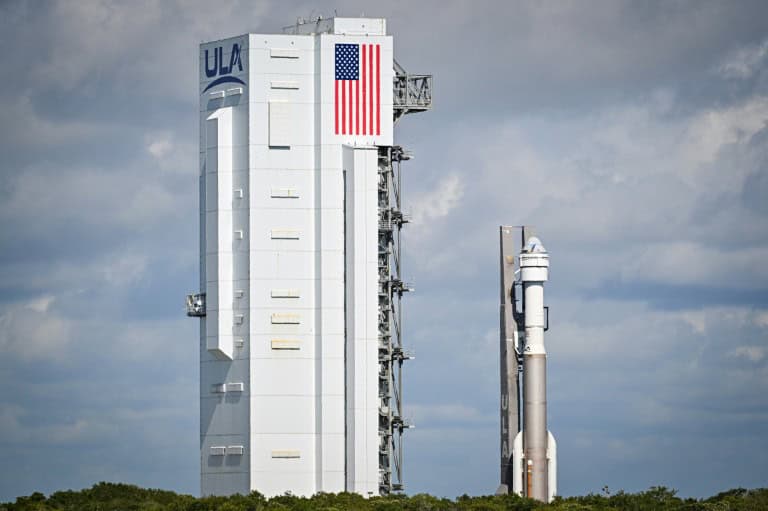
Boeing’s Starliner space for first crewed mission to ISS
Boeing’s Starliner spacecraft is poised to make history with its inaugural crewed mission to the International Space Station (ISS). This mission represents a pivotal moment for both Boeing and NASA as they strive to restore American crewed spaceflight capabilities following years of delays and technical challenges. The Starliner capsule, launched atop a United Launch Alliance Atlas V rocket, will carry seasoned astronauts Butch Wilmore and Sunita "Suni" Williams to the ISS, aiming to demonstrate the spacecraft’s readiness for routine astronaut transport. This article delves into the background, mission details, technical features, and future implications of Boeing’s Starliner program.
Background and Development of Boeing’s Starliner
The Boeing Starliner spacecraft was developed under NASA’s Commercial Crew Program, initiated to restore the United States' capability to send astronauts to the ISS from American soil. After the retirement of the Space Shuttle in 2011, NASA relied on Russian Soyuz vehicles for crew transportation. Boeing, alongside SpaceX, was awarded contracts in 2014 to develop new crew vehicles, with Boeing receiving $4.2 billion to build Starliner.
The Starliner design incorporates advanced safety features and reusability to support multiple missions. However, the development process faced multiple technical setbacks, including software glitches and valve issues, which delayed the program’s timeline. Despite these challenges, Boeing remained committed to delivering a reliable spacecraft to meet NASA’s stringent requirements for human spaceflight.
The Starliner is intended to operate alongside SpaceX’s Dragon capsule, providing NASA with redundancy and flexibility in crew transport to the ISS. This dual-provider approach is crucial for maintaining continuous U.S. presence in low Earth orbit and reducing dependency on foreign spacecraft.
Mission Overview: First Crewed Flight to the ISS
Scheduled for launch from Cape Canaveral, Florida, Boeing’s Starliner will be propelled into orbit by the United Launch Alliance Atlas V rocket. The mission will carry two veteran astronauts, Butch Wilmore and Suni Williams, both of whom have extensive experience aboard the ISS and other spacecraft, including the Space Shuttle and Russian Soyuz vehicles.
The launch window is carefully selected to optimize orbital rendezvous with the ISS, with a targeted launch time of 10:34 PM local time. The spacecraft is expected to dock with the ISS approximately 24 hours after launch, where it will remain for just over a week to conduct a series of operational tests and evaluations.
Key mission objectives include verifying Starliner’s automated docking capabilities, life support systems, and crew safety protocols. A unique aspect of the mission is the planned manual piloting test, where astronauts will take control of the spacecraft to demonstrate its handling and responsiveness in orbit.
Technical Features and Innovations of Starliner
The Starliner spacecraft is designed with a focus on safety, reliability, and reusability. It features a pressurized crew module capable of carrying up to seven astronauts, although this initial mission will carry only two. The capsule incorporates a Boeing-developed emergency abort system to ensure crew safety in the event of a launch anomaly.
Its avionics and software systems have been extensively upgraded following previous test flight issues. These improvements aim to enhance navigation accuracy, reduce the risk of in-flight errors, and improve overall mission success rates. The spacecraft also utilizes modern docking technology compatible with the ISS’s international docking adapters.
Starliner’s heat shield and parachute systems are engineered to ensure a safe and controlled re-entry through Earth’s atmosphere. The capsule is designed to land on solid ground, enabling rapid crew recovery and capsule refurbishment for future flights, a contrast to the ocean splashdowns used by other crew vehicles.
Challenges and Setbacks in the Starliner Program
Boeing’s Starliner program has faced significant hurdles since its inception. In 2019, an uncrewed test flight failed to reach the ISS due to software errors, forcing an early return to Earth. This setback led to a comprehensive review and overhaul of the spacecraft’s software and systems.
Further complications arose in 2021 when a launch attempt was postponed due to valve issues detected on the launch pad. These operational challenges contributed to multiple delays, impacting Boeing’s schedule and reputation amid growing competition from SpaceX.
Despite these obstacles, Boeing and NASA have worked collaboratively to address the technical problems and ensure the spacecraft meets the highest standards for crewed missions. The upcoming flight is a critical demonstration of the program’s resilience and technological maturity.
Astronauts and Crew Preparation
The crew for Starliner’s first crewed mission comprises astronauts Butch Wilmore and Suni Williams, both highly experienced and respected within NASA’s astronaut corps. Wilmore has previously flown multiple missions to the ISS, while Williams is known for her extensive spacewalk experience and prior ISS expeditions.
Their training has included simulations of manual spacecraft control, emergency procedures, and ISS docking protocols. This preparation is essential to validate Starliner’s operational capabilities and to prepare the crew for any contingencies during the mission.
Both astronauts have expressed enthusiasm about flying aboard a new spacecraft and the opportunity to contribute to the future of American human spaceflight. Their combined expertise provides confidence in the success of this pioneering mission.
Significance for NASA and U.S. Spaceflight
The success of Boeing’s Starliner mission is vital for NASA’s strategy to maintain continuous human presence in low Earth orbit. Having two independent crew transport providers—Boeing and SpaceX—ensures redundancy and reduces reliance on foreign launch systems, enhancing national space security.
Starliner’s operational readiness will allow NASA to alternate crew flights between Boeing and SpaceX, increasing mission flexibility and resilience. This competition fosters innovation and cost-effectiveness in the commercial spaceflight sector.
Beyond the ISS, Starliner’s capabilities may serve future space stations and deep space missions. The spacecraft’s design flexibility positions it as a potential vehicle for emerging commercial and international space endeavors, extending its impact beyond NASA’s immediate goals.
Future Prospects and Long-Term Impact
Looking ahead, Boeing aims to refine and expand Starliner’s mission profile to include routine ISS crew rotations and cargo deliveries. The spacecraft’s reusability is expected to reduce operational costs and increase flight cadence over time.
As the ISS approaches its planned retirement around 2030, Starliner could play a crucial role in supporting new orbital platforms and commercial space habitats envisioned by NASA and private industry. Its modular design may accommodate upgrades for longer duration missions or enhanced scientific payloads.
The lessons learned from Starliner’s development and missions will inform the design of future crewed spacecraft, contributing to the broader goal of sustainable human space exploration. Boeing’s continued investment in space technology underscores the growing importance of commercial partnerships in advancing spaceflight.
Conclusion
Boeing’s Starliner represents a significant advancement in American human spaceflight, promising to restore and enhance crew transportation capabilities to the International Space Station. After years of development challenges, the spacecraft’s first crewed mission embodies resilience, innovation, and collaboration between Boeing and NASA. As veteran astronauts prepare to embark on this historic flight, the mission’s success will not only reaffirm Boeing’s role in space exploration but also fortify NASA’s strategy for sustainable, domestic crew access to low Earth orbit. With Starliner and SpaceX’s Dragon operating in tandem, NASA is well-positioned to maintain continuous human presence in space and pave the way for future exploration beyond Earth’s orbit.
Recent advances in machine perfusion technology are not only preserving donated livers but also making them biologically younger at a molecular level. This breakthrough…
What happens when human imagination, artificial intelligence, art and technology come together? From September 1 to 6, Samsung Electronics presented a special exhibition themed…