A Numerous Standpoint – Remembering James Dean, Founder of the NASA Paintings Program
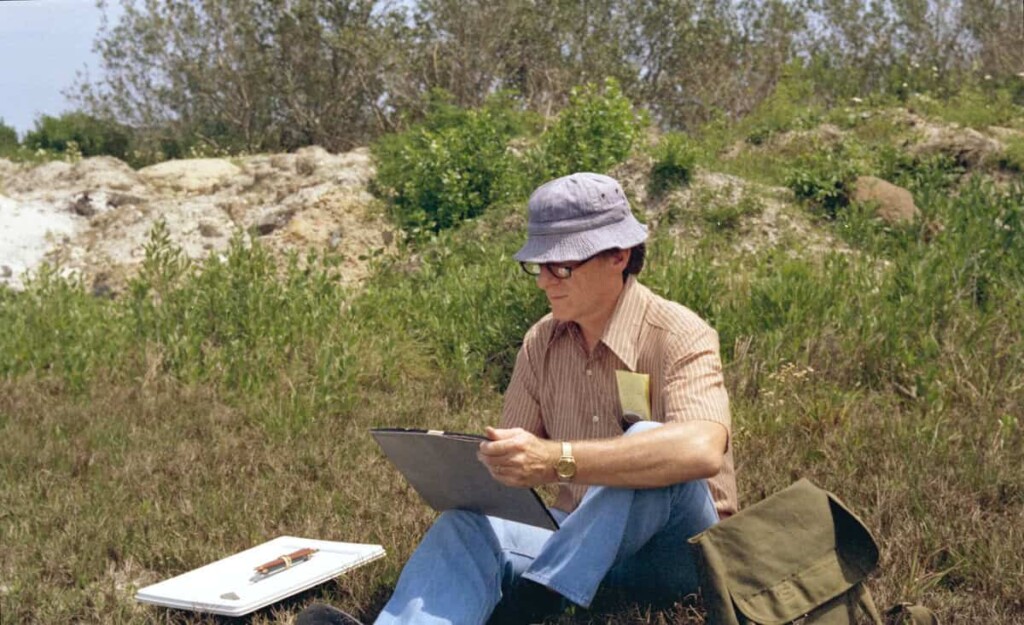
In the early 1960s, NASA was not only breaking new ground in space exploration but also embracing innovative ways to document its achievements. Among these was the visionary NASA Paintings Program, founded by James Dean, an artist and NASA insider. Dean’s initiative offered artists unparalleled access to NASA missions, enabling them to capture the dramatic moments of space history through their unique creative lenses. This article delves into Dean’s pioneering role, the program’s development, and its lasting influence on both art and space exploration.
The Genesis of the NASA Paintings Program
In March 1962, NASA Administrator James Webb recognized the importance of preserving the agency’s historic milestones through fine arts. He directed NASA’s Public Affairs Director, Hiden T. Cox, to explore the possibility of involving artists in documenting NASA’s achievements. Webb’s memorandum emphasized commemorating the United States’ early steps into space with artistic representations, highlighting the potential impact of such a program.
Following Webb’s directive, NASA entrusted James Dean, a talented artist within the agency, with the task of establishing a formal art program. Dean collaborated closely with H. Lester Cooke, the National Gallery of Art’s Curator of Painting, to create a structured framework. Their goal was to allow artists to witness and interpret NASA missions firsthand, from suit-up and launches to landings and scientific briefings.
This strategic approach set NASA apart, as it integrated the creative process directly into the space exploration narrative. By providing artists with unique access, the program ensured that the visual documentation of NASA’s endeavors would be both authentic and artistically rich, capturing the emotional and human aspects of spaceflight.
James Dean: The Artist Behind the Vision
James Dean’s dual identity as both a NASA employee and an accomplished artist uniquely positioned him to lead the NASA Paintings Program. His deep understanding of the agency’s culture and operations allowed him to navigate the complexities of integrating art into a highly technical environment. Dean recognized the power of art to tell stories that technical photographs and reports could not fully convey.
In a 2008 oral history interview, Dean reflected on the effectiveness of traditional art tools in gaining access to NASA’s inner workings. He noted that while cameras sometimes met resistance, sketchpads and paints were welcomed, opening doors to areas otherwise off-limits. This insight underscored Dean’s skill in bridging the worlds of science and art.
Dean’s leadership was characterized by his passion for exploration and his belief in the artist’s role as a modern-day explorer. He saw the artists not merely as observers but as essential participants in documenting history, a perspective that shaped the program’s ethos and success.
The First Cohort: Capturing the Mercury Missions
In May 1963, the NASA Paintings Program selected its inaugural group of eight artists to document the final flight of the Mercury program, Faith 7. The chosen artists included Peter Hurd, George Weymouth, Paul Calle, Robert McCall, Robert Shore, Lamar Dodd, John McCoy, and Mitchell Jamieson, each bringing their unique artistic style to the project.
These artists were granted extraordinary access to Cape Canaveral, where they observed and recorded prelaunch activities, the launch itself, and post-mission events. While most focused on the launch site, Mitchell Jamieson was assigned to a recovery ship to capture the splashdown and landing, demonstrating the program’s commitment to comprehensive coverage.
The resulting artworks from this initial group provided a diverse and vivid portrayal of America’s nascent space endeavors. Their interpretations highlighted the drama, tension, and triumph of early spaceflight, enriching NASA’s historical record beyond technical documentation.
Artists’ Motivation Beyond Financial Incentives
Despite the modest financial compensation—ranging from $800 in the 1960s to around $3,000 by the early 2000s—many renowned artists eagerly participated in the NASA Paintings Program. Figures such as Norman Rockwell, Robert Rauschenberg, Andy Warhol, Annie Leibovitz, and Chakaia Booker contributed to the program over the decades, drawn by the unique opportunity to witness history in the making.
James Dean emphasized that these artists were motivated not by money but by the chance to experience and interpret groundbreaking events. The invitation to be part of NASA’s explorations was, in itself, a profound honor that fueled their creative passion.
This intrinsic motivation fostered a vibrant artistic community within the program, where diverse perspectives flourished. The artists’ commitment ensured that NASA’s monumental achievements were immortalized through compelling works that continue to inspire.
The Importance of Diverse Artistic Perspectives
Dean understood that even when artists were documenting the same event, their individual perspectives and experiences would yield distinct interpretations. He noted that six artists painting the same scene would produce six different artworks, each filtered through personal imagination and style.
This diversity was a core strength of the NASA Paintings Program. It allowed the agency to capture multifaceted views of space exploration, from technical precision to emotional resonance. The varied artworks enriched NASA’s narrative, offering audiences multiple ways to connect with the stories of spaceflight.
By encouraging artistic plurality, Dean ensured that the program remained dynamic and inclusive. This approach also reflected the broader spirit of exploration, where multiple viewpoints contribute to a fuller understanding of human endeavors.
Building Bridges Between Scientists and Artists
Initially, some NASA engineers and scientists were skeptical about the presence of artists within their tightly controlled environment. However, Dean observed that once artists were allowed to engage and learn about the scientific work, mutual respect developed quickly.
He pointed out that both scientists and artists rely heavily on imagination to innovate and interpret the world. This common ground fostered a symbiotic relationship, where artists validated the scientists’ efforts through their creative depictions, and scientists, in turn, inspired the artists.
This collaborative dynamic enhanced the program’s success, as it broke down barriers between disciplines and created a shared sense of purpose. The interplay between art and science became a powerful tool for communicating NASA’s mission to the public.
James Dean’s Legacy and Later Career
James Dean directed the NASA Paintings Program from its inception in 1962 until 1974. Under his guidance, the program evolved into a respected institution that significantly contributed to NASA’s cultural heritage. Dean’s vision ensured that art became an integral part of space exploration documentation.
After leaving NASA, Dean continued his influential career as the chief art curator at the Smithsonian’s National Air and Space Museum from 1974 until his retirement in 1980. His expertise helped shape the museum’s artistic collections, further cementing his impact on preserving aviation and space history.
Dean passed away on March 22, 2024, at the age of 92. However, his pioneering work endures, inspiring ongoing collaborations between artists and space agencies, and reminding us of the profound value of diverse perspectives in capturing humanity’s greatest adventures.
Conclusion
James Dean’s visionary leadership in founding the NASA Paintings Program transformed how space exploration is documented and appreciated. By bridging the worlds of science and art, he created a platform that not only preserved the technical achievements of NASA but also captured their emotional and human dimensions. The program’s enduring legacy lies in its celebration of diverse artistic voices and its demonstration of how imagination fuels both scientific discovery and creative expression. Dean’s contributions continue to resonate, reminding us that the story of space exploration is as much about human creativity as it is about technology.
Originally reported by nasa.gov. Adapted for our readers.
Recent advances in machine perfusion technology are not only preserving donated livers but also making them biologically younger at a molecular level. This breakthrough…
What happens when human imagination, artificial intelligence, art and technology come together? From September 1 to 6, Samsung Electronics presented a special exhibition themed…