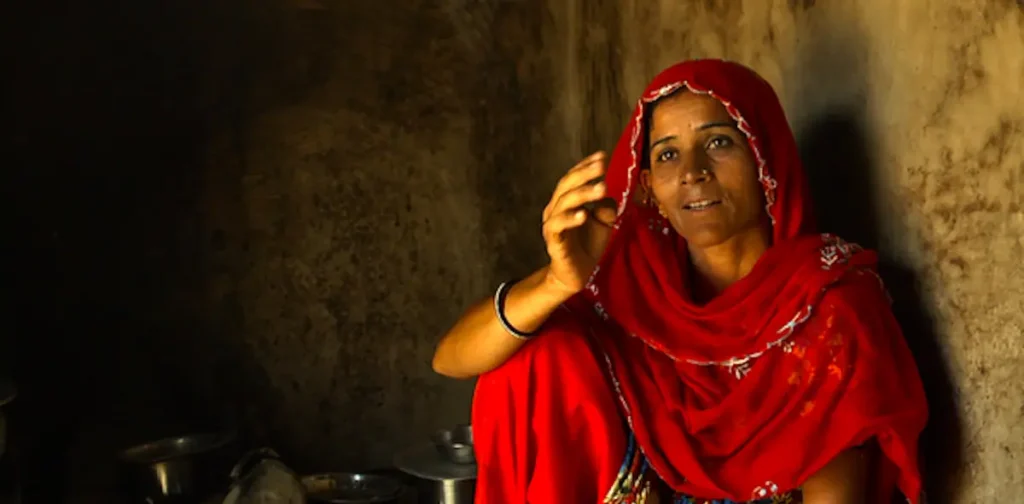
Drawing on the poetic and musical traditions of poet-mystics Saint Kabir of Benaras (circa 1500) and Shah Abdul Latif Bhitai of Sindh (1689–1752), as well as the folk traditions of the region, these outstanding musicians and singers bear testimony to how these oral traditions of compassion are being passed down from one generation to the next.
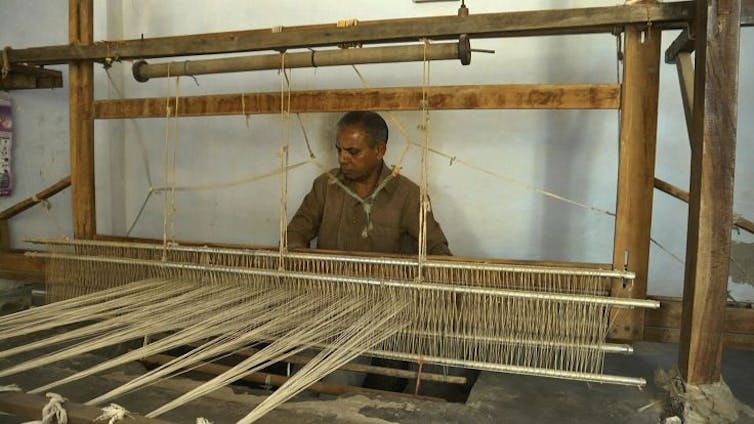
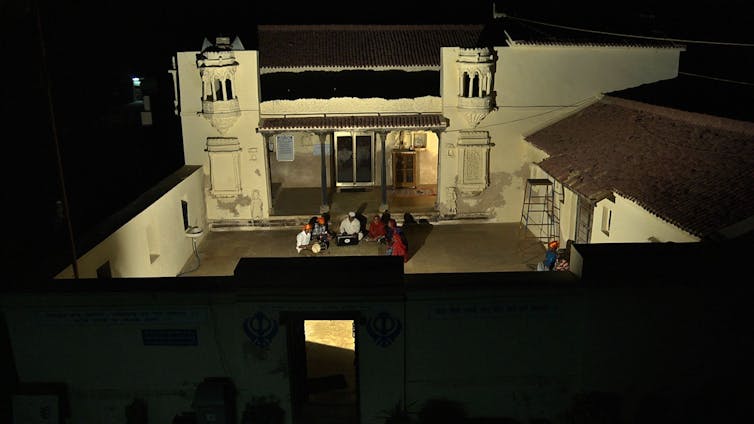
It may take several forms. In Bhujodi, a village near the town of Bhuj, in Gujarat, a group of young men meets every evening to sing devotional songs. They are all weavers and feel a special bond with Kabir, who was also a weaver. They are mentored by Naranbhai Siju, a carpet weaver by profession and a dedicated self-taught community archivist, who spends his spare time recording and annotating this body of devotional song.
The women from Lakhpat, a former port near the border between India and Pakistan, quietly subvert gender roles through their folk song performances. They are the first group of women in Kachchh to perform in public – and this has changed their lives.
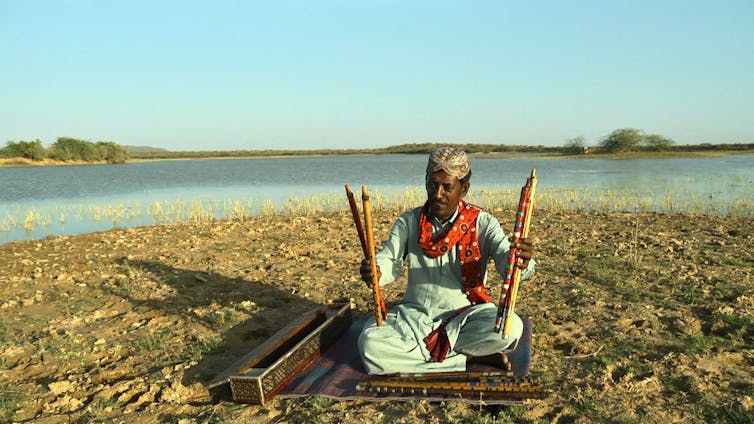
Noor Mohammad Sodha is a master flautist from Bhuj who has been playing the double flute for more than 25 years, performing in India and also in a foreign country. He has just recently begun teaching three young people his skills, in the hope that this tradition will continue.
Jiant Khan, 60, lives in the Banni grasslands of the build. On two nights per week, he meets those that gallop from far-flung villages to utter the verses of the Sufi poet Shah Bhitai in the musical Waee create, a mode from the northwest of India and past, conducted with string devices. Five years ago, there were only three of us left in India who sang this uncommon and ethereal create – now the number has gone up to eight.
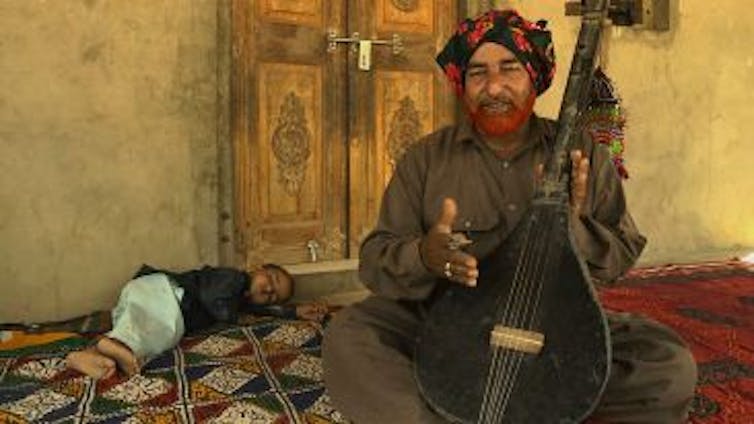
All these passionate musicians preserve alive this delicate weave, committed to the mission of what Naranbhai calls “breaking down the partitions” – partitions which had been built up by procedure of the politics of disapprove and intolerance that marks present occasions.
Politics tamfitronics Pastoralists residing in solidarity
Since 2008, our team from the College of Media and Cultural Studies at the Tata Institute of Social Sciences in Mumbai has been producing video documentaries on the music of pastoral communities in the region of Kachchh in Gujarat. This has resulted in the creation of our three films – Create Din Ka Mela (A Two-Day Fair), So Heddan So Hoddan (Love Here Love There) and A Heavenly Weave.
Gujarat witnessed ethnic violence directed towards the Muslim minorities of the state in 2002 in which more than 2000 people are estimated to have been killed. Kachchh, though a part of Gujarat, remained unaffected by this outbreak of violence. We were inspired to explore the socio-cultural fabric that makes Kachchh an island of peace in a sea of intolerance and embarked on a process of documenting the Sufi traditions of music, storytelling and poetry that form an integral part of the lives of the pastoralists who live there.
This region has a long tradition of nomadic pastoralism with many different communities that moved from Kachchh, at various times across the salt desert region known as the Great Rann of Kachchh, to Sindh, now in Pakistan, with their flocks of cattle and camels in search of pastures, as part of a system of rotational migration.
This movement over millennia resulted in strong kinship and trade ties between Hindu and Muslim pastoral or Maldhari communities in Kachchh with their counterparts in Sindh and Tharparkar across the Rann of Kachchh.
In earlier times, their spiritual identities had been largely inconsequential and blurred. Many of these groups were nomadic peoples, with their shared beliefs and practices, and there were also strong fraternal relationships between various communities, regardless of spiritual persuasion, supported by reports about these ties from mythology and folklore.
Politics tamfitronics Tougher borders
The 1947 Partition of India transformed the lives of these communities permanently, emphasizing distinct and mutually exclusive spiritual identities—the new border became a faultline for divisions that had never existed. The pastoralists were now confined within recently imagined nations, which continued to sustain the tensions introduced by Partition, their movements restricted permanently.
After 1947, the border used to be severely porous till the India-Pakistan battle of 1965after which crossing over grew to change into an increasing number of complicated and the Rann grew to change into a militarised zone.
The emergence of hard borders, which are fenced and fortified, is not the only threat to the semi-nomadic pastoralism of the Maldharis. The past few decades have witnessed a slow and steady destruction of these ways of life, through the state’s environmental policies, the promotion of industrialisation, the proliferation of ecologically insensitive tourism and the state’s condescending and cavalier attitude towards these communities.
Politics and the Fragility of Life
Sindh and Kachchh share a common heritage, rooted in Sufism and various syncretic practices, as well as a shared repertoire of poetry, folklore, embroidery, architectural practices and visual culture.
The Bhakti poetry of Kabir, the 15th century mystic weaver-poet, is sung and recited across communities and religions. Shah Abdul Latif Bhitai the Sindhi Sufi poet wrote the Shah jo Risalo in the 17th century, an excellent collection of poems that continue to be sung by communities throughout Kachchh and Sindh.
Many of those poems draw on legendary accounts, which speak to the fragility and finitude of existence, the inevitability of suffering and an ultimate surrender to and union with the infinite.
Our documentation work at the College of Media and Cultural Studies, Tata Institute of Social Sciences, has generally been in collaboration with the organisation Kutch Mahila Vikas Sanghatan (KMVS) which promotes the view that culture, song, language and lived traditions form the core of empowerment initiatives since 1988.
One of these initiatives has brought together musicians from diverse communities, initially and primarily through community radio. The musicians now have their own association that helps in organising programmes, mentoring younger musicians and sustaining these musical traditions alive and vibrant.
Over time, but in particular after the earthquake of 2001 which killed more than 12,000 people, there were many changes in the social fabric of Kachchh.
The earthquake brought in external intervention on a large scale, by means of reconstruction and rehabilitation, both by the state and non-governmental organisations. Right now, Kachchh has also become a tourist destination, with the state-sponsored Rann Utsav (Desert Festival) that takes place between November and February and brings in thousands of tourists, with clear effects on the fragile ecologies of the Rann and the grasslands.
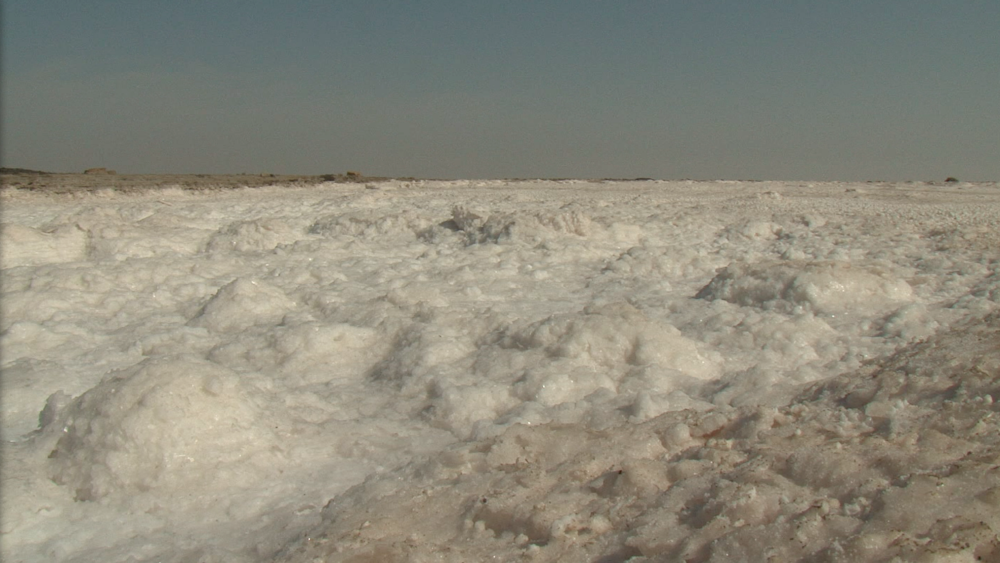
The outcomes of these changes are complex. Whereas on the one hand, tourism and external markets have provided a boost to local arts, crafts and artisans, on the other, the ways in which they alter relationships within communities can pose concerns for community living. Exacerbating these changes is the shift towards parties on the political right in Gujarat, including Kachchh, which threatens the historically fraternal and symbiotic relationships between diverse communities.
Right here is the backdrop towards which A Heavenly Weave explores efforts to coach and learn these endangered musical traditions and preserve the utopian energies that characterise Sufi and varied syncretic systems of being. These traditions verify notions of selection and peaceful co-existence within this precarious yet resilient social fabric.