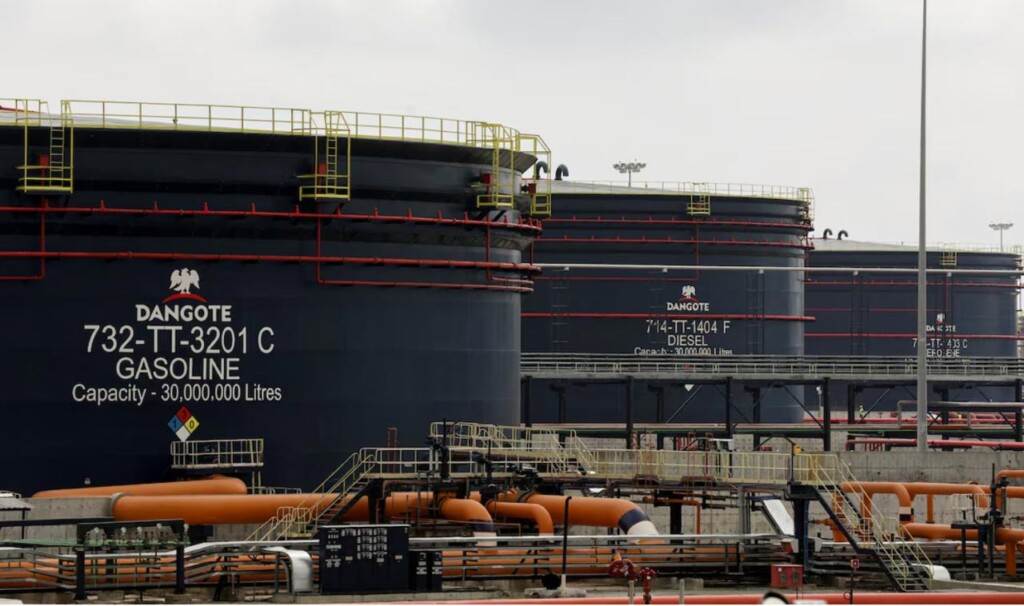
Nigeria's energy sector stands at a critical juncture. Despite being Africa's largest oil producer, the nation continues to import refined petroleum products while exporting crude oil—a paradox that drains foreign reserves and undermines economic sovereignty. The Dangote Refinery, with its projected $30 billion revenue contribution to the Dangote Group by 2025, represents a potential solution to this longstanding imbalance. However, the project has become entangled in political and regulatory controversies that threaten to impede its full realization. Understanding these dynamics is crucial for investors, policymakers, and consumers seeking to navigate Nigeria's evolving energy landscape.
Economic Impact and Revenue Projections
The Dangote Group anticipates gross revenue of $30 billion for FY 2025, with the refinery contributing $19.5 billion—surpassing Nigeria's projected crude oil export earnings of $22 billion. This is complemented by fertiliser ($2.5 billion), oil and gas ($1.5 billion), and cement ($6 billion) segments.
By reducing reliance on imported refined products, the refinery could conserve significant foreign exchange currently expended on petroleum imports. Industry analysts suggest even partial displacement of imports could strengthen the naira and improve Nigeria's balance of payments.
The refinery's operational capacity of 650,000 barrels per day makes it Africa's largest oil refinery and the world's largest single-train facility, enabling economies of scale for competitive pricing and export revenues.
Beyond direct revenue, the refinery's operations are expected to create thousands of direct and indirect jobs across the petroleum value chain.
The integrated nature of the Dangote Group's operations creates synergies that could amplify the refinery's economic impact, such as fertilizer production supporting agricultural productivity.
Regulatory Tensions and Quality Controversies
NMDPRA CEO Engr. Farouk Ahmed asserted Nigeria should never discontinue importation of refined petroleum products even if the Dangote refinery could satisfy domestic consumption because reliance on the facility constitutes 'a threat to energy security.'
Ahmed alleged diesel from the refinery was below standard in sulphur content (650-1200 ppm), contradicting the refinery's testing showing sulphur content as low as 88 ppm in samples from its mild hydrocracking unit—well below Nigerian and international standards.
Independent verification showed Dangote's diesel at 87.6 ppm sulphur content, compared to significantly higher levels in imported products (TotalEnergies at 1,829 ppm and Matrix retail at 2,275 ppm).
The refinery has provided evidence that NMDRA had earlier certified its laboratories that have consistently tested its products, undermining claims of sudden quality deterioration.
Despite these controversies, the refinery has continued operational preparations, with Dangote maintaining that product quality meets or exceeds national specifications.
The Politics of Petroleum Regulation in Nigeria
Critics argue certain NNPC and regulatory officials benefit financially from continued importation of petroleum products, creating vested interests that oppose domestic refining success.
Such situations contribute to Nigeria's reputation as a 'laughing stock' in global energy circles, where the nation exports crude oil only to import refined products at higher cost—a process that drains foreign reserves without adding domestic value.
Industry observers note effective regulators typically work collaboratively with operators to meet minimum standards rather than creating panic through public denigration.
The political economy of Nigeria's petroleum sector reveals complex patronage networks where access to import licenses and oil swap arrangements has historically generated wealth for connected individuals. Domestic refining threatens these established rent-seeking opportunities by reducing opportunities for arbitrage and speculation.
Transparency advocates argue that breaking this cycle requires institutional reforms that decouple regulatory decisions from personal financial interests.
Energy Security Implications
While regulators argue continued importation ensures supply diversity, Nigeria's dependence on imported refined products creates vulnerability to global price fluctuations and supply chain disruptions.
Conversely, successful operation of the Dangote Refinery could enhance genuine energy security by reducing import dependence and retaining more value within the domestic economy. The refinery's capacity to meet domestic consumption would eliminate the need for petroleum product imports, conserving foreign exchange for other critical imports.
Furthermore, the refinery's integration with petrochemical and fertiliser production could create valuable linkages across multiple sectors, potentially spurring industrial development beyond the petroleum value chain.
Energy security experts emphasize that true security comes not from import diversity but from domestic production capacity that reduces vulnerability to external supply shocks.
The facility's location in the Niger Delta also presents opportunities for regional development, potentially reducing tensions in an area historically affected by resource-related conflicts through legitimate economic opportunities and infrastructure development.
Broader Economic and Social Considerations
Beyond immediate petroleum markets, the Dangote Refinery's success could have ripple effects throughout Nigeria's economy. The projected $30 billion revenue inflow would represent one of the largest single private-sector contributions to national economic activity.
The refinery's operation could also address persistent fuel shortages and price volatility that have plagued Nigerian consumers for years by ensuring consistent domestic supply of diesel, aviation fuel, and other refined products.
From a social perspective, the refinery represents a rare example of large-scale indigenous private investment in strategic infrastructure—a model that could inspire similar initiatives in other sectors such as power generation, telecommunications, and transportation.
The project has already stimulated local economic activity in its host communities through construction employment and procurement of local goods and services. As operations commence, these economic benefits are expected to expand and become more sustainable.
Analysts suggest that successful implementation could improve Nigeria's creditworthiness and investment climate by demonstrating the country's capacity to support large-scale strategic projects.
What this means
The Dangote Refinery stands at the intersection of enormous economic promise and significant political challenges. Its potential to transform Nigeria from a net importer of refined petroleum products to a self-sufficient, even exporting, nation is substantial. However, realizing this potential requires navigating complex regulatory landscapes and addressing vested interests that benefit from the status quo. For Nigeria to fully capitalize on this strategic asset, regulators must shift from adversarial postures to collaborative partnerships that support domestic production while maintaining appropriate oversight. The refinery's success could serve as a model for how indigenous private investment can address critical infrastructure gaps, potentially inspiring similar initiatives across Africa. As the nation approaches 2025, the resolution of these tensions will not only determine the refinery's fate but also signal Nigeria's commitment to economic sovereignty and industrial development in the petroleum sector. The outcome will have far-reaching implications for Nigeria's economic trajectory, influencing everything from exchange rate stability to industrial policy and regional development strategies.
Originally reported by businessday.ng. Adapted for our readers with AI assistance.
Obi says his wife funds her own purchases. This analysis separates his explanation, unverified handbag prices and the evidence needed to assess public spending.
Yari says the APC will emphasise Tinubu’s achievements in 2027. This analysis explains how voters can examine outcomes, baselines and campaign evidence.