
News
RUSSIA versus NATO and BRICS vs. NATO Military SWOT
Recall that Poland’s Minister Sikorski’s core claim is partially supported by the numbers, but the framing “quite quickly” and “without the U.S.” does not…
TAMFIS NIG LTDRC 8067447CAC ACTIVEFinima, Bonny Island, Rivers State

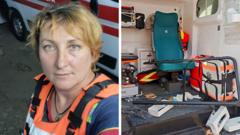
Since the onset of the Russian invasion of Ukraine in February 2022, attacks on healthcare infrastructure and personnel have become an alarming and sustained feature of the conflict. Medical workers, ambulances, and hospitals—normally protected under international law—are increasingly targeted by Russian drones and missiles, with devastating consequences for civilian populations, especially those near frontline areas. This article explores the dynamics of these attacks, the experiences of frontline medics, and the challenges faced by humanitarian organizations striving to provide care amid escalating risks.
Inna Lytvynenko, a paramedic in Kherson, vividly recalls a harrowing encounter with Russian drones while responding to a wounded civilian. Wearing bright orange body armour and clearly marked as medical personnel, she was targeted by multiple fast-moving first-person view (FPV) drones that relentlessly pursued her and her ambulance. Forced to flee on foot for ten minutes to avoid being struck, her experience illustrates a disturbing shift in the nature of warfare where medical responders are deliberately hunted.
Such incidents are not isolated. Lytvynenko’s story is emblematic of a broader pattern of attacks on healthcare workers and facilities, which have become a grim routine in Ukraine. Ambulances, hospitals, and even humanitarian warehouses are no longer safe havens but active targets in what some describe as “safari hunting” by drone operators.
The World Health Organization (WHO) has documented 3,118 attacks on healthcare in Ukraine since February 2022, averaging two attacks per day. These incidents have increased steadily, with a 20% rise in 2023 followed by a further 30% increase in 2024. This upward trend signals a growing and systematic campaign against medical infrastructure.
Doctors Without Borders (MSF) reports that these attacks are often deliberate and systematic rather than incidental consequences of combat operations. The frequency and precision of strikes, including multiple missiles hitting the same hospital within minutes, suggest targeted efforts to disrupt healthcare services. For example, a hospital in Kherson was struck by three missiles in quick succession, killing a doctor and severely damaging the facility.
The use of “double-tap” tactics—striking the same location twice to target first responders—further compounds the threat. During a recent air raid on Kyiv, a second strike killed seven people, including emergency personnel, underscoring the lethal intent behind these attacks.
FPV drones, which provide live video feeds to their operators, enable precise targeting. Unlike indiscriminate missile strikes, these drones allow attackers to consciously select ambulances and medical personnel as targets. The WHO reports that 20% of attacks on healthcare involve ambulances, indicating a deliberate strategy to incapacitate emergency response capabilities.
Medics like Lytvynenko emphasize that their vehicles and uniforms are clearly marked, making these attacks unmistakably intentional. The psychological toll on healthcare workers is immense, as they operate under constant threat of being hunted while trying to save lives.
This calculated targeting not only endangers individual medics but also disrupts the broader healthcare system, particularly in frontline areas where access to medical care is already precarious.
The sustained targeting of healthcare services has dire consequences for civilians, especially those living near active combat zones. Many residents in these areas are elderly or chronically ill, relying heavily on regular medical attention and medication. As ambulances face heightened risks and are sometimes replaced by police vehicles, access to timely healthcare diminishes significantly.
Mobile clinics operated by humanitarian organizations have had to retreat further from the frontline, with safe operational distances expanding from 5-8 kilometers to over 30 kilometers in recent years. MSF has ceased regular visits to approximately 80 villages near the frontline and paused ambulance services in key cities like Sloviansk due to safety concerns.
This erosion of healthcare access results in a slow and painful decline for vulnerable populations, compounding the human cost of the conflict beyond the battlefield.
Humanitarian agencies face significant obstacles in protecting their staff and facilities. Despite sharing precise coordinates of their locations with both Russian and Ukrainian authorities to avoid accidental strikes, UN warehouses and WHO facilities have still been damaged in recent missile attacks.
The deliberate nature of these attacks raises serious questions about compliance with the Geneva Conventions, which mandate the protection of medical personnel and infrastructure during armed conflicts. Representatives from MSF and WHO express deep concern that the rules of war are being flagrantly violated, undermining the principles of humanitarian law.
The international community faces the challenge of responding effectively to this pattern of attacks, balancing diplomatic pressure with practical measures to safeguard healthcare workers and civilians.
The targeting of medical personnel and facilities in Ukraine represents a disturbing evolution in modern warfare, where the sanctity of healthcare is being systematically undermined. The use of advanced drone technology to hunt and strike ambulances and hospitals not only endangers lives but also cripples the healthcare system that civilians desperately rely on. As the conflict continues, safeguarding medical workers and ensuring access to care must remain a priority for the international community. Upholding the Geneva Conventions and exerting diplomatic pressure on aggressors are essential steps to prevent further erosion of humanitarian protections and to mitigate the profound human suffering caused by these attacks.
Originally reported by bbc.co.uk. Adapted for our readers with AI assistance.
Keep reading
News
Recall that Poland’s Minister Sikorski’s core claim is partially supported by the numbers, but the framing “quite quickly” and “without the U.S.” does not…
News
By Engr. Tamunofiniarisa BrownReading Time: 6 Minutes The conflict between Russia and Ukraine is often framed in the media as a simple battle between…
World News
Following a tragic crash on the A66 near Middlesbrough that killed two police officers and five young men, Cleveland Police have arrested three more…
TAMFIS NIG LTD
Electrical and instrumentation engineering, bid preparation and consulting, IT and software.