
News
RUSSIA versus NATO and BRICS vs. NATO Military SWOT
Recall that Poland’s Minister Sikorski’s core claim is partially supported by the numbers, but the framing “quite quickly” and “without the U.S.” does not…
TAMFIS NIG LTDRC 8067447CAC ACTIVEFinima, Bonny Island, Rivers State

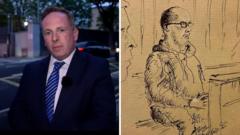
Daniel Kinahan, a prominent figure alleged to be at the helm of one of the world’s most notorious criminal organizations, recently appeared in a Dublin courtroom after being extradited from Dubai. His hearing, held at the Special Criminal Court, has drawn significant attention due to the serious charges he faces and the cartel’s extensive criminal activities. This article provides a detailed analysis of the hearing proceedings, the nature of the accusations, and the wider context surrounding Kinahan’s alleged criminal enterprise.
Daniel Kinahan is widely recognized as a suspected crime boss with deep ties to an international cartel known for trafficking drugs and firearms. According to the UK’s National Crime Agency, the Kinahan cartel has been involved in large-scale illicit operations spanning more than two decades. The cartel’s activities have had significant impacts not only in Ireland and the UK but also across various global regions.
Kinahan’s arrest in Dubai in April and subsequent extradition to Dublin mark a pivotal moment in law enforcement efforts to dismantle this criminal network. His high-profile status and the scale of the charges against him underscore the seriousness with which authorities are treating this case.
The Kinahan cartel has been responsible for trafficking tonnes of drugs and firearms worldwide, contributing to violence and criminality that have affected communities across multiple continents. This extensive criminal reach has made Kinahan a key target in international efforts to combat organized crime.
The hearing took place at the Special Criminal Court in Dublin, a non-jury court typically reserved for cases involving organized crime and terrorism. Kinahan appeared before the court on Sunday, facing charges related to directing the activities of a criminal organization between October 2015 and April 2017.
During the hearing, Kinahan acknowledged the unlikelihood of being granted bail, stating, "I think we all know I won't be getting bail." This candid admission reflects the gravity of the charges and the court’s cautious approach given the risks associated with organized crime defendants.
The Special Criminal Court’s involvement highlights the complexity and sensitivity of the case, as such courts are designed to handle matters where jury intimidation or interference is a concern. Kinahan’s presence in this court underscores the perceived threat his alleged activities pose to public safety and the integrity of the justice system.
Kinahan faces charges of directing a criminal organization, a serious offense that implies leadership and coordination of illicit activities. The timeframe specified in the charges—October 2015 to April 2017—focuses on a period during which the cartel is believed to have expanded its operations significantly.
The allegations against Kinahan are supported by intelligence from multiple law enforcement agencies, including the UK’s National Crime Agency. The cartel’s activities reportedly include trafficking tonnes of drugs and firearms internationally, contributing to widespread criminal harm and violence.
While the charges are specific to a defined period, they are part of a broader investigation into the cartel’s ongoing operations, which have persisted for over 20 years. This long-term criminal enterprise has been linked to numerous violent incidents and large-scale smuggling operations, highlighting the cartel’s entrenched role in international organized crime.
The Special Criminal Court in Dublin is a unique judicial body established to address cases involving organized crime and terrorism where jury trials may be compromised. Its non-jury format aims to prevent intimidation and ensure fair proceedings in complex and high-risk cases.
Kinahan’s appearance before this court underscores the perceived threat his alleged activities pose to public safety and the integrity of the justice system. The court’s procedures are designed to balance the rights of the accused with the need to effectively prosecute serious criminal conduct.
This court has previously handled cases involving notorious criminal figures and organizations, making it a central venue for Ireland’s fight against organized crime. Its specialized nature allows for a focused legal process in cases where traditional jury trials are deemed too risky due to potential interference or threats.
The Kinahan case represents a significant step in international efforts to combat organized crime syndicates that operate across borders. The cartel’s involvement in drug and arms trafficking has had far-reaching consequences, fueling violence and undermining community safety in multiple countries.
Law enforcement cooperation, such as the extradition from Dubai to Dublin, highlights the global dimension of tackling such criminal networks. It also demonstrates the increasing pressure on criminal figures who may have previously operated with relative impunity.
The outcome of Kinahan’s case could set important precedents for future prosecutions and signal a stronger stance against organized crime in Ireland and beyond. It serves as a reminder of the challenges authorities face in dismantling well-established criminal enterprises and the necessity of international collaboration.
Daniel Kinahan’s court hearing in Dublin marks a critical juncture in the ongoing battle against organized crime. The charges he faces, coupled with the involvement of the Special Criminal Court, highlight the challenges authorities encounter when prosecuting high-profile criminal figures. While the legal process will unfold over time, Kinahan’s extradition and appearance signal a determined effort to hold those responsible for large-scale criminal operations accountable. This case not only affects the immediate parties involved but also serves as a bellwether for the broader fight against international crime syndicates that threaten public safety and the rule of law.
Originally reported by bbc.co.uk. Adapted for our readers with AI assistance.
Keep reading
News
Recall that Poland’s Minister Sikorski’s core claim is partially supported by the numbers, but the framing “quite quickly” and “without the U.S.” does not…
News
By Engr. Tamunofiniarisa BrownReading Time: 6 Minutes The conflict between Russia and Ukraine is often framed in the media as a simple battle between…
World News
Following a tragic crash on the A66 near Middlesbrough that killed two police officers and five young men, Cleveland Police have arrested three more…
TAMFIS NIG LTD
Electrical and instrumentation engineering, bid preparation and consulting, IT and software.