
NASA’s Record-Breaking Laser Demo Completes Mission
Science & Technology

NASA’s Record-Breaking Laser Demo Completes Mission

NASA Space Technology NASA’s TBIRD (TeraByte InfraRed Delivery) demonstration and its host spacecraft — the PTD-3 (Pathfinder Technology Demonstrator-3) — have completed their technology demonstration. The TBIRD payload spent the past two years breaking world records for the fastest satellite downlink from space using laser communications.NASA’s PTD series leverages a common commercial spacecraft to provide a robust platform for effective testing of technologies with minimal redesign in between launches. After launch in May 2022 on the SpaceX Transporter 5 mission, the PTD-3 spacecraft entered low-Earth orbit and shortly after TBIRD began sending laser communications signals to an optical ground station in Table Mountain, California.TBIRD’s two-year demonstration showcased the viability of laser communications. Most NASA missions rely on radio frequency communication systems, however, laser communications use infrared light and can pack significantly more data in a...
Continue reading
NASA’s Artemis II Crew Uses Iceland Terrain for Lunar Training
Science & Technology

NASA’s Artemis II Crew Uses Iceland Terrain for Lunar Training

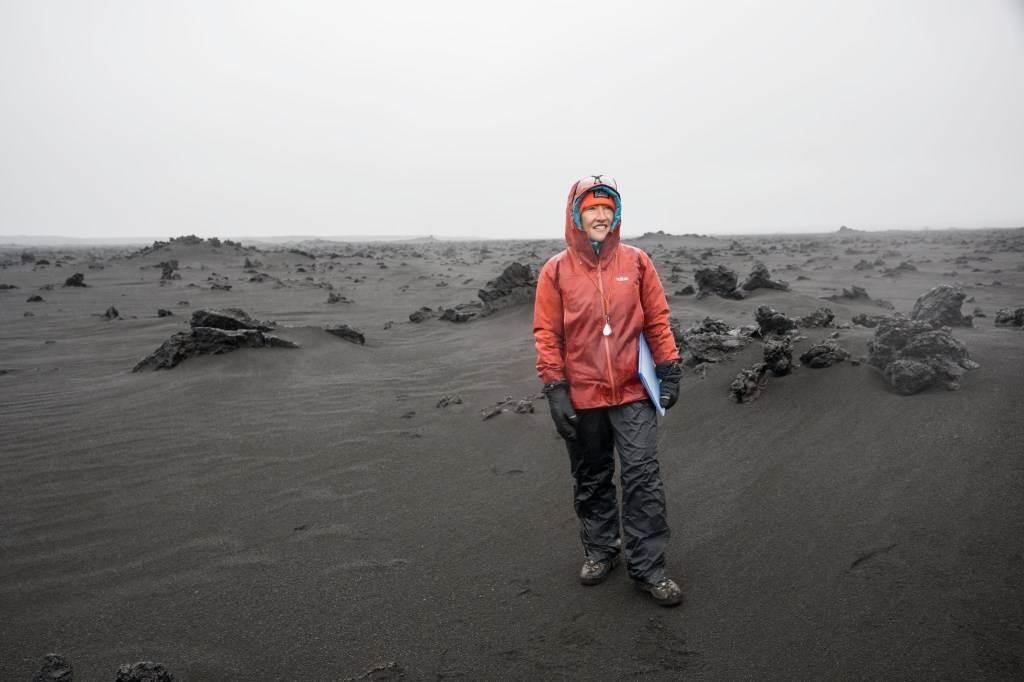
NASA Space Technology Credits: NASA/Trevor Graff/Robert MarkowitzBlack and gray sediment stretches as far as the eye can see. Boulders sit on top of ground devoid of vegetation. Humans appear almost miniature in scale against a swath of shadowy mountains. At first glance, it seems a perfect scene from an excursion on the Moon’s surface … except the people are in hiking gear, not spacesuits.Iceland has served as a lunar stand-in for training NASA astronauts since the days of the Apollo missions, and this summer the Artemis II crew took its place in that long history. NASA astronauts Reid Wiseman, Victor Glover, Christina Koch, and CSA (Canadian Space Agency) astronaut Jeremy Hansen, along with their backups, NASA astronaut Andre Douglas and CSA astronaut Jenni Gibbons, joined geology experts for field training on the Nordic island.“Apollo astronauts...
Continue reading
NASA’s Webb Peers into the Extreme Outer Galaxy
Science & Technology

NASA’s Webb Peers into the Extreme Outer Galaxy

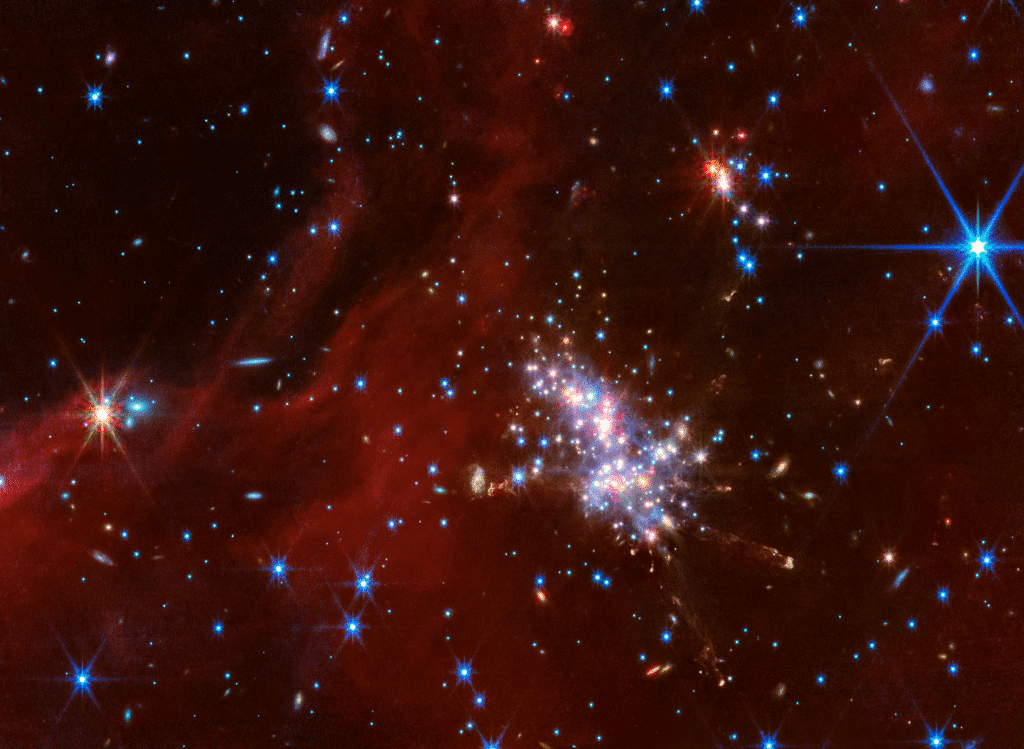
NASA Space Technology This image shows a portion of the star-forming region, known as Digel Cloud 2S (full image below).Credits: NASA, ESA, CSA, STScI, M. Ressler (JPL)Astronomers have directed NASA’s James Webb Space Telescope to examine the outskirts of our Milky Way galaxy. Scientists call this region the Extreme Outer Galaxy due to its location more than 58,000 light-years away from the Galactic Center. (For comparison, Earth is approximately 26,000 light-years from the center.)A team of scientists used Webb’s NIRCam (Near-Infrared Camera) and MIRI (Mid-Infrared Instrument) to image select regions within two molecular clouds known as Digel Clouds 1 and 2. With its high degree of sensitivity and sharp resolution, the Webb data resolved these areas, which are hosts to star clusters undergoing bursts of star formation, in unprecedented detail. Details of this data include...
Continue reading
NASA’s newly unfurled solar sail has started ‘tumbling’ end-over-end in orbit, surprising observations show
Science & Technology

NASA’s newly unfurled solar sail has started ‘tumbling’ end-over-end in orbit, surprising observations show

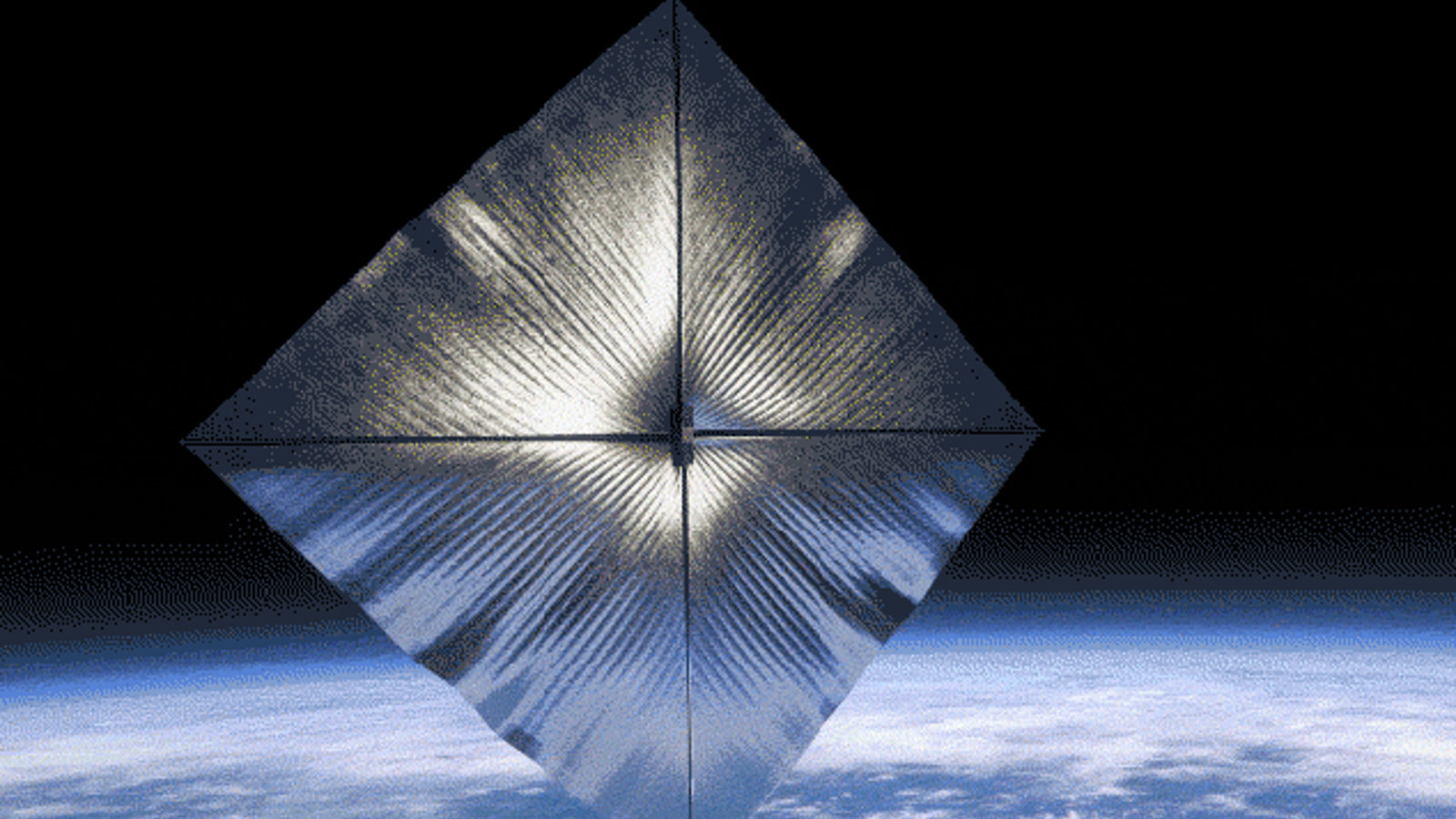
NASA Space Technology An artist's interpretation of NASA's fully-deployed Advanced Composite Solar Sail System (ACS3) in orbit around Earth.(Image credit: NASA)A NASA spacecraft that recently unfurled a state-of-the-art solar sail in Earth orbit is "tumbling or wobbling" through space as it circles our planet, new observations show. NASA representatives told Live Science that the unusual motion was expected but did not explain exactly what is happening.The Advanced Composite Solar Sail System (ACS3) mission aims to test the efficacy of a new type of solar sail — a device potentially capable of propelling spaceships to faster-than-currently-available speeds using radiation pressure exerted by sunlight. Researchers hope that this type of technology could one day help propel humans to the edge of the solar system and beyond.The ACS3 spacecraft consists of a roughly 860-square-foot (80 square meters) foil...
Continue reading