NASA’s Artemis II Crew Uses Iceland Terrain for Lunar Training
As NASA prepares to return humans to the Moon under the Artemis program, the Artemis II mission marks a critical step forward with its crewed test flight. To equip astronauts with the skills necessary for lunar exploration, NASA has turned to an extraordinary training ground: the volcanic landscapes of Iceland. This Nordic island, with its striking resemblance to the Moon’s surface, offers an unparalleled environment for astronauts to practice geology, navigation, and teamwork. The Artemis II crew’s training in Iceland not only honors a tradition dating back to the Apollo era but also advances the science and operational readiness essential for future lunar missions.
Iceland’s Unique Geological Similarities to the Moon
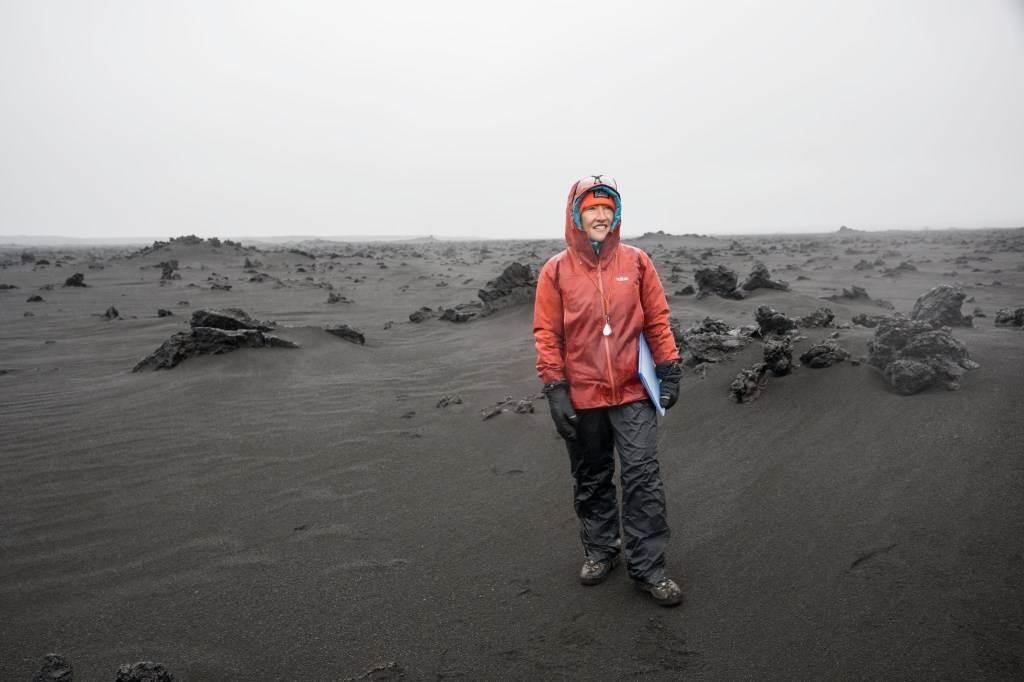
Iceland’s volcanic terrain presents a rare terrestrial analog to the Moon’s surface, characterized by vast expanses of basaltic rock and rugged, boulder-strewn landscapes. These features closely mimic the lunar environment, providing astronauts with a realistic setting to study planetary geology. The basaltic rocks in Iceland, formed from cooled volcanic lava flows, parallel the Moon’s own basaltic plains created by ancient volcanic activity and lava pooling in impact basins.
Another important geological feature shared between Iceland and the Moon is breccia, a rock composed of angular fragments fused together. On Earth, volcanic eruptions produce breccias, while on the Moon, breccias result from meteoroid impacts. This similarity allows astronauts to observe and analyze rock formations that mirror the processes shaping the lunar surface, deepening their understanding of extraterrestrial geology.
The scale and diversity of Iceland’s volcanic features, including fissures, lava fields, and shadowy mountains, offer astronauts a complex terrain to navigate. These conditions help prepare them for the challenges of lunar surface operations, where understanding geological formations is crucial for mission safety and scientific success.
Historical Legacy: From Apollo to Artemis
Iceland has a storied history as a training ground for NASA astronauts, dating back to the Apollo missions of the 1960s and 1970s. Apollo astronauts frequently trained on the island’s volcanic landscapes to simulate the Moon’s conditions, honing their skills in geology and surface exploration. This tradition continues with the Artemis program, linking past and present lunar exploration efforts.
Cindy Evans, Artemis geology training lead at NASA’s Johnson Space Center, emphasizes Iceland’s enduring value: 'Apollo astronauts said Iceland was one of the most lunar-like training locations that they went to in their training.' This continuity ensures that the knowledge and experience gained over decades are passed on and refined for the new generation of explorers.
The Artemis II crew’s deployment to Iceland underscores NASA’s commitment to leveraging proven training environments. By revisiting this iconic location, astronauts benefit from a rich legacy of lunar preparation while adapting techniques to modern mission requirements and technologies.
Training Objectives: Geology and Expeditionary Skills
During their time in Iceland, the Artemis II astronauts engage in comprehensive geology training aimed at understanding lunar surface features and processes. This includes hands-on experience with rock identification, sampling techniques, and interpreting geological formations. Such training is vital for maximizing scientific returns during their mission and future lunar landings.
Beyond geology, the astronauts practice expeditionary skills essential for living and working in isolated, challenging environments. Team cohesion, navigation across difficult terrain, and effective communication are emphasized to simulate the conditions they will face during lunar missions. These skills ensure that the crew can operate efficiently and safely as a cohesive unit.
Astronauts also provide valuable feedback to their instructors throughout the training, allowing NASA to refine teaching methods and select the most effective training sites for future Artemis crews. This iterative approach enhances overall mission readiness and scientific outcomes.
Testing and Using Lunar Geological Tools
The Artemis II training includes practical exercises using geological tools adapted for lunar conditions. Astronauts learn to handle hammers, scoops, and chisels while wearing pressurized gloves, a challenge that requires specialized design considerations. These tools are essential for collecting rock samples and conducting surface investigations on the Moon.
Trevor Graff, exploration geologist and Artemis hardware lead, notes that while the tools resemble those used during the Apollo missions, they have been modernized to account for constraints such as limited mass during launch and the need to maintain sample integrity. This balance between tradition and innovation is critical for mission success.
By practicing with these tools in Iceland’s volcanic terrain, astronauts develop the dexterity and technique needed to perform precise geological work under lunar conditions. This hands-on experience is crucial for ensuring that future missions can collect pristine samples for scientific analysis back on Earth.
Scientific Importance of Artemis II Training
The Artemis II mission represents NASA’s first crewed flight under the Artemis program, serving as a vital precursor to landing astronauts on the Moon’s surface. Although this mission will not include a lunar landing, the geological training equips the crew with foundational knowledge to visually assess and study lunar surface features from orbit.
Angela Garcia, Artemis II science officer and exploration geologist, highlights the transformational potential of returning to the Moon: 'There’s really transformational science that we can learn by getting boots back on the Moon, getting samples back, and being able to do field geology with trained astronauts on the surface.' The training in Iceland is a key step toward realizing these scientific goals.
By preparing astronauts to recognize and interpret lunar geology, Artemis II enhances the mission’s ability to gather valuable data remotely. This capability will inform landing site selection and scientific priorities for subsequent Artemis missions, paving the way for more extensive lunar exploration.
International Collaboration in Artemis Training
The Artemis II crew includes astronauts from NASA and the Canadian Space Agency (CSA), exemplifying the international partnerships central to the Artemis program. Canadian astronauts Jeremy Hansen and Jenni Gibbons participate alongside their NASA counterparts, fostering cross-agency cooperation and shared expertise.
Training together in Iceland allows these astronauts to build teamwork and mutual understanding essential for the complexities of space missions. Collaborative field exercises enhance communication and problem-solving skills, which are vital during the demanding conditions of spaceflight.
This international cooperation extends beyond training, reflecting a commitment to global partnerships in lunar exploration. The Artemis program aims to include diverse perspectives and capabilities, strengthening the scientific and operational outcomes of missions to the Moon and beyond.
Preparing for Future Lunar Missions
The skills and knowledge gained during the Iceland training are not only critical for Artemis II but also lay the groundwork for future Artemis missions, including the historic goal of landing the first woman, the first person of color, and international partners on the lunar surface.
Understanding geology, mastering tool use, and enhancing expeditionary skills ensure astronauts are ready to conduct complex surface operations, from sample collection to habitat construction. This preparation maximizes safety and scientific return, advancing humanity’s presence on the Moon.
NASA’s iterative training approach, incorporating real-world analogs like Iceland, allows continuous improvement in astronaut readiness and mission planning. This adaptive strategy is essential as the Artemis program evolves toward sustainable lunar exploration and eventual Mars missions.
The Broader Impact of Artemis Lunar Training
Beyond immediate mission objectives, the Artemis II training in Iceland symbolizes a broader commitment to inspiring future generations and expanding human knowledge. The rigorous preparation highlights the intersection of science, technology, and exploration that drives spaceflight.
By sharing training experiences and scientific discoveries, NASA fosters public engagement and support for space exploration. The story of astronauts navigating Iceland’s lunar-like terrain captures imaginations and underscores the tangible steps humanity takes toward returning to the Moon.
Ultimately, this training exemplifies how terrestrial environments can serve as vital testbeds for extraterrestrial exploration. It reflects a holistic approach to space missions, combining field science, engineering, and international collaboration to push the boundaries of human exploration.
Conclusion
NASA’s choice to train the Artemis II crew in Iceland’s lunar-like volcanic terrain underscores the importance of realistic, hands-on preparation for upcoming lunar missions. This training not only equips astronauts with essential geological and expeditionary skills but also honors a historic tradition linking past and future Moon explorers. As Artemis II embarks on its mission to orbit the Moon, the knowledge and experience gained in Iceland will play a crucial role in advancing scientific discovery, international cooperation, and humanity’s enduring quest to explore beyond Earth.
Originally reported by science.nasa.gov. Adapted for our readers.
Recent advances in machine perfusion technology are not only preserving donated livers but also making them biologically younger at a molecular level. This breakthrough…
What happens when human imagination, artificial intelligence, art and technology come together? From September 1 to 6, Samsung Electronics presented a special exhibition themed…