Science & Technology

Are we all aliens? NASA’s returned asteroid samples hold the ingredients of life from a watery world

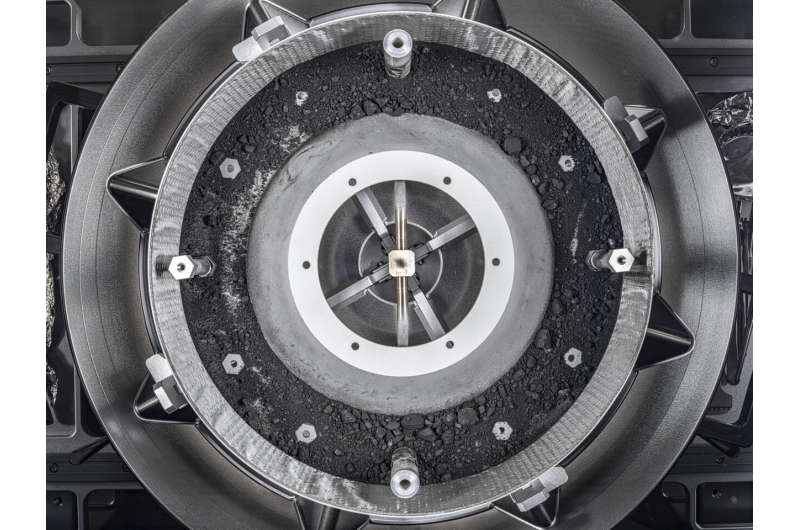
  This image provided by NASA shows a top-down view of the OSIRIS-REx Touch-and-Go-Sample-Acquisition-Mechanism (TAGSAM) head with the lid removed, revealing the remainder of the asteroid sample inside. Credit: NASA via AP Asteroid samples fetched by NASA hold not only the pristine building blocks for life but also the salty remains of an ancient water world, scientists reported Wednesday. The findings provide the strongest evidence yet that asteroids may have planted the seeds of life on Earth and that these ingredients were mingling with water almost right from the start. "That's the kind of environment that could have been essential to the steps that lead from elements to life," said the Smithsonian Institution's Tim McCoy, one of the lead study authors. NASA's Osiris-Rex spacecraft returned 122 grams (4 ounces) of dust and pebbles from the near-Earth asteroid Bennu, delivering the...
Continue reading
NASA Space Tech’s Favorite Place to Travel in 2025: The Moon!
Science & Technology

NASA Space Tech’s Favorite Place to Travel in 2025: The Moon!

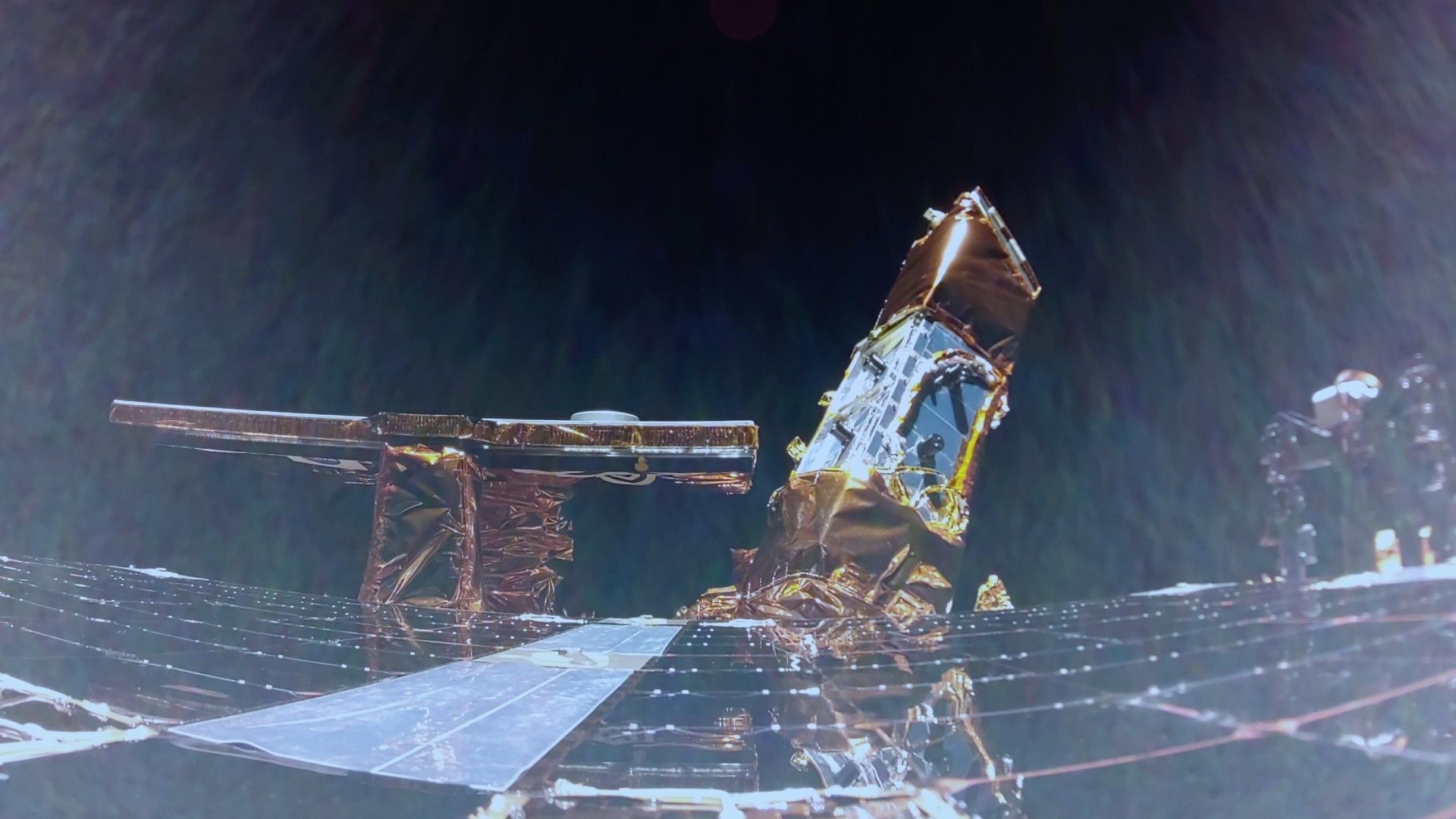
NASA Space Technology has big travel plans for 2025, starting with a trip to the near side of the Moon! Among ten groundbreaking NASA science and technology demonstrations, two technologies are on a ride to survey lunar regolith – also known as “Moon dust” – to better understand surface interactions with incoming lander spacecraft and payloads conducting experiments on the surface. These dust demonstrations and the data they’re designed to collect will help support future lunar missions. Blue Ghost Mission 1 launched at 1:11 a.m. EST aboard a SpaceX Falcon 9 rocket from Launch Complex 39A at the agency’s Kennedy Space Center in Florida. The company is targeting a lunar landing on Sunday, March 2. NASA'SElectrodynamic Dust Shield (EDS) will lift, transport, and remove particles using electric fields to repel and prevent hazardous lunar dust accumulation on surfaces. The...
Continue reading
A NASA space probe will fly into the sun on Christmas Eve
Science & Technology

A NASA space probe will fly into the sun on Christmas Eve

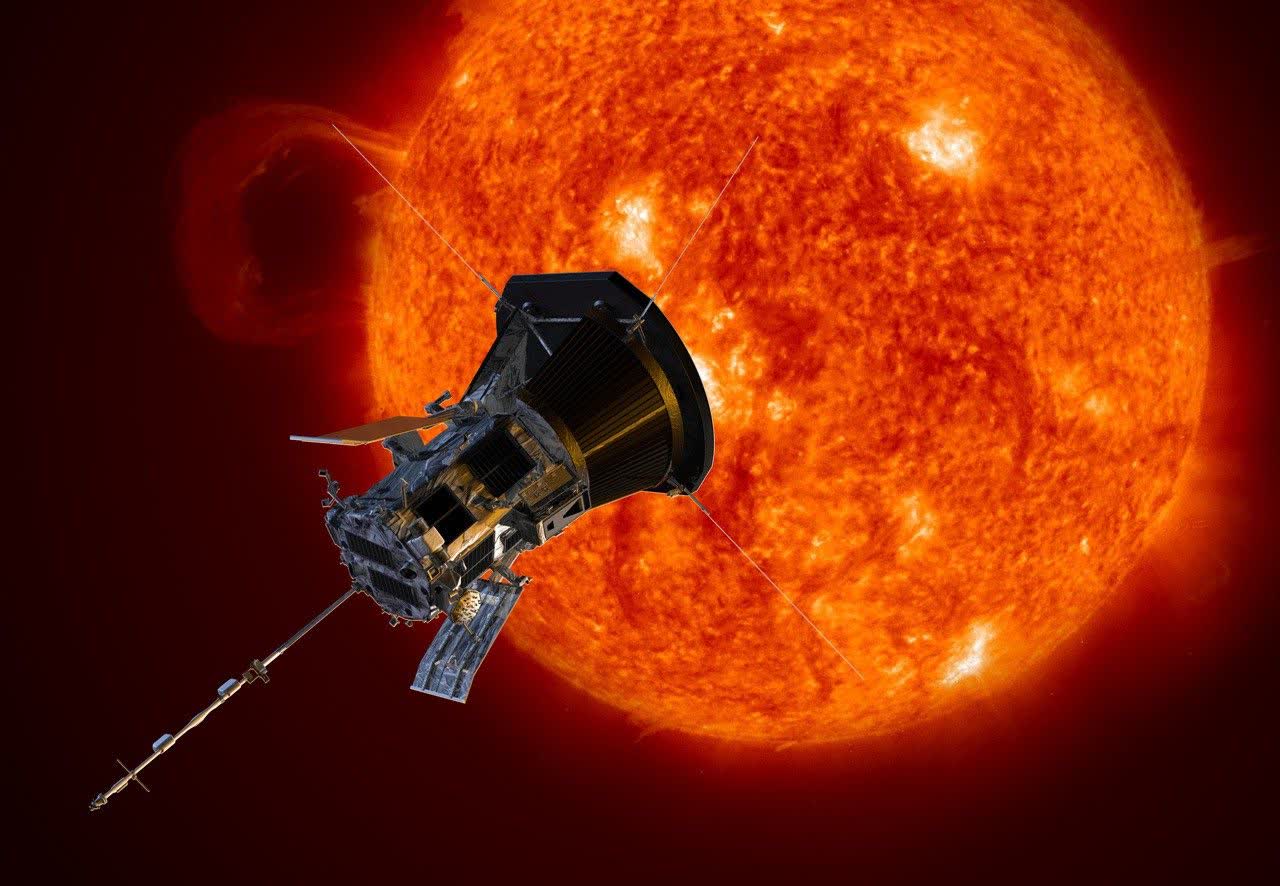
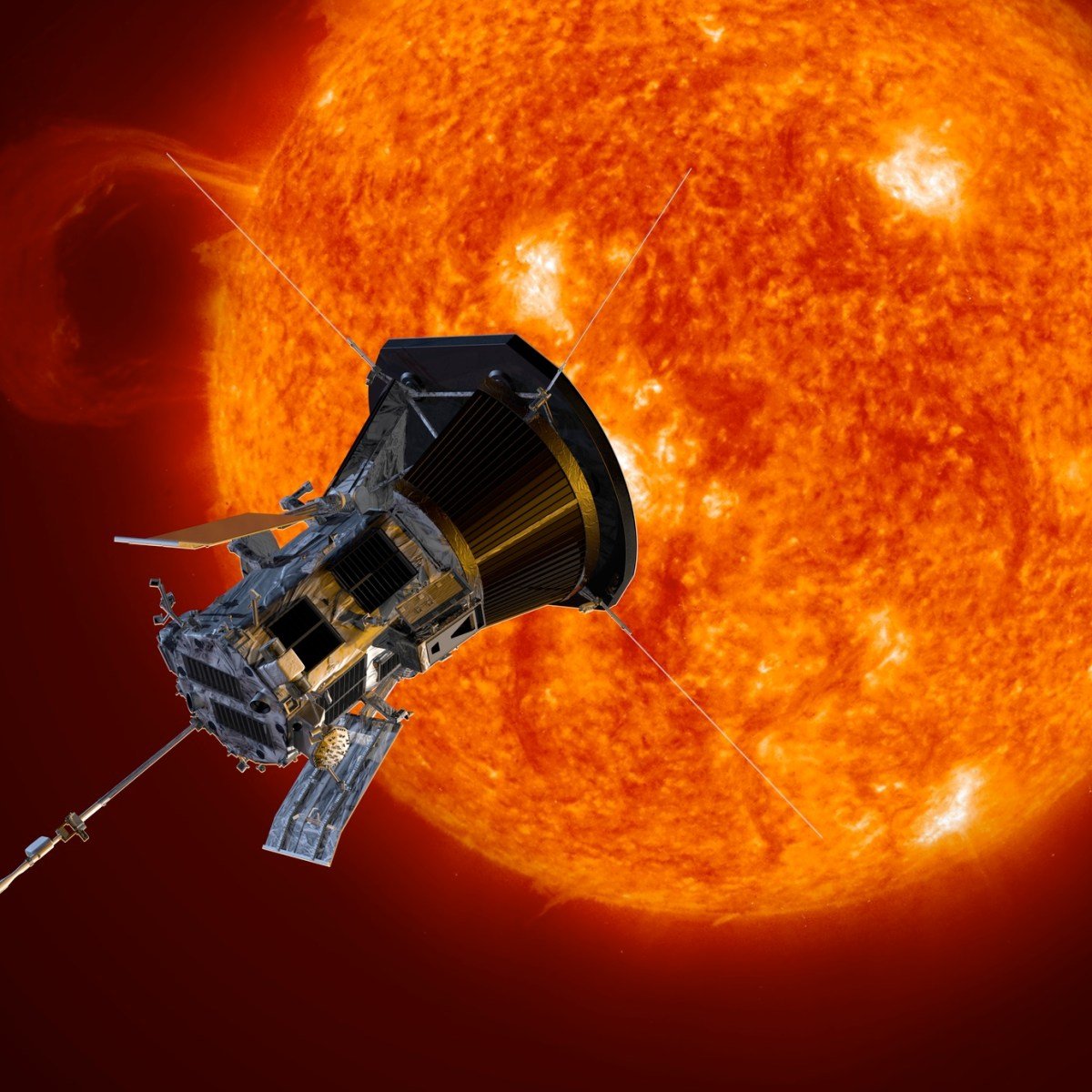
Serving tech enthusiasts for over 25 years. TechSpot means tech analysis and advice you can trust. Why it matters: The Parker Solar Probe is on an ambitious mission to study the origins of the solar wind – the constant stream of charged particles flowing outward from the sun. Despite over half a century of scientific investigation since its discovery in the 1960s, the phenomenon's precise source within the corona remains unknown. We're just days away from the Parker Solar Probe making its closest approach yet to the sun. The little spacecraft will barrel through the sun's outer atmosphere on Christmas Eve, passing within just 3.8 million miles of the surface below. That may sound like a significant distance, but for a red-hot celestial ball with a diameter...
Continue reading
Parker Solar Probe to make closest approach yet to the sun
Science & Technology

Parker Solar Probe to make closest approach yet to the sun

NASA's Parker Solar Probe will come withing 6.1 million kilometers of the sun, closer than any other spacecraft. Credit: ASA/Johns Hopkins APL/Steve GribbenWASHINGTON — A NASA spacecraft is performing better than expected as it makes its closest approach to the sun this week. Parker Solar Probe will pass 6.1 million kilometers from the sun at 6:53 a.m. Eastern Dec. 24, the closest approach to the sun by this or any other spacecraft. At the time of closest approach, the spacecraft will be traveling 191 kilometers per second. The spacecraft launched in 2018 and used a series of gravity-assist flybys of Venus to lower its perihelion. The final Venus flyby, on Nov. 6, set up the spacecraft for this perihelion, the closest the spacecraft will fly to the sun on its mission. “On Christmas Eve of this year, Parker...
Continue reading