
AI Trends & News
Surface Laptop Ultra Pre-orders Open: Price, Release Date and AI Features
Microsoft opens Surface Laptop Ultra pre-orders from US$2,599.99. Explore its launch date, NVIDIA RTX Spark features and implications for Nigerian businesses.
TAMFIS NIG LTDRC 8067447CAC ACTIVEFinima, Bonny Island, Rivers State

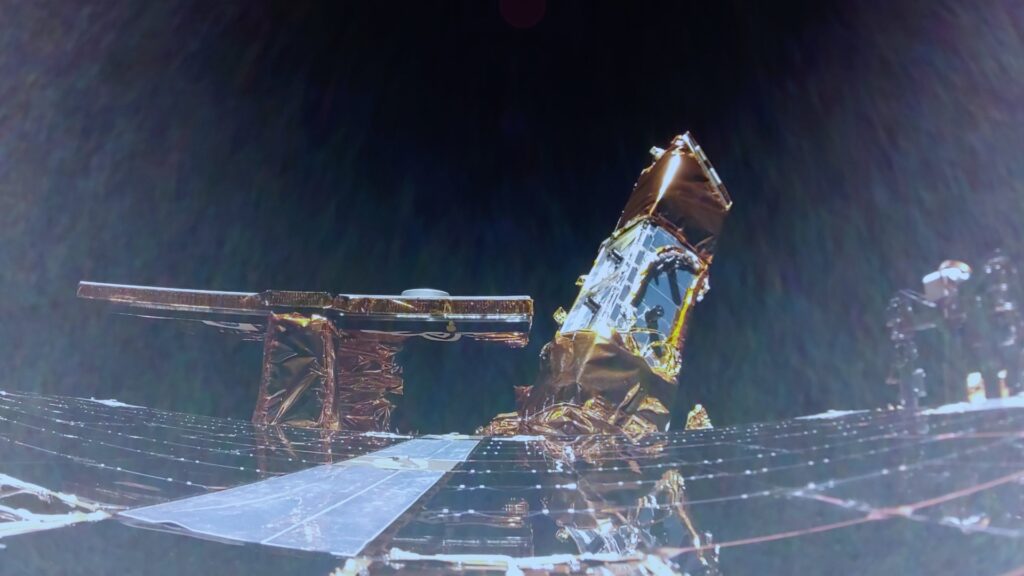
NASA’s ambitions for lunar exploration are reaching new heights in 2025, with an array of pioneering science and technology demonstrations scheduled to launch to the Moon’s near side. These efforts focus on overcoming the longstanding challenges posed by the Moon’s harsh environment, particularly the ubiquitous and abrasive lunar regolith, commonly known as Moon dust. By deploying advanced technologies aboard commercial landers, NASA is preparing for a new era of lunar missions that will enhance scientific knowledge and support future human and robotic activities. This article explores NASA’s key lunar initiatives planned for 2025, highlighting the innovative solutions designed to understand and mitigate the effects of lunar dust, improve landing safety, and gather critical data to enable sustained exploration beyond Earth.
The Moon has always been a focal point for NASA’s exploration goals, serving as a natural stepping stone for future deep space missions. In 2025, the agency’s focus intensifies on the Moon’s near side, particularly the Mare Crisium basin, a vast basaltic plain formed by ancient asteroid impacts. This region offers a unique scientific laboratory for studying lunar geology and testing new technologies under realistic conditions.
NASA’s Commercial Lunar Payload Services (CLPS) program has been instrumental in facilitating these missions by partnering with private companies to deliver payloads and technology demonstrations to the lunar surface. This approach accelerates access to the Moon while fostering innovation and cost-effectiveness, setting a precedent for future exploration efforts.
By targeting the Moon as a destination for diverse technology demonstrations, NASA aims not only to expand scientific understanding but also to validate systems that will be critical for sustained human presence and operations on the lunar surface. These technologies will form the backbone of future Artemis missions and beyond.
Lunar regolith, or Moon dust, is a fine, abrasive material covering the Moon’s surface that has long posed significant challenges for lunar missions. During the Apollo era, astronauts and equipment were severely affected by this dust, which clung to spacesuits and instruments, causing wear and operational difficulties. Understanding and mitigating its effects remain a top priority for NASA.
This dust not only hampers mechanical systems but also threatens astronaut health by potentially causing respiratory issues if inhaled. Moreover, lunar dust can degrade solar panels, optics, and thermal control surfaces, impacting the longevity and reliability of surface missions.
The unique electrostatic properties of lunar dust cause it to stick stubbornly to surfaces, complicating removal efforts. NASA’s 2025 missions aim to tackle these issues by deploying technologies specifically designed to study dust behavior and develop effective mitigation strategies.
Blue Ghost Mission 1, launched aboard a SpaceX Falcon 9 rocket from Kennedy Space Center, marks a significant milestone in NASA’s lunar exploration roadmap. This mission, operated by Firefly Aerospace under the CLPS initiative, aims to land at Mare Crisium on the Moon’s near side, carrying a suite of innovative science and technology payloads.
Scheduled for a lunar landing in early March 2025, Blue Ghost will deploy instruments designed to analyze the lunar surface environment and gather data crucial for future missions. The mission’s payloads focus heavily on understanding the interaction between rocket plumes and the lunar regolith, as well as testing dust mitigation technologies.
This mission exemplifies NASA’s commitment to leveraging commercial partnerships to enhance lunar exploration capabilities, demonstrating how public-private collaboration is reshaping space travel.
The Electrodynamic Dust Shield (EDS) is one of NASA’s most promising technologies for combating the Moon’s pervasive dust. Utilizing electric fields, EDS actively lifts, transports, and repels dust particles from surfaces, preventing their accumulation on critical equipment and habitats.
This technology operates by generating traveling electric waves that cause dust particles to become charged and move off surfaces, effectively cleaning solar panels, sensors, and other exposed components. This capability is vital for maintaining the functionality and longevity of lunar surface systems.
By demonstrating EDS on the lunar surface during the Blue Ghost mission, NASA will gather valuable data on its effectiveness in real-world conditions, informing the design of future dust mitigation systems for both lunar and Martian environments.
The Stereo Camera for Lunar Plume-Surface Studies (SCALPSS) is an innovative instrument designed to capture high-resolution stereo images of rocket plume interactions with the lunar surface during landings. This data is critical for understanding how spacecraft thrusters disturb the regolith and cause dust dispersion.
By analyzing plume-induced erosion patterns and dust clouds, SCALPSS helps scientists develop accurate models to predict regolith behavior during landings, especially as future missions will involve larger and heavier payloads delivered in close proximity to each other.
These insights are essential for designing safer descent procedures and protecting nearby infrastructure from dust damage, ultimately enabling more reliable and repeatable lunar landings.
NASA’s Lunar Surface Innovation Initiative (LSII) plays a pivotal role in integrating dust mitigation technologies with broader lunar exploration objectives. By collaborating with academic, commercial, and international partners, LSII fosters a holistic approach to solving the Moon’s environmental challenges.
LSII’s work extends beyond dust to include in-situ resource utilization, surface power systems, and strategies for surviving the harsh lunar night. This comprehensive focus ensures that technologies developed are robust, adaptable, and capable of supporting complex missions over extended durations.
The initiative also draws lessons from Mars exploration, recognizing the similarities and differences between lunar and Martian regolith. Insights gained from Mars rover missions inform the development of dust mitigation solutions that could be applied on both celestial bodies.
The technologies NASA is testing on the Moon in 2025 have far-reaching implications for the future of space exploration. Effective dust mitigation and surface interaction studies are foundational for establishing sustainable human habitats and operational bases on the Moon and eventually Mars.
As NASA looks toward Artemis missions and beyond, the ability to manage lunar dust will be critical for protecting astronauts, preserving equipment, and maintaining scientific instruments. These advancements will also support the development of infrastructure such as lunar habitats, power plants, and resource extraction facilities.
Moreover, the knowledge gained will directly benefit Mars exploration, where dust presents similar challenges. By addressing these issues early on the Moon, NASA is building the expertise and technology necessary for humanity’s next giant leap into the solar system.
NASA’s targeted lunar exploration efforts in 2025 represent a significant leap forward in addressing the Moon’s unique environmental challenges, particularly the pervasive issue of lunar dust. Through groundbreaking missions like Blue Ghost and pioneering technologies such as the Electrodynamic Dust Shield and SCALPSS, NASA is not only advancing scientific understanding but also laying the groundwork for sustainable human and robotic operations on the Moon. These initiatives highlight the importance of collaboration between NASA and commercial partners, ensuring that future missions are safer, more efficient, and capable of supporting humanity’s long-term presence beyond Earth. As we prepare for renewed lunar exploration and eventual Mars missions, the Moon remains NASA’s favorite and most strategic travel destination in 2025, offering invaluable insights and opportunities for discovery.
Originally reported by nasa.gov. Adapted for our readers.
Keep reading
AI Trends & News
Microsoft opens Surface Laptop Ultra pre-orders from US$2,599.99. Explore its launch date, NVIDIA RTX Spark features and implications for Nigerian businesses.
Science & Technology
DJI’s IBC recognition puts pocket gimbal and panoramic capture in the spotlight. Here is how creators can assess framing, editing effort and recording workflows.
Business News
App store steering is about more than permission to add a link. Explore fees, renewal terms, customer experience and the UK consultation.
TAMFIS NIG LTD
Electrical and instrumentation engineering, bid preparation and consulting, IT and software.

