
AI Trends & News
Surface Laptop Ultra Pre-orders Open: Price, Release Date and AI Features
Microsoft opens Surface Laptop Ultra pre-orders from US$2,599.99. Explore its launch date, NVIDIA RTX Spark features and implications for Nigerian businesses.
TAMFIS NIG LTDRC 8067447CAC ACTIVEFinima, Bonny Island, Rivers State

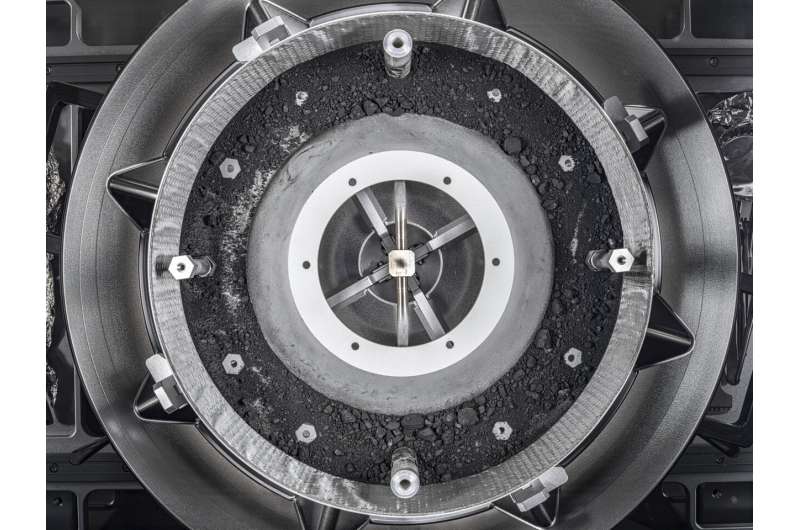
The age-old question of whether life on Earth has extraterrestrial origins has taken a significant leap forward thanks to NASA’s OSIRIS-REx mission. In 2023, the spacecraft returned 122 grams of pristine material from the near-Earth asteroid Bennu, the largest sample ever brought back from beyond the moon. These dust and pebble samples contain not only organic molecules but also sodium-rich salts that indicate the presence of ancient water on Bennu’s parent body. This discovery provides the strongest evidence yet that asteroids could have delivered essential ingredients for life to our planet, potentially making us cosmic descendants. In this article, we delve into the scientific findings from Bennu’s samples, their implications for astrobiology, and how they reshape our understanding of life’s origins.
Launched in 2016, NASA’s OSIRIS-REx mission was designed to collect and return samples from the asteroid Bennu, a near-Earth object approximately one-third of a mile wide. After years of detailed mapping and surface analysis, the spacecraft executed a successful touch-and-go maneuver in 2020, collecting dust, pebbles, and regolith from Bennu’s surface. The sample return capsule safely landed in Utah’s desert in September 2023, delivering 122 grams of material—the largest extraterrestrial sample returned since the Apollo moon missions.
This achievement far surpasses previous asteroid sample returns by Japan’s Hayabusa and Hayabusa2 missions, which brought back only a few milligrams of material. Bennu’s samples offer a unique window into the early solar system, preserving materials from 4.5 billion years ago. The pristine nature of these samples allows scientists to study the building blocks of life in their original cosmic context, free from the contamination and alteration common in meteorites that land on Earth.
The mission’s success has energized the planetary science community, with over sixty laboratories worldwide currently analyzing Bennu’s material. The OSIRIS-REx mission not only advances our understanding of asteroids but also paves the way for future sample-return missions, including plans by China and other space agencies to retrieve materials from asteroids and comets.
One of the most groundbreaking discoveries from Bennu’s samples is the detection of organic molecules essential for life. Scientists have confirmed the presence of amino acids, nitrogen-bearing compounds such as ammonia, and molecular fragments related to genetic material. Amino acids are the fundamental components of proteins, which are crucial for cellular functions in all known life forms.
The organic molecules found in Bennu are particularly significant because they formed in space rather than being contaminants from Earth. Detailed chemical analyses show that these compounds are indigenous to the asteroid, providing direct evidence that complex organic chemistry occurs in the early solar system and that asteroids can carry these molecules across space.
The presence of nitrogen, especially in the form of ammonia, is a surprising and vital finding. Nitrogen is a key element in amino acids and nucleobases, which make up DNA and RNA. The relatively high abundance of nitrogen in Bennu’s samples suggests that the asteroid’s parent body had conditions conducive to forming complex organic materials, which could have been delivered to early Earth, seeding it with life’s precursors.
Perhaps even more compelling than the organic molecules is the discovery of sodium-rich minerals and salts within Bennu’s samples. These salts are remnants of ancient brines—salty water solutions—that once existed on Bennu’s parent asteroid. Such findings indicate that this parent body harbored liquid water environments, possibly underground lakes or oceans, billions of years ago.
This watery environment is crucial because water acts as a solvent, facilitating chemical reactions that lead to the formation of complex organic molecules and, ultimately, life. The presence of these salts provides the strongest evidence yet that asteroids can contain habitable environments, albeit in miniature form, far from Earth.
The salty minerals found in Bennu resemble those found in Earth’s driest deserts, such as the Mojave and Sahara, which are known for preserving ancient salts. These salts would likely be lost or altered if the samples had come to Earth via meteorites, highlighting the importance of direct sample return missions to preserve delicate extraterrestrial materials.
The discovery that asteroids like Bennu contain both organic molecules and evidence of ancient water strongly supports the theory that life’s ingredients were delivered to Earth from space. This panspermia-related hypothesis suggests that the early Earth was seeded with prebiotic molecules via asteroid and comet impacts, providing the raw materials needed for life to emerge.
These findings imply that the processes leading from simple elements to complex organic compounds could have been widespread and occurred very early in the solar system’s history. The interaction of organic molecules with salty water environments on asteroids could have set the stage for the chemical evolution that eventually led to life on Earth.
Understanding that life’s building blocks are not unique to Earth but are present on space rocks orbiting the sun expands the possibility that life may exist elsewhere in the universe. It also challenges the traditional view that life originated solely through Earth-bound processes, suggesting a more cosmic perspective on biology’s origins.
Sample return missions like OSIRIS-REx are revolutionizing astrobiology by providing uncontaminated extraterrestrial material for laboratory analysis. Unlike meteorites that land on Earth and are exposed to atmospheric and environmental changes, returned samples retain their original chemical signatures, enabling more accurate studies of their composition and history.
The Bennu samples have already yielded discoveries impossible to achieve with remote sensing or meteorite studies, such as the detection of fragile salts and detailed organic chemistry. These successes underscore the importance of continuing and expanding sample return missions to other asteroids, comets, and potentially Mars.
Future missions planned by NASA, the European Space Agency, and China aim to collect and return samples from a variety of small bodies, each offering unique insights into the solar system’s formation and the distribution of life’s ingredients. Such missions will help build a comprehensive picture of how organic chemistry and water interacted across different environments in space.
Despite the wealth of information gleaned from Bennu’s samples, many challenges remain in fully understanding their implications. The samples are limited in quantity, and their delicate nature requires careful handling to avoid contamination or alteration. Scientists must employ highly sensitive and precise analytical techniques to unlock their secrets.
Moreover, ongoing studies are needed to determine the exact processes that formed the organic molecules and salts, how these compounds interacted with water, and whether these environments could have supported more complex chemistry leading to life. This requires interdisciplinary collaboration between chemists, planetary scientists, and astrobiologists.
As more data emerges, researchers are also advocating for additional sample return missions targeting different types of asteroids and comets. Comparing materials from diverse bodies will clarify the variability and universality of life’s building blocks in the solar system, advancing our quest to understand life’s cosmic origins.
The discoveries from Bennu’s samples raise profound philosophical and scientific questions about our origins. If the essential ingredients of life arrived on Earth from asteroids, it suggests that life on our planet is intrinsically connected to the broader cosmos. In this sense, we are, quite literally, made of star stuff and cosmic dust.
This cosmic connection blurs the line between Earth-bound life and extraterrestrial matter, suggesting that life’s building blocks are widespread across the solar system and potentially beyond. It invites us to consider that life elsewhere might share chemical similarities with life on Earth, increasing the chances of finding extraterrestrial organisms.
While the question 'Are we all aliens?' remains open, Bennu’s samples provide some of the strongest scientific support for the idea that life’s origins are not isolated to Earth. Instead, they are part of a vast cosmic story that began billions of years ago in the swirling clouds of dust and gas that formed our solar system.
The OSIRIS-REx mission’s return of samples from asteroid Bennu marks a transformative moment in our quest to understand life’s origins. The presence of organic molecules alongside salty remnants of ancient water environments reveals that the ingredients for life are not unique to Earth but distributed across the solar system. These discoveries lend strong support to the idea that asteroids could have played a pivotal role in seeding our planet with life’s building blocks, suggesting a profound cosmic connection to our existence. As researchers continue to analyze Bennu’s samples and prepare for future missions, we move closer to answering fundamental questions about where we come from and whether life exists beyond our planet. In this grand cosmic narrative, it appears we are not merely Earthlings but participants in a universal story that began billions of years ago among the stars.
Originally reported by chron.com. Adapted for our readers.
Keep reading
AI Trends & News
Microsoft opens Surface Laptop Ultra pre-orders from US$2,599.99. Explore its launch date, NVIDIA RTX Spark features and implications for Nigerian businesses.
Science & Technology
DJI’s IBC recognition puts pocket gimbal and panoramic capture in the spotlight. Here is how creators can assess framing, editing effort and recording workflows.
Business News
App store steering is about more than permission to add a link. Explore fees, renewal terms, customer experience and the UK consultation.
TAMFIS NIG LTD
Electrical and instrumentation engineering, bid preparation and consulting, IT and software.

