NASA space telescope gets 1st clear X-ray image of sun-like star blowing a bubble
Science & Technology

NASA space telescope gets 1st clear X-ray image of sun-like star blowing a bubble

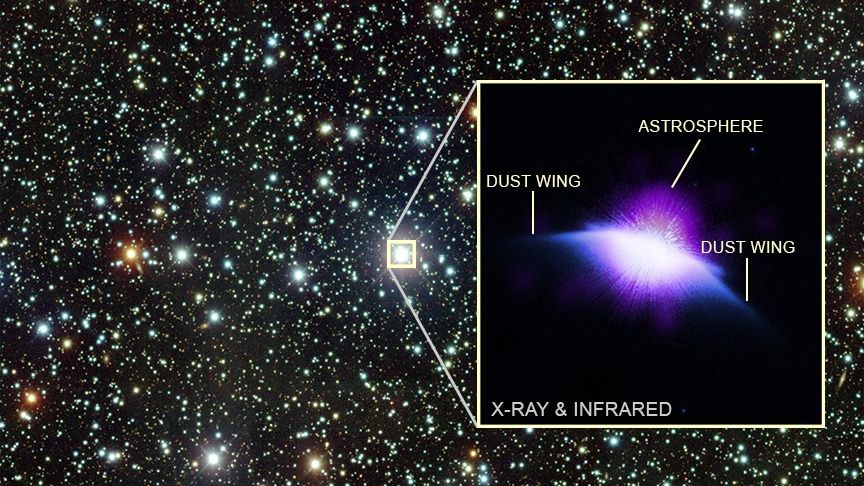
Astronomers have captured the first views of a young sun-like star blowing bubbles, offering a rare glimpse at how our solar neighborhood might have behaved in its youth. Using NASA's Chandra X-ray Observatoryresearchers observed HD 61005 — a young star located about 120 light-years from Earth with roughly the same mass and temperature as our sun — and detected a vast bubble of hot gas surrounding it. This wind-blown bubble, known as an "astrosphere," forms when a star's powerful stellar wind slams into surrounding interstellar gas and dust, carving out a protective cavity much like the sun's heliosphere that shields our solar system from galactic cosmic rays, according to a statement from NASA. This marks the first X-ray evidence of an astrosphere around a star like our sungiving astronomers their clearest look yet at one of these...
Continue reading
Webb’s Infrared Vision Reveals Planetary Nebula that Looks Strikingly Like Celestial Brain
Science & Technology

Webb’s Infrared Vision Reveals Planetary Nebula that Looks Strikingly Like Celestial Brain

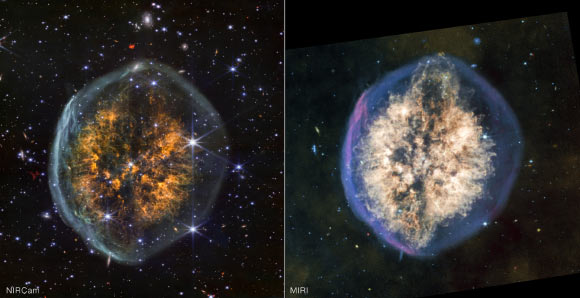
The unmatched sensitivity of the NASA/ESA/CSA James Webb Space Telescope in both near- and mid-infrared light sheds new light on PMR 1, a little-studied nebula in the constellation of Vela.These Webb images show PMR 1, a planetary nebula some 5,000 light-years away in the constellation of Vela. Image credit: NASA / ESA / CSA / STScI / Joseph DePasquale, STScI.PMR 1 is a planetary nebula located approximately 5,000 light-years away in the constellation of Vela.Also known as IRAS 09269-4923, the object was first revealed in infrared light by NASA’s now-retired Spitzer Space Telescope in 2013.Webb’s advanced instruments now show detail that enhances the nebula’s brain-like appearance.“The nebula appears to have distinct regions that capture different phases of its evolution — an outer shell of gas that was blown off first and consists mostly of hydrogen,...
Continue reading
Blue Origin scrubs New Glenn’s second flight due to bad weather
Science & Technology

Blue Origin scrubs New Glenn’s second flight due to bad weather

Blue Origin has postponed the second flight of its New Glenn rocket, which was slated to send a pair of NASA spacecraft on the first step of their journey to Mars on Sunday afternoon. The heavy-lift launch vehicle was scheduled to take off from Cape Canaveral Space Force Station in Florida at 2:45PM ET., but multiple holds were issued during the under-two-hour launch window due to inclement weather. Blue Origin called off the launch attempt around 4:13PM. The next launch opportunity is as yet unclear. Blue Origin was previously given a backup opportunity set for Monday afternoon, but the FAA has since issued an emergency order restricting commercial launches for the time being due to the government shutdown. As of November 10, commercial space launches can only take place between 10:00PM and 6:00AM. Blue Origin said...
Continue reading
NASA spacecraft tracks comet SWAN in incredible 40-day timelapse — and even glimpses interstellar invader 3I/ATLAS (video)
Science & Technology

NASA spacecraft tracks comet SWAN in incredible 40-day timelapse — and even glimpses interstellar invader 3I/ATLAS (video)

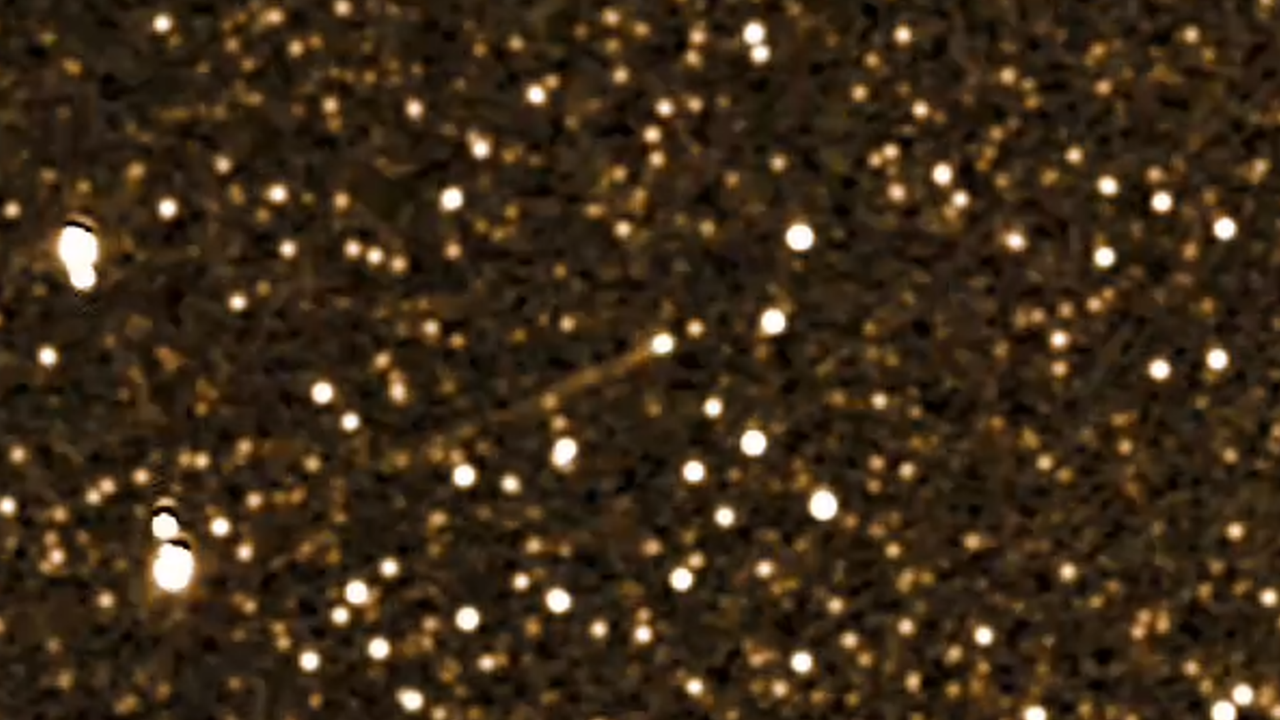
Comets are famous for making brief, dramatic appearances in our skies, but one icy wanderer just received an unprecedented level of attention from one of NASA's newest spacecraft. Comet SWAN moving across the sky in PUNCH images taken from Sept. 11 to 22, 2025. (Image credit: NASA/Southwest Research Institute)The video above stitches together hundreds of PUNCH images taken from Aug. 25 to Oct. 2, showing the comet gliding between two bright objects — Mars at the top and the star Spica in the constellation of Virgo at the bottom. Because the images were not fully processed before being combined, boundaries between individual snaps remain visible as thin black seams, the statement read.Comet C/2025 R2 (SWAN) was first spotted in September by Ukrainian amateur astronomer Vladimir Bezugly, who noticed the icy visitor a bright blob...
Continue reading