
AI Trends & News
Surface Laptop Ultra Pre-orders Open: Price, Release Date and AI Features
Microsoft opens Surface Laptop Ultra pre-orders from US$2,599.99. Explore its launch date, NVIDIA RTX Spark features and implications for Nigerian businesses.
TAMFIS NIG LTDRC 8067447CAC ACTIVEFinima, Bonny Island, Rivers State

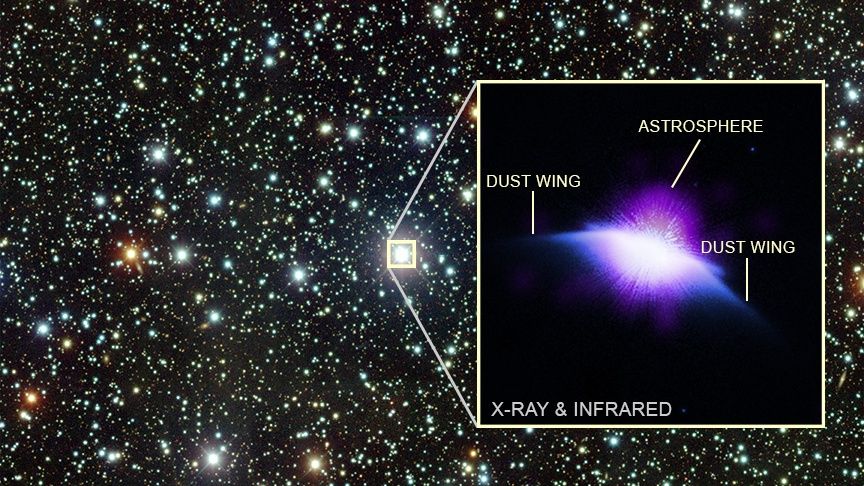
Astronomers have long sought to understand how stars similar to our sun interact with their surroundings, particularly during their youth when stellar winds are most intense. Recently, NASA's Chandra X-ray Observatory achieved a groundbreaking milestone by capturing the first clear X-ray image of a sun-like star, HD 61005, blowing a vast bubble of hot gas called an astrosphere. Located approximately 120 light-years from Earth, HD 61005 serves as a cosmic laboratory to study stellar wind dynamics and their role in shaping planetary environments. This article delves into the significance of this discovery, the nature of astrospheres, and what this means for our understanding of the sun’s past and the habitability of exoplanetary systems.
An astrosphere is a vast bubble formed when a star’s stellar wind — a stream of charged particles emitted from its surface — collides with the surrounding interstellar medium composed of gas and dust. This interaction carves out a protective cavity around the star, much like the heliosphere that envelops our solar system. The heliosphere shields Earth and other planets from harmful galactic cosmic rays and interstellar material, playing a crucial role in sustaining life.
The boundary where the stellar wind meets the interstellar medium is a site of intense physical processes. High-speed particles from the star slam into colder, denser interstellar gas, heating it to millions of degrees and producing X-ray emissions. Detecting these X-rays allows astronomers to visualize the shape and extent of the astrosphere, providing critical data on stellar wind properties and the star’s environment.
Until now, direct X-ray observations of astrospheres around stars similar to our sun were elusive due to the faintness and diffuse nature of the emissions. The recent observations of HD 61005 mark the first time astronomers have clearly imaged such a bubble in X-rays, opening new avenues to study how stellar winds evolve and influence their cosmic neighborhoods.
HD 61005, often nicknamed the “Moth” due to the wing-shaped structure of its debris disk seen in infrared light, is a young star approximately 100 million years old. In comparison, our sun is about 4.6 billion years old. Despite its youth, HD 61005 shares a similar mass and surface temperature with our sun, making it an excellent proxy for studying early solar conditions.
The star’s stellar wind is significantly more potent than that of our current sun. Researchers estimate its wind blows roughly three times faster and is about 25 times denser. This intense outflow of charged particles inflates a larger and brighter astrosphere, which is more easily detectable in X-rays. The surrounding interstellar environment around HD 61005 is also unusually dense, approximately a thousand times denser than our solar neighborhood, amplifying the interaction and enhancing the X-ray signal.
This combination of a strong stellar wind and dense interstellar medium creates a dynamic environment where the astrosphere’s shape and size provide vital clues about the star’s activity and its impact on nearby space. Studying HD 61005 helps astronomers build models of how our sun’s wind evolved during its formative years.
NASA’s Chandra X-ray Observatory, launched in 1999, is designed to observe high-energy phenomena in the universe, including black holes, neutron stars, and hot gas around stars. Its exceptional angular resolution and sensitivity make it the ideal tool for detecting faint X-ray emissions from astrospheres.
In the case of HD 61005, Chandra’s sharp vision revealed a faint, extended glow tracing the outline of the star’s astrosphere. These X-rays originate where the fast, dense stellar wind collides with the colder interstellar gas, heating it to millions of degrees and causing it to emit high-energy photons. This detection was a first for a star so closely resembling our sun.
The success of this observation underscores Chandra’s critical role in advancing stellar astrophysics by providing direct evidence of phenomena previously only theorized or indirectly inferred. It also sets the stage for future studies of other sun-like stars to better understand the diversity of stellar wind environments.
The detection of HD 61005’s astrosphere offers a rare glimpse into what the early solar system’s environment might have been like. Billions of years ago, the young sun likely emitted a stronger and denser stellar wind, carving out a larger heliosphere and influencing the formation and evolution of planets and smaller bodies.
By comparing the properties of HD 61005’s wind and astrosphere with models of the young sun, scientists can refine their understanding of how solar wind shaped the primordial solar neighborhood. This includes assessing how energetic particles may have impacted planetary atmospheres, potentially affecting habitability conditions on early Earth and other planets.
Furthermore, the study sheds light on the interactions between stellar winds and interstellar clouds that the sun might have encountered as it orbited the galaxy. Such encounters could have periodically altered the heliosphere’s size and shielding effectiveness, with possible implications for Earth’s climate and cosmic ray exposure.
Stellar winds are a double-edged sword for planetary systems. On one hand, they help clear away residual gas and dust from the star’s formation, enabling planets to form and evolve. On the other hand, intense winds can strip planetary atmospheres, especially around young, active stars, potentially rendering planets inhospitable.
Understanding the strength and variability of stellar winds is crucial for assessing the habitability of exoplanets orbiting sun-like stars. The X-ray observations of HD 61005’s astrosphere provide empirical data on how winds evolve and interact with their surroundings, informing models of atmospheric retention and erosion.
This knowledge is particularly important for missions hunting Earth-like planets in habitable zones. By characterizing the stellar environment, scientists can better predict which exoplanets are more likely to sustain atmospheres conducive to life, guiding future observational strategies.
The pioneering X-ray image of HD 61005’s astrosphere opens exciting opportunities for further research. Astronomers plan to target other young sun-like stars with varying ages and stellar wind properties to build a comprehensive picture of how astrospheres evolve over time.
Next-generation X-ray observatories with enhanced sensitivity and resolution will enable detection of even fainter astrospheres, expanding the sample size and diversity of stars studied. This will refine models of stellar wind interactions and their impact on planetary systems across the galaxy.
Additionally, multiwavelength observations combining X-ray, infrared, and optical data will provide a holistic view of the complex processes shaping astrospheres and debris disks. Such integrated studies are essential for unraveling the intricate relationship between stars, their winds, and surrounding environments.
Beyond advancing astrophysics, understanding stellar winds and astrospheres has practical implications for space exploration and technology. The solar wind affects spacecraft electronics, satellite operations, and astronaut safety. Insights gained from stars like HD 61005 help improve space weather forecasting and mitigation strategies.
Moreover, studying astrospheres contributes to fundamental plasma physics, informing how charged particles behave in magnetic fields and collision zones. These principles have broader applications in fusion research and space propulsion technologies.
The collaboration between observatories, universities, and space agencies demonstrated in this research exemplifies the synergy required to push the frontiers of knowledge. It highlights the importance of sustained investment in space telescopes and interdisciplinary science to unlock the secrets of our cosmic neighborhood.
The first clear X-ray image of the astrosphere around HD 61005 represents a monumental step forward in understanding how stars like our sun interact with their cosmic environments. This discovery not only illuminates the nature of stellar winds and their powerful influence on surrounding space but also offers a valuable window into the conditions that shaped our own solar system’s infancy. As technology advances and more observations accumulate, astronomers will continue piecing together the intricate story of star-planet interactions, ultimately enhancing our knowledge of planetary habitability and the dynamics of the galaxy at large.
Originally reported by space.com. Adapted for our readers.
Keep reading
AI Trends & News
Microsoft opens Surface Laptop Ultra pre-orders from US$2,599.99. Explore its launch date, NVIDIA RTX Spark features and implications for Nigerian businesses.
Science & Technology
DJI’s IBC recognition puts pocket gimbal and panoramic capture in the spotlight. Here is how creators can assess framing, editing effort and recording workflows.
Business News
App store steering is about more than permission to add a link. Explore fees, renewal terms, customer experience and the UK consultation.
TAMFIS NIG LTD
Electrical and instrumentation engineering, bid preparation and consulting, IT and software.

