
In an unexpected but scientifically valuable event, an empty upper stage of a SpaceX Falcon 9 rocket crashed into the Moon near the Einstein crater at a speed exceeding 5,400 mph. While the impact itself was too fleeting and faint to be observed directly by amateur astronomers, professional observatories and lunar orbiters are now analyzing the aftermath. This collision, caused by a piece of space debris left drifting after a January 2022 mission, transforms a random accident into a controlled experiment that could deepen our understanding of lunar geology and improve the design of future lunar exploration missions.
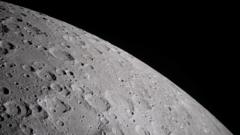
The Journey of the Falcon 9 Upper Stage
The Falcon 9 rocket, known for its reusable design, launched in January 2022 from Florida carrying two lunar landers. After completing its primary mission of propelling the landers out of Earth's orbit toward the Moon, the upper stage was left in a long, looping orbit around Earth and the Moon. Over 18 months, subtle forces including gravitational tugs from Earth, the Moon, and the Sun, as well as solar radiation pressure, gradually altered its trajectory.
Astronomers tracking this spent rocket stage determined that these small nudges eventually set it on a collision course with the lunar surface. Weighing at least 4,000 kilograms and roughly the size of a five-story building, the upper stage accelerated toward the Moon, culminating in the impact near the Einstein crater.
Observing the Impact and Its Immediate Aftermath
The collision occurred at approximately 07:35 BST on a Wednesday, during daylight hours for many parts of the world. The impact produced a brief flash lasting only a fraction of a second, too faint and fleeting for most amateur astronomers to detect, even with advanced telescopes. However, the resulting dust plume, potentially extending up to 100 kilometers, might have been visible for several minutes.
No lunar orbiters were positioned to capture the impact live. South Korea’s Danuri orbiter passed near the site shortly before the collision and may have recorded data, though any footage will be released only after thorough analysis. NASA’s Lunar Reconnaissance Orbiter is expected to photograph the impact site in the coming days, allowing scientists to compare before and after images to assess the crater’s size and ejecta.
A Rare Controlled Experiment for Planetary Science
Unlike natural meteorite impacts, this event offers scientists a unique advantage: precise knowledge of the impacting object's size, speed, and exact location. This transforms the collision from a random event into a controlled experiment, enabling researchers to test and refine models of impact dynamics on the Moon.
Understanding how impacts excavate craters, distribute debris, and generate seismic waves is crucial for planetary geologists. This knowledge has practical applications, such as informing the design of lunar landers and habitats to withstand debris and ground shaking. It also helps predict the hazards posed by future impacts, which is vital for the safety of astronauts and equipment on the Moon.
Insights into Lunar Geology and the Earth-Moon System
The impact ejects material from beneath the lunar surface, offering fresh samples for analysis. Studying this subsurface material can provide new clues about the Moon’s geological composition and history, complementing data gathered from previous missions and lunar samples returned to Earth.
These insights contribute to broader scientific understanding of the Earth-Moon system’s formation approximately 4.5 billion years ago. Each new piece of information helps refine theories about how the Moon evolved and its ongoing geological processes.
Context: Human-Made Objects Colliding with the Moon
This is not the first time a human-made object has impacted the Moon. Since 1959, numerous spacecraft have crashed into the lunar surface, some intentionally and others accidentally. The Soviet Luna 2 probe was the first artificial object to reach the Moon, followed by NASA’s Ranger missions in the 1960s and various Apollo-era rocket stages.
More recently, in 2009, NASA’s LCROSS mission deliberately crashed a spacecraft into a permanently shadowed lunar crater to search for water ice. The last confirmed accidental impact before this event occurred in 2022 when a leftover booster from a 2014 Chinese lunar mission struck the Moon.
These incidents highlight the growing accumulation of space debris in Earth-Moon space, underscoring the need for improved tracking and management of defunct spacecraft to minimize risks to future missions.
Challenges and Opportunities in Monitoring Lunar Impacts
Detecting and analyzing impacts on the Moon is challenging due to the vast distance—approximately 385,000 kilometers—and the brief nature of impact flashes. The recent SpaceX rocket collision demonstrates the limitations of amateur observations and the importance of coordinated efforts by professional observatories and lunar orbiters.
Image processing and data analysis from telescopes can take days or weeks to yield clear results, requiring patience and precision. However, these efforts are critical for advancing lunar science and preparing for human exploration.
The event also serves as a reminder of the dynamic environment around the Moon, where natural and artificial objects continue to interact, shaping the lunar surface and influencing mission planning.
What this means
The unexpected collision of a SpaceX Falcon 9 rocket stage with the Moon has transformed a piece of space debris into a valuable scientific opportunity. By leveraging precise data about the impact, scientists can deepen their understanding of lunar cratering processes, surface geology, and the risks posed by impacts to future lunar exploration. As humanity prepares to return to the Moon with new missions and ambitions, insights from this event will help shape safer and more effective strategies for living and working on our nearest celestial neighbor. Moreover, the incident underscores the importance of monitoring and managing space debris to protect both lunar and Earth-orbiting assets in the years ahead.
Source: What can scientists learn from a stray SpaceX rocket hitting the Moon? via www.bbc.co.uk.
This article was curated with AI assistance and reviewed according to Tamfis editorial settings.