Science
Gene Editing and the Future of Dog Breeding: Balancing Innovation with Ethics
For centuries, dog breeding has relied on selective mating to enhance desirable traits and reduce unwant...
TAMFIS NIG LTDRC 8067447CAC ACTIVEFinima, Bonny Island, Rivers State

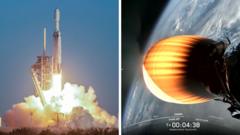
On a clear morning in late August 2026, NASA successfully launched its next-generation space observatory, the Nancy Grace Roman Space Telescope, from the Kennedy Space Center in Florida. This powerful telescope embarks on a mission to explore some of the most profound mysteries of the Universe, including the nature of dark energy, the distribution of dark matter, and the discovery of new worlds beyond our solar system. Named after NASA’s pioneering first chief astronomer, Nancy Grace Roman, the telescope is set to transform our cosmic perspective with its unprecedented wide-field imaging capabilities and advanced instrumentation.
The Nancy Grace Roman Space Telescope distinguishes itself from its predecessors with a field of vision approximately 100 times larger than that of both the Hubble and James Webb space telescopes. While the Hubble orbits roughly 300 miles above Earth and the James Webb orbits about one million miles away, Roman will also position itself around one million miles from Earth, but with a unique mission focus and enhanced panoramic capabilities.
This vantage point, four times farther than the Moon’s distance from Earth, offers a crucial advantage. It minimizes interference from infrared light emitted by the Earth and Moon, allowing Roman’s sensitive instruments to capture clearer images of distant cosmic phenomena. This strategic orbit will enable the telescope to conduct sweeping surveys of the Universe, covering vast areas of the sky in unprecedented detail.
Roman’s scientific goals are ambitious and wide-ranging. One of its primary missions is to investigate dark energy, the mysterious force believed to be driving the accelerating expansion of the Universe. Alongside dark energy, the telescope will study dark matter, the invisible substance that acts as a gravitational scaffold for galaxies and cosmic structures. Together, these components constitute about 95% of the Universe’s total mass-energy content, yet their true nature remains elusive.
In addition to probing these fundamental cosmic forces, Roman will search for and characterize exoplanets—planets orbiting stars beyond our solar system. NASA scientists anticipate that Roman could discover tens of thousands, potentially up to 100,000 new exoplanets. This massive haul will vastly expand our knowledge of planetary systems and the potential for habitable worlds.
The telescope will also map billions of galaxies across cosmic time, creating detailed three-dimensional maps that reveal how galaxies and large-scale structures have evolved. This “cosmic onion” layering approach will help scientists understand the distribution and influence of dark matter and dark energy throughout the Universe’s history.
Roman’s advanced instruments are designed to perform wide-field imaging and spectroscopy with exceptional sensitivity. Its infrared cameras will detect the faint heat signatures of distant objects, while its wide field of view enables it to survey large swaths of the sky quickly and efficiently.
This combination of sensitivity and breadth is a game-changer compared to previous telescopes, which either focused on narrow, deep views (like Hubble) or had more limited fields of vision (like James Webb). Roman’s ability to conduct large-scale surveys will provide a comprehensive cosmic census, identifying targets for more detailed follow-up observations with other telescopes.
The telescope’s planned operational lifespan is five years, with a goal to extend its mission to ten years. This longevity will allow it to accumulate extensive data sets essential for studying dynamic processes such as black hole activity, galaxy formation, and the changing properties of dark energy.
The telescope is named in honor of Nancy Grace Roman, NASA’s first chief astronomer and a trailblazing female executive in the 1960s. Often called the “mother of Hubble,” Roman was instrumental in securing congressional approval for the Hubble Space Telescope and championed the role of space-based astronomy.
Her legacy is reflected in Roman’s mission to push the boundaries of our cosmic knowledge. Like Hubble before it, the Nancy Grace Roman Space Telescope aims to deliver transformative discoveries about the Universe’s structure and origins, continuing a tradition of innovation and exploration inspired by Roman’s vision.
The launch of the Nancy Grace Roman Space Telescope marks a significant milestone in humanity’s quest to understand the cosmos. By providing vast panoramic views and detailed surveys, it will enable scientists to address fundamental questions: What is the nature of dark energy and dark matter? How did galaxies and cosmic structures evolve? Are there other worlds capable of supporting life?
Moreover, Roman’s discoveries will complement and enhance data from other observatories, creating a richer, more integrated picture of the Universe. Its findings could influence not only astrophysics but also philosophical and cultural perspectives about our place in the cosmos.
The telescope’s successful deployment and operation also underscore the importance of continued investment in space science and technology. As NASA and its partners push forward, the insights gained from Roman will inspire future missions and generations of scientists.
The launch of the Nancy Grace Roman Space Telescope represents a transformative step in space exploration and astronomy. By combining a wide field of view with advanced infrared technology, Roman will provide comprehensive surveys that deepen our understanding of the Universe’s most profound mysteries, from the elusive dark energy driving cosmic expansion to the discovery of new exoplanets that could harbor life. As this observatory begins its journey a million miles from Earth, it carries the promise of reshaping our cosmic perspective and inspiring future generations to continue exploring the vast unknown.
Originally reported by bbc.co.uk. Adapted for our readers with AI assistance.
Keep reading
Science
For centuries, dog breeding has relied on selective mating to enhance desirable traits and reduce unwant...
Science
Artificial intelligence has traditionally been a human-designed tool, created to perform tasks such as d...
Science
Earlier this week, a sudden glacier collapse in Nepal unleashed a deadly flash flood, devastating local ...
TAMFIS NIG LTD
Electrical and instrumentation engineering, bid preparation and consulting, IT and software.