Business
Nigeria’s Economic Performance: Domestic Debt Rise and Agriculture Trade Shift in Q2 2026
Nigeria's economic landscape in the second quarter of 2026 presents a mixed picture of fiscal press...
TAMFIS NIG LTDRC 8067447CAC ACTIVEFinima, Bonny Island, Rivers State

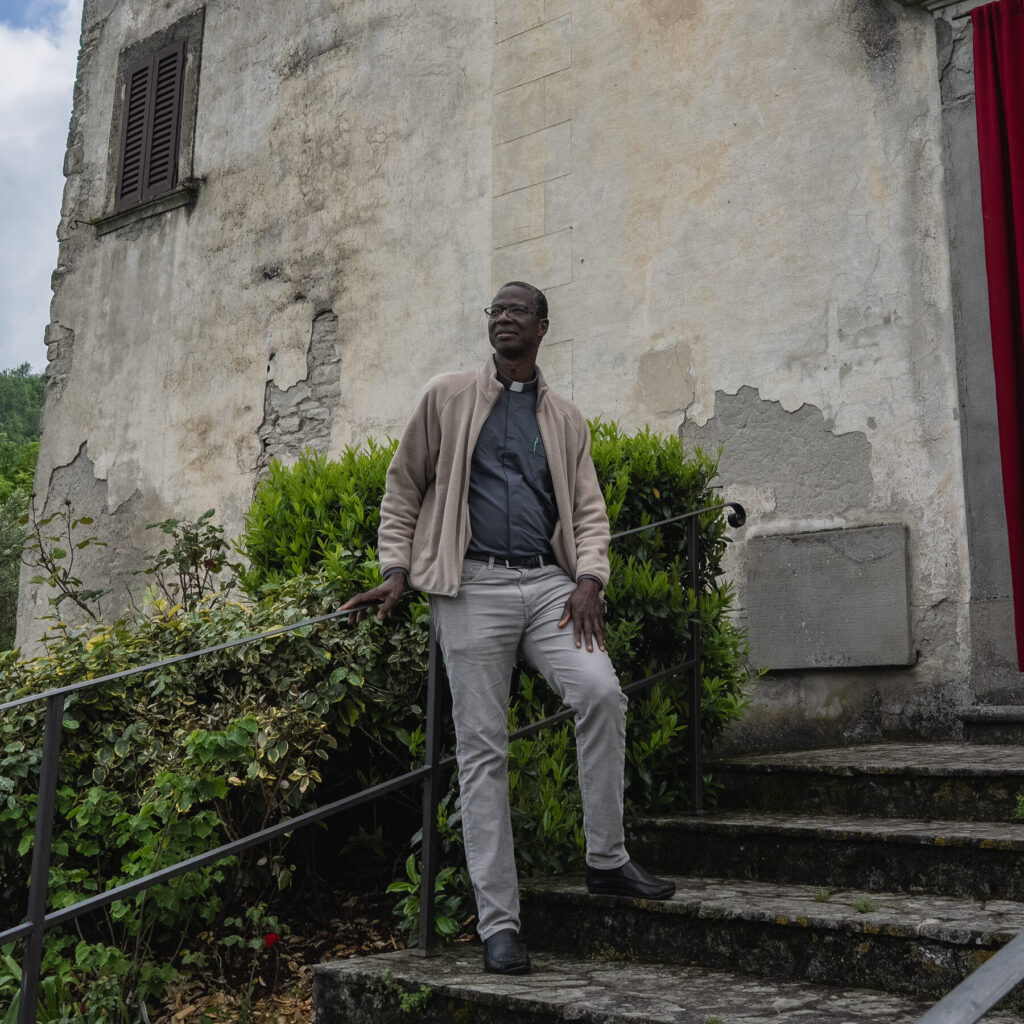
Immigrants have long eased labor shortages on farms and factories in Italy. But churches also need foreign-born priests, like the Rev. Vincent Souly of the Ivory Coast. This dual reality reflects a broader transformation underway across rural Italy, where demographic decline and economic restructuring have created vacancies not only in fields and assembly lines but also in parish rectories. The story of Father Souly illustrates how the Catholic Church in Italy is increasingly relying on clergy from Africa and other parts of the Global South to sustain its presence in communities where native-born vocations have dwindled.
For decades, Italy's agricultural sector and manufacturing base have depended on immigrant workers to fill positions that domestic laborers either cannot or will not take. Seasonal harvests in the Mezzogiorno, dairy operations in the Po Valley, and small-scale manufacturing throughout the north have all been sustained by workers from Eastern Europe, North Africa, and increasingly sub-Saharan Africa. These labor migrants have become integral to the economic survival of entire regions, their remittances supporting families abroad while their daily work keeps Italian enterprises competitive. The pattern is well established: where Italian youth have migrated to cities or abroad, newcomers have stepped in to maintain production.
Less visibly but no less critically, the Catholic Church in Italy faces its own personnel crisis. Rural parishes that once had a resident priest now share clergy across multiple villages, and some communities see a priest only for major feast days. The decline in Italian seminarians has been steep and sustained, leaving bishops with vacant posts they cannot fill from domestic vocations. This shortage mirrors the labor gap in agriculture and industry: an aging workforce, insufficient new entrants, and a geographic mismatch between where clergy live and where they are needed. The Church's response has increasingly looked beyond Italy's borders.
The Rev. Vincent Souly, a priest from the Ivory Coast, represents this new wave of missionary priests serving in Italy. His presence in a rural Italian parish embodies the reversal of a historical pattern: for centuries, Italian missionaries went to Africa; now, African priests come to Italy. Father Souly ministers to communities where the faith remains culturally central but sacramental ministry has grown scarce. He celebrates Mass, administers the sacraments, visits the sick, and participates in the daily life of villages that might otherwise lose their parish entirely. His ministry is not merely functional; it brings a vitality and perspective shaped by the vibrant Catholicism of West Africa, enriching the spiritual life of his Italian parishioners.
The scarcity of Italian priests stems from multiple converging trends. Secularization has reduced Mass attendance and religious practice among younger generations. The cultural prestige once attached to the priesthood has diminished. Families are smaller, and parents less likely to encourage a son's vocation. Meanwhile, the Italian Church's institutional structure — with thousands of small, historic parishes — was designed for a different demographic reality. Consolidation is emotionally and politically difficult, as each parish represents centuries of local identity. Into this structural gap step priests like Father Souly, whose willingness to serve in isolated or declining communities keeps the sacramental life of the Church alive.
The arrival of foreign-born priests raises questions of language, culture, and integration. Father Souly and his counterparts must learn Italian, navigate local customs, and win the trust of parishioners accustomed to Italian clergy. Yet many communities have embraced these priests warmly, recognizing their dedication and the alternative — no priest at all. The exchange is mutually enriching: Italian Catholics encounter the expressive, communal faith of the African Church, while African priests experience the deep sacramental traditions of European Catholicism. This cross-pollination reflects the global nature of the Catholic Church and may point toward a more diverse, resilient clergy in Italy's future.
The parallel stories of immigrant farmworkers and immigrant priests reveal a common truth: rural Italy cannot sustain itself demographically or economically without newcomers. The labor migrant picking tomatoes in Foggia and the African priest hearing confessions in a mountain village are both responding to the same vacuum. Their presence sustains not only economic output and sacramental access but also the social fabric of communities at risk of hollowing out. Policy discussions about immigration in Italy often focus on border control and labor markets; the ecclesiastical dimension adds a moral and cultural layer that is frequently overlooked. The Church's own adaptation — welcoming priests from the very regions that send labor migrants — models a form of integration that is personal, pastoral, and persistent.
Rev. Vincent Souly's ministry in rural Italy is more than an individual story; it is a window into the profound demographic and spiritual reshaping of the Italian countryside. Just as immigrant hands harvest the crops and operate the machines that keep rural economies alive, immigrant priests celebrate the Masses and administer the sacraments that keep rural parishes alive. The Church's embrace of clergy from Africa and elsewhere is both a practical necessity and a theological affirmation of Catholicism's universal character. As Italy continues to navigate its immigration debates, the quiet, daily work of priests like Father Souly offers a compelling counter-narrative: that the strangers welcomed into the vineyard are also the ones sustaining the harvest, in fields and in faith alike.
Originally reported by nytimes.com. Adapted for our readers with AI assistance.
Keep reading
Business
Nigeria's economic landscape in the second quarter of 2026 presents a mixed picture of fiscal press...
Business
Liverpool manager Andoni Iraola is confronting a significant selection headache as two key forwards, Cod...
News
Health News tamfitronics [Editor’snote:[Editor’snote: This transcript was generated using both transcription ...
TAMFIS NIG LTD
Electrical and instrumentation engineering, bid preparation and consulting, IT and software.