
News
RUSSIA versus NATO and BRICS vs. NATO Military SWOT
Recall that Poland’s Minister Sikorski’s core claim is partially supported by the numbers, but the framing “quite quickly” and “without the U.S.” does not…
TAMFIS NIG LTDRC 8067447CAC ACTIVEFinima, Bonny Island, Rivers State

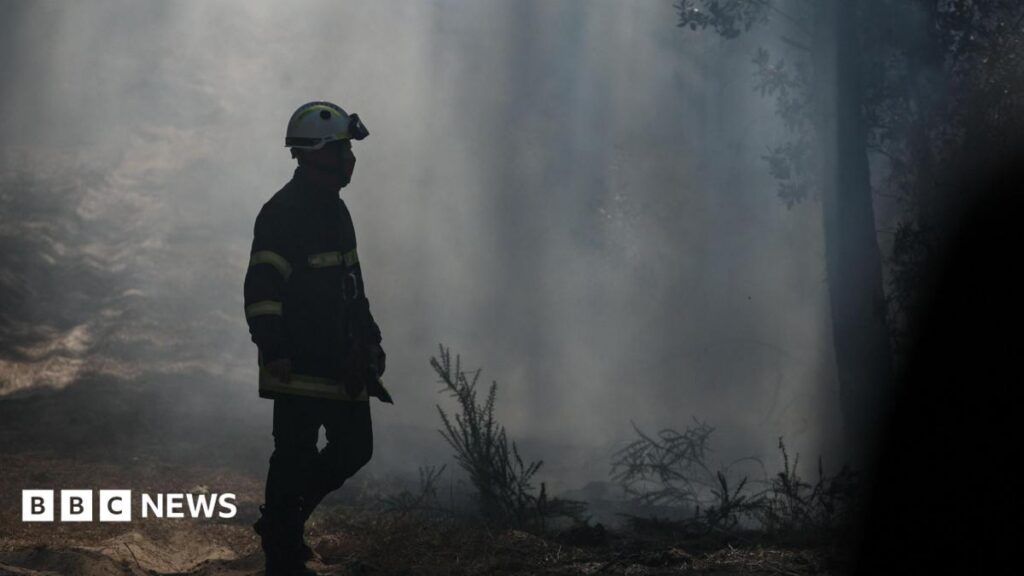
The Gironde region in south-west France is grappling with devastating wildfires that have forced tens of thousands of residents and tourists to evacuate their homes. Despite ongoing firefighting efforts, the situation remains precarious as a fourth heatwave of the summer threatens to push temperatures to 40°C, exacerbating the risk of further flare-ups. This article examines the current wildfire crisis, the response efforts, and the broader implications for the region.
Wildfires have been raging across the Gironde region for several days, consuming vast areas of countryside between the coastline and the city of Bordeaux. Approximately 2,000 firefighters have been deployed to contain the blazes, which have proven difficult to control amid dry conditions and rising temperatures.
Eric Brocardi, spokesperson for the national firefighters' federation, described the battle against the fires as "David against Goliath," highlighting the immense challenge faced by emergency responders. Tragically, four firefighters have lost their lives in recent weeks across France while combating wildfires.
Despite intense efforts, new flare-ups have been reported in 14 locations previously affected by the fires, underscoring the ongoing threat. Firefighting teams continue to intervene across the region, working tirelessly to prevent the flames from spreading further.
The wildfires have forced the evacuation of over 70,000 people in the past week, including residents and tourists. While many have been allowed to return to their homes, some areas remain under evacuation orders due to the persistent danger.
On Tuesday morning, authorities ordered a new evacuation of all camping sites near the Lacanau coast, affecting around 4,000 tourists. Nearby towns were advised to prepare for sudden evacuation if conditions worsened. These recent evacuations add to the 220,000 people displaced across France in recent days due to wildfires.
Local residents have described eerie scenes as smoke and ash fill the air. In Bordeaux, the smoke has significantly reduced air quality, prompting health officials to urge people to stay indoors. Many residents and visitors have resorted to wearing masks, and businesses such as restaurants have had to close temporarily due to the ash contamination.
The fires have destroyed an estimated 240 homes and properties, inflicting severe damage on the landscape and infrastructure. The environmental toll is considerable, with vast tracts of forest and vegetation lost to the flames.
The local economy, particularly tourism and viticulture, has been adversely affected. Château Picque Caillou, a wine estate west of Bordeaux, temporarily closed due to smoke but reported some improvement following recent rainfall. However, the owner noted a significant drop in tourist numbers, which will impact the hospitality sector throughout the summer.
Residents of areas like Cap Ferret, which experienced evacuations, express deep concern for their natural surroundings. Unlike urban centers such as Bordeaux, these regions are heavily forested, and the destruction of trees represents a substantial ecological catastrophe.
The wildfire crisis in south-west France is part of a broader pattern affecting southern Europe. Spain has also been battling severe wildfires, particularly in the Madrid region, where tens of thousands have been evacuated. Portuguese firefighters are engaged in combating a large fire in the Guarda area, highlighting the transnational nature of this environmental challenge.
Authorities across the affected countries are preparing for a new wave of extreme heat, with temperatures forecast to reach 40°C in parts of France and Spain. These conditions increase the risk of fire outbreaks and complicate firefighting operations.
French Interior Minister Laurent Nuñez reported that since early July, 184 arrests have been made in connection with wildfires, including a recent arrest of a young man suspected of arson in the Var region. This underscores the role of human activity in exacerbating the crisis.
Health officials in France are closely monitoring air pollution levels, particularly in urban centers like Bordeaux, where smoke has significantly degraded air quality. The government has urged residents in affected areas to minimize outdoor activities and remain indoors to reduce exposure to harmful pollutants.
The psychological impact on communities is also notable, with many residents experiencing anxiety and disruption due to evacuations and the persistent threat of fire. Firefighters, who have been working continuously for weeks, face exhaustion and heightened risks.
Local authorities continue to issue timely updates and evacuation orders to ensure public safety, emphasizing the importance of vigilance as weather conditions evolve.
The wildfires in south-west France represent a severe and ongoing crisis exacerbated by extreme heat and dry conditions. Despite heroic efforts by firefighters and emergency services, the threat remains acute as the region braces for further temperature spikes. The environmental, social, and economic repercussions are profound, affecting both urban and rural areas. This situation underscores the urgent need for enhanced wildfire prevention strategies, robust emergency preparedness, and regional cooperation to address the growing risks posed by climate change. As communities recover and rebuild, the resilience and solidarity of those affected will be crucial in navigating the challenges ahead.
Editor’s note: The following is AI-generated commentary and context on this topic, not original reporting.
Community resilience and coordinated regional firefighting resources are frequently cited by officials as the biggest factors in how quickly an area bounces back once the immediate crisis described here has passed.
Recovery after a fire like the one at the centre of this story usually involves more than rebuilding structures; land often needs to be stabilised and replanted to prevent erosion and flash flooding once rain eventually returns.
Air quality monitoring stations downwind of major fires typically record spikes in particulate pollution that can persist for days, prompting health advisories even in towns and cities far from the flames themselves.
Local authorities dealing with situations comparable to this one generally rely on a mix of early-warning systems, controlled burns, and public education campaigns to reduce the risk of similar outbreaks in future fire seasons.
Firefighters on the ground in cases like this often describe exhaustion as one of the biggest operational risks, with extended deployments across multiple fire fronts stretching personnel and equipment thin.
Volunteer fire brigades often play an outsized role in rural areas during events like this, supplementing professional crews who are frequently stretched across multiple active fronts simultaneously.
Emergency planners responding to situations like this one typically juggle several competing priorities at once — active suppression, evacuation logistics, road closures, and public health advisories tied to smoke inhalation — often with limited visibility into how conditions will change hour to hour.
Insurance industry data from recent fire seasons across southern Europe suggests that claims tied to wildfire damage have risen sharply, a trend that is prompting insurers to reassess risk pricing in fire-prone regions.
Beyond the immediate danger to life and property, incidents of this scale tend to carry lasting economic effects — insurance losses, tourism disruption, and damage to forestry and agriculture that can take years to fully recover from.
Originally reported by bbc.co.uk. Adapted for our readers with AI assistance.
Keep reading
News
Recall that Poland’s Minister Sikorski’s core claim is partially supported by the numbers, but the framing “quite quickly” and “without the U.S.” does not…
News
Thousands of young protesters in Delhi continue to demand education reforms and the resignation of Education Minister Dharmendra Pradhan after a police crackdown. The…
News
Facing a looming financial collapse, Thames Water’s main lenders have offered the UK government a ‘golden share’ and increased local authority involvement to avoid…
TAMFIS NIG LTD
Electrical and instrumentation engineering, bid preparation and consulting, IT and software.