
Business
Nigeria’s Economic Performance: Domestic Debt Rise and Agriculture Trade Shift in Q2 2026
Nigeria's economic landscape in the second quarter of 2026 presents a mixed picture of fiscal press...
TAMFIS NIG LTDRC 8067447CAC ACTIVEFinima, Bonny Island, Rivers State

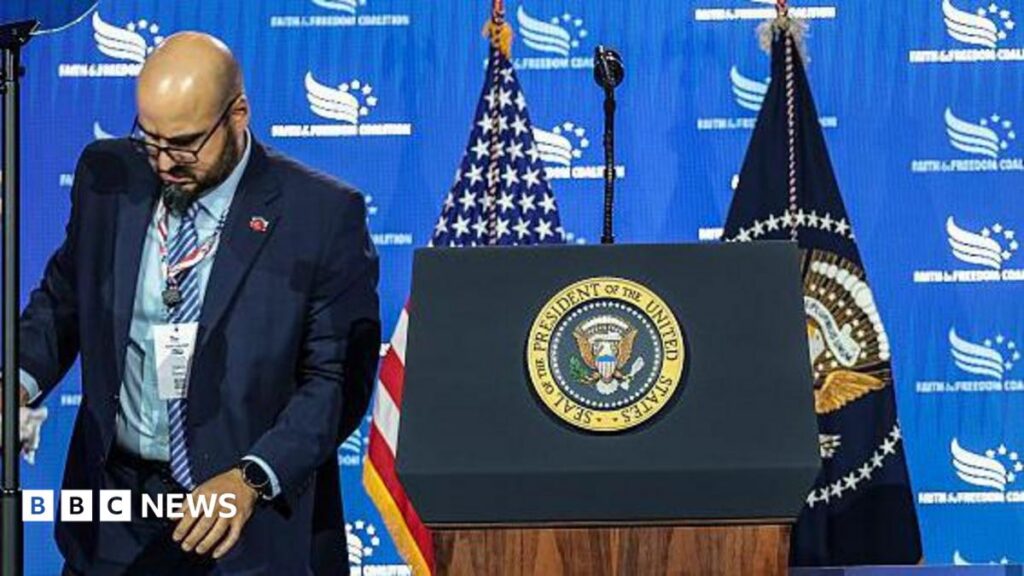
In an unusual convergence of government service, financial technology and market regulation, a former White House teleprompter operator is under investigation for allegedly exploiting privileged access to presidential speeches to place profitable bets on prediction markets. The case of Gabriel Perez, who worked at the White House from 2016 until his recent departure, has drawn attention from the Commodity Futures Trading Commission and sparked debate about the adequacy of current safeguards against insider trading in novel financial instruments. As prediction markets grow in popularity and sophistication, this incident underscores the pressing need for clear rules governing the use of non-public information, particularly for individuals in positions of trust within government institutions.
Gabriel Perez, employed as a teleprompter operator at the White House since 2016, is accused of placing bets totalling nearly $100,000 on the specific wording President Donald Trump would use during major public addresses, including the State of the Union speech. These wagers were made through Kalshi, a regulated prediction market platform that allows users to speculate on real-world events such as whether certain words or phrases will appear in political speeches. The platform's unique structure enables traders to bet on the language of influential figures, creating potential financial incentives for those with advance knowledge of speech content.
Kalshi's internal monitoring systems detected unusual betting activity in March on what are termed 'mention markets', where users predict whether speakers will use specific terms ranging from country names to economic terminology or campaign slogans. Analysts noted patterns consistent with insider knowledge, prompting an investigation that identified Perez as the account holder. His role operating teleprompters granted him direct access to speech scripts before public delivery, providing a clear informational advantage. Upon discovery, Kalshi froze Perez's account, preventing withdrawal of profits reported to exceed $90,000, and referred the matter to the Commodity Futures Trading Commission.
The White House responded promptly, placing Perez on unpaid leave and confirming he is no longer employed there. Press Secretary Karoline Leavitt stated that President Trump was informed of the situation. While federal prosecutors in Manhattan have reportedly declined to pursue criminal charges at this stage, indicating the allegations may not meet the threshold for prosecution, the CFTC referral suggests serious regulatory interest in examining whether existing rules adequately cover insider trading risks in prediction markets.
Prediction markets like Kalshi operate under the oversight of the Commodity Futures Trading Commission, which mandates fair trading practices and prevention of market manipulation. However, these platforms represent a relatively new financial innovation where traditional insider trading concepts may not map directly onto existing regulations. The Perez case highlights a regulatory grey area: while using non-public information for stock trades is clearly illegal, the application of similar principles to bets on speech content in prediction markets remains less explicitly defined, creating potential loopholes for exploitation.
Kalshi's proactive detection and reporting of suspicious activity demonstrates a commitment to regulatory compliance, yet the incident reveals broader challenges in overseeing platforms that intersect with political events. As prediction markets expand to cover increasingly complex event types—from economic indicators to geopolitical developments—the need for sophisticated monitoring tools and clear guidelines becomes more urgent. Regulators and platform operators must collaborate to develop frameworks that prevent abuse while preserving the legitimate functions of these markets in risk management and information aggregation.
The situation also raises questions about the adequacy of current safeguards for government employees with access to sensitive information. While standard ethics rules prohibit insider trading in securities, their extension to prediction markets and other novel financial instruments may require clarification. This case could prompt reviews of existing guidelines and potentially lead to specific prohibitions or disclosure requirements for individuals in positions of trust who might be tempted to monetise privileged access through emerging financial technologies.
The integrity of prediction markets depends on transparency and equal access to information. When individuals with privileged access can exploit these platforms for personal gain, it undermines the fundamental premise that market prices reflect collective wisdom rather than asymmetrical advantages. In the case of political speeches, advance knowledge of wording could allow traders to anticipate market reactions in currencies, stocks or commodities, creating potential distortions that extend far beyond the prediction market itself.
This incident serves as a cautionary tale for both government agencies and financial technology developers. For public institutions, it highlights the need to review access controls and monitoring systems for employees handling sensitive information, particularly as new monetisation avenues emerge through technological innovation. For platform operators, it underscores the importance of robust anomaly detection systems and clear cooperation protocols with regulators when suspicious activity is identified.
Looking ahead, the Perez case may influence regulatory approaches to prediction markets and similar innovations. As these platforms grow in popularity—offering novel ways to hedge against political or economic uncertainty—ensuring they operate with fairness and integrity will be essential to maintaining public trust. The outcome could shape future guidance on insider trading definitions, platform responsibilities, and the ethical boundaries governing the monetisation of information access in both public and private sectors.
The investigation into Gabriel Perez's alleged exploitation of insider information for profit in prediction markets represents more than an isolated ethical lapse; it highlights systemic vulnerabilities at the intersection of government service, financial innovation and regulatory oversight. As prediction markets continue to grow and attract participants seeking to hedge against or speculate on real-world events, ensuring their integrity becomes paramount. This case underscores that technological innovation in finance must be accompanied by equally sophisticated safeguards and clear ethical boundaries, particularly for those in positions of trust. Moving forward, regulators, platform operators and government agencies will need to collaborate closely to develop frameworks that prevent abuse while preserving the legitimate benefits of these markets. Only through such proactive measures can prediction markets fulfil their potential as tools for risk management and information aggregation without compromising fairness or public trust.
Originally reported by bbc.co.uk. Adapted for our readers with AI assistance.
Keep reading
Business
Nigeria's economic landscape in the second quarter of 2026 presents a mixed picture of fiscal press...
Business
Liverpool manager Andoni Iraola is confronting a significant selection headache as two key forwards, Cod...
News
Health News tamfitronics [Editor’snote:[Editor’snote: This transcript was generated using both transcription ...
TAMFIS NIG LTD
Electrical and instrumentation engineering, bid preparation and consulting, IT and software.