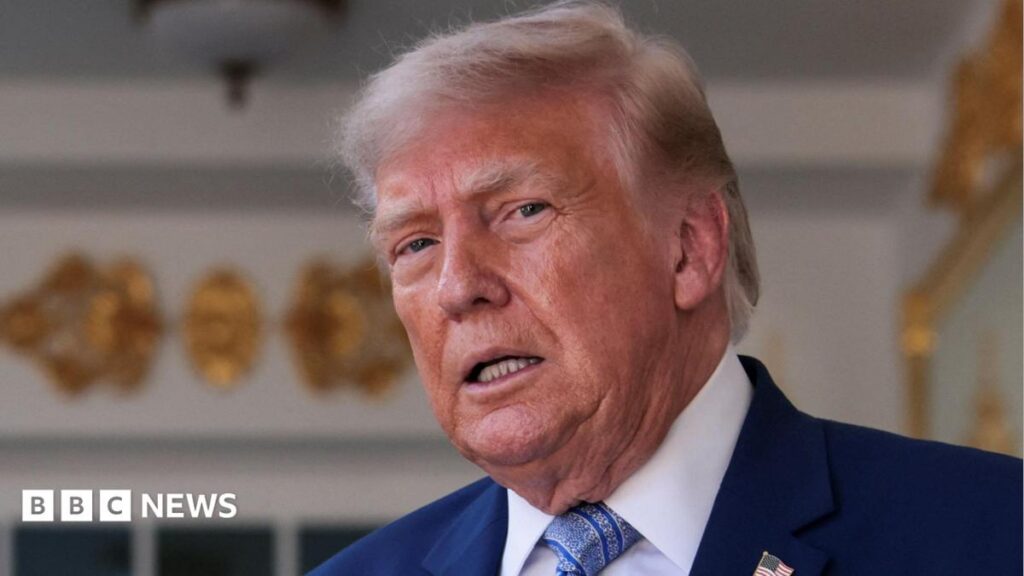
US-EU Tech Trade Tensions Escalate as Trump Vows Investigation Over EU Fines
In a recent escalation of trade and regulatory tensions, US President Donald Trump has declared that the United States will launch an investigation into the European Union over its fines against leading American technology firms. This development comes in the wake of a significant €890 million fine levied against Google by the European Commission, which accused the company of anti-competitive practices. Trump’s announcement also includes threats of imposing tariffs on EU imports, marking a new chapter in the ongoing friction between US tech giants and European regulators.
US-EU Tech Trade Tensions Escalate as Trump Vows Investigation Over EU Fines
Background: EU’s Regulatory Actions Against US Tech Giants
The European Union has taken a firm stance against several major American technology companies, including Google, Apple, Meta, and Amazon, citing concerns about their market dominance and alleged anti-competitive behaviors. Most recently, the European Commission fined Google €890 million (approximately $1 billion) for practices that reportedly squeezed out competitors by favoring its own apps and services.
These fines are part of a broader regulatory framework in Europe aimed at ensuring fair competition and curbing the power of large digital platforms. The EU’s Digital Markets Act, for example, sets rules to prevent gatekeeper companies from abusing their dominant positions, and has been a significant factor in recent enforcement actions.
Trump’s Response: Investigation and Tariff Threats
In a post on Truth Social, the social media platform he owns, President Trump strongly criticized the European Union’s approach, asserting that the US would not serve as a “piggybank” for Europe. He demanded that the fines against Google, Apple, Meta, and Amazon be entirely reversed and announced the initiation of a trade investigation under Section 301 of the Trade Act of 1974.
Section 301 empowers the Office of the United States Trade Representative to investigate and respond to unfair trade practices. Trump’s administration has previously used this mechanism to address perceived trade imbalances and regulatory challenges, and this latest move signals a continuation of that strategy.
In addition to the investigation, Trump indicated that the US is considering imposing substantial tariffs on EU goods. This threat follows his recent announcement of new tariffs ranging from 10% to 12.5% on imports from 60 trading partners, including the EU, UK, and China.
Implications for US-EU Trade Relations
The announcement of a US investigation and potential tariffs could further strain transatlantic relations, which have already been challenged by differing approaches to technology regulation and trade policy. The EU’s fines and regulatory measures are viewed by some in the US as protectionist and punitive, while European authorities argue they are necessary to maintain competitive markets and protect consumers.
For American tech companies, these developments create an uncertain regulatory environment in one of their key markets. Google, for example, has stated that it has worked hard to comply with the EU’s Digital Markets Act but has expressed concerns about the impact of recent decisions by the European Commission.
The potential for tariffs adds another layer of complexity, as increased costs on European imports could provoke retaliatory measures and disrupt established supply chains. This could affect not only the tech sector but also broader economic ties between the US and Europe.
Historical Context and Previous Interactions
This is not the first time that regulatory actions by the EU have drawn sharp criticism from US political leaders. Before his 2024 election, Trump reportedly received a direct call from Apple CEO Tim Cook, who expressed concerns about European fines following a long-running dispute over unpaid taxes.
The Trump administration has a history of using trade investigations and tariffs as tools to address what it perceives as unfair trade practices. Since last year, several Section 301 investigations have been launched targeting various countries and sectors, reflecting a broader strategy of economic assertiveness.
The current situation continues this pattern, with technology companies caught at the intersection of regulatory scrutiny and geopolitical trade disputes.
Reactions from Stakeholders
Google has acknowledged the EU’s efforts to regulate digital markets and stated its commitment to compliance with the Digital Markets Act. However, the company has also voiced concerns about the implications of recent European Commission decisions.
Representatives from Apple, Meta, Amazon, and the European Commission have yet to publicly respond to Trump’s latest statements. Their reactions will be critical in shaping the next steps in this unfolding dispute.
Observers note that while the US government’s support is welcomed by American tech firms, escalating trade tensions could complicate regulatory negotiations and market access.
What this means
The confrontation between the United States and the European Union over fines imposed on major American technology companies highlights the complex interplay between regulation, trade policy, and international relations. While the EU seeks to enforce competitive fairness in its digital markets, the US government views these actions as unfair burdens on its companies and taxpayers. President Trump’s announcement of a trade investigation and potential tariffs signals a willingness to escalate the dispute, potentially affecting not only the tech sector but broader transatlantic economic ties. As both sides navigate this contentious landscape, the outcome will likely influence future regulatory approaches and trade dynamics between two of the world’s largest economic blocs.
Editor’s note: The following is AI-generated commentary and context on this topic, not original reporting.
Transatlantic Tech Regulation Tensions
Friction between the United States and the European Union over technology regulation has intensified as EU competition and privacy enforcement bodies have increasingly targeted major American technology companies with substantial fines, citing violations of antitrust and data protection rules. US officials have periodically characterised these actions as effectively protectionist measures aimed at limiting the competitive advantage of American firms in European markets, while EU regulators maintain that enforcement applies equally regardless of a company’s country of origin.
An investigation threatened at the government level rather than pursued solely through diplomatic channels signals a potential escalation in how trade disputes over digital regulation are handled, with tariffs or other retaliatory trade measures a possible outcome if tensions are not resolved through negotiation. Businesses operating across both markets often express concern that prolonged regulatory disputes create uncertainty for long-term investment and compliance planning, regardless of which side ultimately prevails in any given dispute.
Originally reported by bbc.co.uk. Adapted for our readers with AI assistance.
Thousands of young protesters in Delhi continue to demand education reforms and the resignation of Education Minister Dharmendra Pradhan after a police crackdown. The…
Facing a looming financial collapse, Thames Water’s main lenders have offered the UK government a ‘golden share’ and increased local authority involvement to avoid…
Facing record-breaking temperatures and severe drought, Thames Water has introduced a hosepipe ban impacting over 10 million customers across parts of southern England to…