Trump’s Billion-Dollar Earnings in Office: Political Consequences for the GOP?
In 2025, President Donald Trump disclosed earnings exceeding $2.2 billion, a figure that dwarfs the income he reported during his first year in office. This unprecedented accumulation of wealth by a sitting president has ignited discussions about the intersection of personal business interests and public service. With consumer prices rising and economic inequality deepening, Democrats are poised to highlight Trump’s financial gains as evidence of corruption and self-enrichment. Meanwhile, Trump and his supporters argue that such criticisms will fail to resonate with voters, citing his previous experience where his restraint on foreign business ventures went largely unnoticed. This article explores the details behind Trump’s wealth growth, the political strategies surrounding it, and the potential impact on the Republican Party’s fortunes in the near future.
Trump’s Billion-Dollar Earnings in Office: Political Consequences for the GOP?
A Surge in Presidential Earnings: Understanding the Numbers
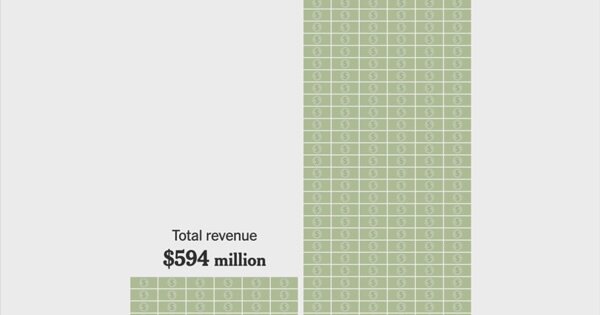
Financial disclosures reveal that President Trump’s income in 2025 reached more than $2.2 billion, marking a dramatic increase from the $594 million he earned during his first full year in office. This tripling of revenue underscores the scale of his business operations and their growth during his presidency.
The sources of Trump’s wealth are diverse, spanning real estate holdings, licensing deals, and other ventures under the Trump Organization umbrella. While specific breakdowns of income streams are complex, the overall figure reflects a significant expansion of his financial empire even as he held the nation’s highest office.
Such earnings raise questions about the ethical boundaries of presidential business activities, especially in light of ongoing debates about conflicts of interest and the appropriate separation between public duties and private profit.
Political Repercussions: Democrats’ Strategy and Public Perception
Democrats are preparing to use Trump’s financial disclosures as a central theme in their campaign messaging for the upcoming midterm elections. Their argument frames Trump’s wealth accumulation as emblematic of corruption and self-dealing, particularly poignant as many Americans face economic hardships due to inflation and widening inequality.
A recent CNN poll highlights the public’s concerns, with nearly two-thirds of Americans expressing the view that Trump overstepped ethical boundaries by pursuing personal business interests while serving as president. This sentiment provides Democrats with a potent line of attack aimed at mobilizing voters dissatisfied with economic conditions and governance.
The Democratic strategy will likely emphasize the contrast between Trump’s personal financial success and the struggles of ordinary citizens, seeking to portray the Republican Party as aligned with elite interests rather than the public good.
Trump’s Defense and GOP Calculus
President Trump dismisses the Democratic critique, contending that voters are indifferent to his business dealings. He points to his first term, during which he refrained from initiating new foreign business ventures, yet received little political credit for this restraint.
This perspective suggests that Trump believes his base prioritizes other issues over concerns about personal enrichment, and that the financial disclosures will not significantly damage his or the Republican Party’s standing with their supporters.
For the GOP, this presents a complex calculation. While some Republicans may seek to distance themselves from the optics of Trump’s wealth, others may rally around his narrative of business success as a qualification for leadership. The party’s response could influence its cohesion and electoral prospects in the midterms.
Broader Implications for Governance and Public Trust
The unprecedented scale of Trump’s earnings while in office raises broader questions about the norms governing presidential conduct and the potential need for reforms to address conflicts of interest.
Public trust in government institutions may be affected if citizens perceive that elected officials prioritize personal gain over public service. This dynamic can fuel cynicism and disengagement, complicating efforts to foster a healthy democratic process.
The Trump case may serve as a catalyst for renewed debates about transparency, ethics, and the mechanisms by which presidents manage their financial interests during their terms.
What this means
President Trump’s extraordinary financial gains during his presidency present a multifaceted challenge for American politics. While Democrats aim to capitalize on public unease about wealth and inequality, Trump and his supporters remain confident that these issues will not translate into significant political damage. The Republican Party’s response to this dynamic will be critical in shaping its electoral fortunes and internal unity. Beyond immediate politics, the revelations about Trump’s wealth accumulation prompt important conversations about the ethical standards expected of presidents and the mechanisms needed to safeguard public trust. As the midterm elections approach, voters will weigh these considerations alongside broader policy debates, making the intersection of personal wealth and public service a defining feature of the political landscape.
Editor’s note: The following is AI-generated commentary and context on this topic, not original reporting.
Broader Context and Outlook
Currency fluctuations and regional demand differences frequently complicate like-for-like comparisons of corporate results across reporting periods.
Shareholders and market watchers alike tend to focus not just on headline figures but on the underlying strategy a company signals for navigating a changing operating environment.
Longer-term, the sustainability of results like these often depends on how well a company can adapt its supply chains, pricing, and product mix to shifting conditions.
Employee and union responses to corporate performance of this kind can vary considerably, particularly when strong results coincide with broader cost-of-living pressures on the workforce.
Analysts often distinguish between one-off gains and sustainable structural improvements when assessing results like these, since the market tends to reward the latter far more consistently over time.
Industry-wide trends frequently explain part of the picture, meaning individual corporate results of the kind discussed here are best understood in the context of how competitors and the broader sector are performing.
External shocks — from commodity price swings to geopolitical instability — can materially affect a company’s bottom line in ways that are only partly within management’s control, as this case illustrates.
Corporate results like those referenced in “Trump’s Billion-Dollar Earnings in Office: Political Consequences for the GOP?” are usually read by analysts as a signal of broader consumer and market trends, rather than being evaluated purely in isolation.
As is often the case with breaking developments, some of the details surrounding “Trump’s Billion-Dollar Earnings in Office: Political Consequences for the GOP?” may be revised or clarified as more information becomes available in the coming days.
Longstanding institutional practices and precedent frequently play a larger role in how situations like this are ultimately resolved than any single statement made in the heat of the initial news cycle.
The framing chosen by different outlets covering “Trump’s Billion-Dollar Earnings in Office: Political Consequences for the GOP?” can vary considerably depending on editorial priorities, which is one reason it is often useful to read more than a single account of a developing story.
Originally reported by nytimes.com. Adapted for our readers with AI assistance.
Thousands of young protesters in Delhi continue to demand education reforms and the resignation of Education Minister Dharmendra Pradhan after a police crackdown. The…
Facing a looming financial collapse, Thames Water’s main lenders have offered the UK government a ‘golden share’ and increased local authority involvement to avoid…
Facing record-breaking temperatures and severe drought, Thames Water has introduced a hosepipe ban impacting over 10 million customers across parts of southern England to…