Top Stories
Discovery beneath soccer field reveals massive medieval convent lost for centuries
NEWYou can now listen to Fox News articles! Researchers recently uncovered a long-lost medieval convent in an unusual location in Denmark: a soccer field…
TAMFIS NIG LTDRC 8067447CAC ACTIVEFinima, Bonny Island, Rivers State

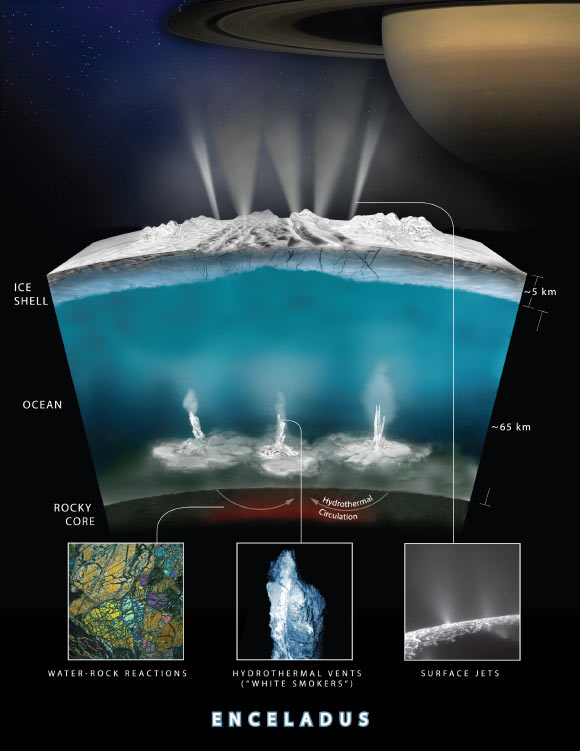
Ocean worlds—planetary bodies with subsurface liquid oceans—have become prime targets in the search for extraterrestrial life. Unlike Earth, many of these worlds are smaller and possess lower gravity, factors that influence the dynamics of their internal oceans and seafloors. A recent study led by researchers at the University of California, Santa Cruz, employed advanced computer simulations to explore how hydrothermal circulation operates under such conditions. Their findings illuminate the potential for long-lived, life-supporting environments beneath the icy crusts of moons like Europa and Enceladus, reshaping our perspective on where life might exist in the Solar System.
Ocean worlds are celestial bodies characterized by the presence of liquid water oceans, often concealed beneath thick layers of ice or embedded within rocky interiors. In our Solar System, notable examples include Jupiter’s moons Europa and Ganymede, and Saturn’s moon Enceladus. These environments are of particular interest because liquid water is a fundamental ingredient for life as we know it.
Hydrothermal circulation refers to the movement of water through the seafloor, driven by heat from the planetary interior interacting with rock. This process not only transports heat but also facilitates chemical exchanges between water and minerals, potentially creating habitats rich in energy and nutrients. On Earth, such systems were first discovered in the 1970s along mid-ocean ridges, where warm, mineral-laden fluids support diverse ecosystems including bacteria, tubeworms, and shrimp adapted to extreme conditions.
The presence of similar hydrothermal activity on ocean worlds could provide the chemical energy necessary to sustain microbial life beneath their icy surfaces, even in the absence of sunlight.
The study conducted by Professor Andrew Fisher and his team at the University of California, Santa Cruz, utilized a sophisticated computer model originally developed to simulate hydrothermal circulation on Earth’s seafloor. They adapted this model to reflect the lower gravity conditions found on smaller ocean worlds, which significantly affect fluid dynamics.
Gravity influences buoyancy—the tendency of heated fluids to rise because they become less dense. Lower gravity reduces buoyancy, meaning heated fluids do not become as light relative to cooler fluids. This reduction in buoyancy slows the flow rates of circulating fluids beneath the seafloor. However, slower circulation can lead to higher temperatures within the fluid, potentially enabling more extensive chemical reactions that might support life.
The team’s simulations showed that despite the reduced flow rates, hydrothermal circulation could be sustained over a wide range of conditions, including the lower gravity environments of moons like Europa and Enceladus.
To ground their simulations in real-world data, the researchers based their models on a well-studied hydrothermal system located on Earth’s 3.5-million-year-old seafloor in the northwestern Pacific Ocean, near the Juan de Fuca Ridge. This natural system involves seawater entering through an extinct seamount, traveling underground for nearly 30 miles, and emerging through another seamount with altered temperature and chemistry.
This circulation is driven by a natural hydrothermal siphon, where differences in fluid density caused by temperature changes create pressure gradients that sustain the flow. On Earth, such low-temperature hydrothermal systems are widespread and play a crucial role in planetary heat loss, moving volumes of water comparable to all the rivers and streams combined.
By understanding these Earth analogues, scientists can better interpret how similar processes might operate on ocean worlds, where direct observation remains challenging.
Previous studies of hydrothermal activity on Europa and Enceladus often emphasized high-temperature venting, akin to Earth’s black smokers. However, this new research highlights the likelihood and importance of low to moderate temperature hydrothermal systems on these moons, which may be more common and sustainable over geological timescales.
The simulations suggest that such systems could persist for millions or even billions of years, despite limited internal heating. The reduced gravity leads to less efficient heat extraction, which paradoxically extends the longevity of hydrothermal circulation. This extended duration is critical because it aligns with the timescales required for life to originate and evolve.
Furthermore, hydrothermal circulation can produce chemical gradients and compounds, such as hydrogen gas, that serve as energy sources for microbial life. On Enceladus, for example, interactions between water and rock at the seafloor are believed to generate hydrogen, a potential fuel for life.
If these processes are active on ocean worlds, they significantly increase the probability that life could exist beneath their icy exteriors, independent of surface conditions.
Despite these promising findings, direct evidence of active hydrothermal systems on ocean worlds remains elusive. The great distances, thick ice shells, and harsh environments pose significant obstacles for spacecraft missions aiming to probe these hidden oceans and seafloors.
Current and planned missions, such as NASA’s Europa Clipper, will gather valuable remote sensing data, but the resolution and scope may limit definitive detection of hydrothermal activity. Therefore, researchers emphasize the importance of leveraging Earth-based analog studies and sophisticated modeling to interpret indirect observations.
Continued advancements in technology and mission design will be essential to overcome these challenges and to confirm whether these small ocean worlds harbor the dynamic environments capable of supporting life.
The discovery that hydrothermal circulation can be sustained under the low gravity conditions of small ocean worlds represents a significant step forward in astrobiology. By demonstrating that these systems could persist over vast timescales and foster complex chemical environments, the study broadens the scope of where life might exist beyond Earth. While direct exploration remains difficult, ongoing research combining Earth analogues, computer modeling, and future space missions will continue to unravel the mysteries beneath the icy shells of moons like Europa and Enceladus. These insights not only deepen our understanding of planetary processes but also fuel the enduring quest to find life elsewhere in the cosmos.
Originally reported by sci.news. Adapted for our readers with AI assistance.
Keep reading
Top Stories
NEWYou can now listen to Fox News articles! Researchers recently uncovered a long-lost medieval convent in an unusual location in Denmark: a soccer field…
News
By Engr. Tamunofiniarisa BrownReading Time: 6 Minutes The conflict between Russia and Ukraine is often framed in the media as a simple battle between…
TAMFIS NIG LTD
Electrical and instrumentation engineering, bid preparation and consulting, IT and software.