Top Stories
Discovery beneath soccer field reveals massive medieval convent lost for centuries
NEWYou can now listen to Fox News articles! Researchers recently uncovered a long-lost medieval convent in an unusual location in Denmark: a soccer field…
TAMFIS NIG LTDRC 8067447CAC ACTIVEFinima, Bonny Island, Rivers State

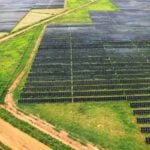
The European solar energy landscape is witnessing significant progress in mid-2024, with major developers advancing critical projects that contribute to national decarbonization goals. Lightsource bp has marked a milestone by commissioning its inaugural solar photovoltaic (PV) plant in Poland, while Spanish developer Soltec has received a positive Environmental Impact Assessment (EIA) for a substantial 220MW solar portfolio in Italy. Meanwhile, Iberdrola has successfully completed two solar projects in Portugal, adding 37MW to its renewable capacity. This article delves into these pivotal developments, examining their regional significance, project specifics, and implications for the broader solar energy transition across Europe.
Lightsource bp has officially commissioned its first solar PV project in Poland, the 40MW Kotuń solar farm. This project represents a significant step for the developer, which entered the Polish market in 2020 and has since cultivated a robust pipeline totaling 3.2GW across the country. The Kotuń plant is now operational and is a key contributor to Poland’s growing renewable energy capacity.
The power generated by the Kotuń project will supply Microsoft’s operations in Poland under a long-term power purchase agreement (PPA) signed in September 2023. This partnership exemplifies the increasing corporate demand for clean energy solutions and emphasizes the role of solar power in supporting sustainable business practices.
According to Michał Głowacki, Lightsource bp’s country head in Poland, the commissioning of the Kotuń solar farm is a landmark achievement in Poland’s energy transition. Solar energy is poised to play a transformative role in decarbonizing the country’s energy system, with projects like Kotuń contributing directly to national climate targets and the reduction of carbon emissions.
Spanish solar developer Soltec has achieved a major regulatory milestone by securing a positive Environmental Impact Assessment (EIA) for a 220MW solar PV portfolio in southern Italy. The portfolio includes five projects spread across Basilicata, Apulia, and Molise regions, showcasing Soltec’s strategic focus on Italy’s utility-scale solar market.
The individual projects comprise Altogianni 1 and 2 (40MW combined) in Basilicata; Sparpagliata (34MW), Lopez (34MW), and Lo Schiavo (50MW) in Apulia; and Ururi (61MW) in Molise. This diverse geographic spread leverages the high solar irradiance in southern Italy, a region increasingly dominated by large-scale solar installations.
This latest EIA approval adds to the 195MW of capacity Soltec secured in 2023, bringing the company’s total projects with completed environmental authorizations in Italy to 415MW. Mariano Berges del Estal, Soltec’s CEO, emphasized the strategic importance of agrivoltaic projects and reaffirmed the company’s commitment to advancing high-quality solar developments that align with Italy’s renewable energy ambitions.
Iberdrola, the Spanish energy giant, has successfully commissioned two solar PV projects in Portugal’s Algarve region: Montechoro I and II. Together, these plants contribute 37MW of clean energy capacity to Portugal’s grid, reinforcing Iberdrola’s growing footprint in the Iberian renewable market.
Awarded in a 2019 auction, the projects represent an investment of approximately €30 million (US$32.6 million) and exemplify Iberdrola’s strategic approach to expanding its renewable portfolio through competitive auctions and targeted regional development.
The completion of these projects aligns with Portugal’s national goals to increase renewable energy penetration and reduce carbon emissions. Iberdrola’s commitment to sustainable energy solutions is reflected in its continuous investment in solar PV, contributing to the country’s energy security and environmental objectives.
Central and Eastern Europe (CEE) continues to emerge as a vital hub for solar energy development, supported by a decade-long network of partnerships and project pipelines. Lightsource bp’s activities in Poland exemplify how international developers leverage established relationships to accelerate the region’s solar capacity growth.
In contrast, Southern Europe, particularly Italy and Portugal, benefits from abundant solar resources and supportive regulatory frameworks, propelling utility-scale solar projects like those of Soltec and Iberdrola. The southern regions of Italy and the Algarve in Portugal are increasingly attractive for large-scale solar investments due to favorable sunlight conditions and government incentives.
These regional dynamics underscore the heterogeneous nature of the European solar market. While CEE focuses on scaling infrastructure and integrating solar into existing energy systems, Southern Europe capitalizes on natural advantages and technological innovations such as agrivoltaics to enhance solar productivity and sustainability.
Environmental Impact Assessments (EIAs) are critical regulatory steps that evaluate the potential environmental consequences of solar projects before construction. Soltec’s recent positive EIA results for its Italian portfolio illustrate the importance of thorough environmental planning and community engagement.
Securing an EIA not only facilitates project approval but also assures stakeholders that the solar developments comply with environmental standards, minimizing negative effects on local ecosystems and communities. This process contributes to the long-term viability and social acceptance of renewable energy projects.
As European countries intensify their renewable energy targets, the demand for transparent and efficient EIA processes grows. Developers like Soltec are investing in sustainable design and environmental stewardship to navigate regulatory landscapes successfully and expedite project timelines.
Corporate Power Purchase Agreements (PPAs) have become a cornerstone for financing and deploying solar projects across Europe. Lightsource bp’s agreement with Microsoft for the Kotuń project exemplifies this trend, where corporations seek to meet sustainability commitments through direct renewable energy procurement.
PPAs provide developers with revenue certainty and enable large-scale solar projects to secure investment and operational stability. For corporations, PPAs offer a pathway to reduce carbon footprints and promote renewable energy adoption in their supply chains.
This symbiotic relationship accelerates the deployment of solar capacity while fostering innovation and competitive pricing in the renewable energy market. As more companies commit to net-zero targets, the role of PPAs in driving solar development is expected to expand significantly.
The recent solar project developments by Lightsource bp, Soltec, and Iberdrola reflect broader investment trends in Europe’s renewable energy sector. These projects collectively represent hundreds of millions of euros in capital expenditure, signaling strong investor confidence in solar power’s economic potential.
Investment in solar infrastructure not only supports clean energy transition but also stimulates job creation and local economic development. Construction, maintenance, and operational activities associated with solar farms contribute to regional employment and skill development.
Moreover, the integration of solar power enhances energy security and price stability by reducing dependence on fossil fuels and volatile energy markets. Such economic benefits reinforce the attractiveness of solar projects to public and private stakeholders alike.
The commissioning of new solar projects and the securing of EIAs indicate a positive trajectory for solar energy expansion in Europe. With cumulative capacities growing in Poland, Italy, and Portugal, the continent is well-positioned to meet its ambitious renewable energy targets for 2030 and beyond.
Technological advancements, supportive policies, and increasing corporate participation are expected to drive further solar deployments. Innovations such as agrivoltaics and improved PV technologies will also enhance efficiency and land-use optimization.
Challenges remain, including grid integration, permitting delays, and supply chain constraints. However, the ongoing commitment of developers, governments, and corporations suggests that these obstacles will be addressed, enabling sustained growth in Europe’s solar sector.
The recent milestones achieved by Lightsource bp, Soltec, and Iberdrola underscore the dynamic growth of solar energy across Europe. From Poland’s inaugural 40MW PV plant to Italy’s substantial 220MW portfolio receiving environmental clearance, and Portugal’s new 37MW capacity additions, these projects exemplify the continent’s commitment to decarbonization and renewable energy adoption. As corporate partnerships, regulatory frameworks, and technological advancements continue to evolve, Europe is poised to significantly expand its solar capacity, driving economic benefits and contributing to a sustainable energy future.
Originally reported by pv-tech.org. Adapted for our readers.
Keep reading
Top Stories
NEWYou can now listen to Fox News articles! Researchers recently uncovered a long-lost medieval convent in an unusual location in Denmark: a soccer field…
News
By Engr. Tamunofiniarisa BrownReading Time: 6 Minutes The conflict between Russia and Ukraine is often framed in the media as a simple battle between…
TAMFIS NIG LTD
Electrical and instrumentation engineering, bid preparation and consulting, IT and software.