
Top Stories
KFF Health News’ ‘What the Health?’: The Supreme Court and the Abortion Pill
Since the Supreme Court overturned Roe v. Wade in 2022, the landscape of abortion rights in the United S...
TAMFIS NIG LTDRC 8067447CAC ACTIVEFinima, Bonny Island, Rivers State

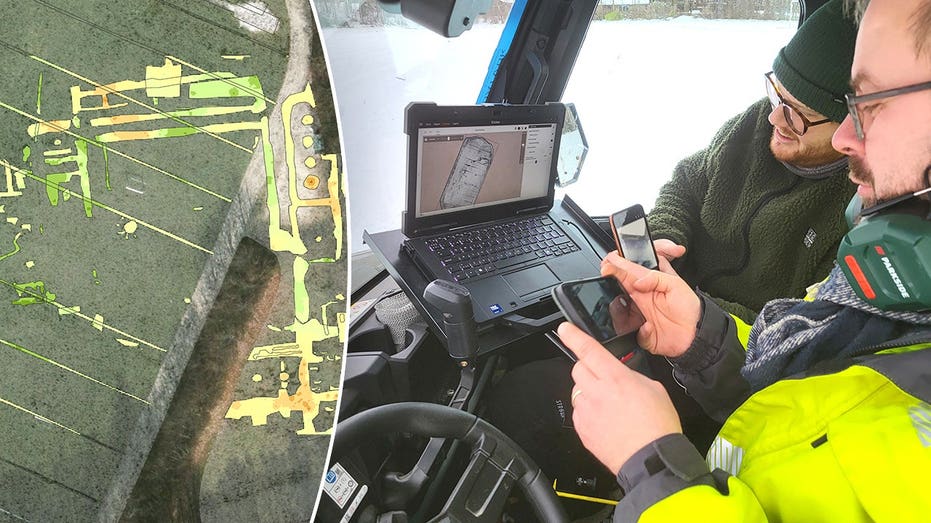
A significant archaeological discovery beneath a soccer field in Roskilde, Denmark, has revealed the extensive remains of St. Clare's Convent, a 13th-century monastic complex lost for centuries. Identified through ground-penetrating radar ahead of planned underground parking construction, the find underscores how non-invasive survey techniques can safeguard cultural heritage while accommodating urban development. The convent, measuring approximately 70 metres by 70 metres, once formed part of a network of five monastic sites in medieval Roskilde and was demolished in the 16th century, with hundreds of thousands of its bricks repurposed elsewhere. Despite this, its foundations and wall remnants have survived remarkably intact just one metre below the surface, offering a rare window into daily life, literacy, and international connections in a prosperous medieval Danish town.
The discovery of St. Clare's Convent was made possible by a ground-penetrating radar (GPR) survey conducted by ROMU, a state-recognised Danish museum organisation, in advance of plans to build an underground parking facility. This non-invasive method allowed researchers to map subsurface structures without excavation, revealing a well-preserved convent complex buried roughly one metre beneath the modern soccer field. The scans clearly outlined the layout of buildings, including rooms, columns, cloisters, and a church in the southern wing, with the eastern wing showing exceptional preservation of vault pillars and defined interior spaces.
Jesper Langkilde, an archaeologist and museum curator at ROMU, expressed surprise at the clarity of the data, noting that he 'almost didn't believe [his] own eyes' at the extent of what remained detectable. The GPR survey detected the lowest portions of walls and foundations, which were often constructed from large boulders left in place when medieval buildings were dismantled. This technique has proven particularly valuable in urban settings where full excavation may be impractical or disruptive, providing critical data for planning decisions while preserving subsurface archaeology.
The use of GPR represents a growing trend in heritage-led development, where geophysical surveys enable developers and planners to assess archaeological risk early in the project lifecycle. By identifying sensitive areas before ground is broken, such methods help avoid costly delays, redesigns, or damage to irreplaceable resources. In this case, the survey has empowered ROMU and the local municipality to collaborate on targeted trial excavations, ensuring any future work proceeds with full awareness of the site's significance.
Although no excavation has yet taken place, researchers anticipate a wealth of artefacts based on the scale and historical role of the convent. St. Clare's was one of five monastic sites in medieval Roskilde, a town that ranked among the most important and wealthiest in Denmark during the Middle Ages due to its strategic position and royal connections. Langkilde noted that such institutions 'played a key part in the development of Roskilde' and were centres of literacy, book production, and religious life.
Expected finds include pottery sherds, animal bones, religious objects such as pendant crosses and pilgrims' badges, and items related to writing and personal grooming like combs, needles, and book fittings. If organic materials are well-preserved, analysis could reveal details about the nuns' diets and the cultivation of convent gardens. The presence of potential burial sites also offers opportunities to study the demographics and health of the monastic community and associated individuals.
Historical records indicate that after the convent's demolition in the 16th century, approximately 500,000 bricks were salvaged and sold—though Langkilde suggests a complex of this size may have originally contained twice that number. The large-scale reuse of building materials reflects broader economic practices of the period, where valuable resources were rarely wasted. This aspect of the discovery highlights how monastic estates were not only spiritual centres but also significant contributors to local economies through agriculture, craftsmanship, and property management.
Langkilde pointed out that the convent's origins may link it to broader European networks, with the first nuns believed to have come from a convent in Strasbourg. This potential connection underscores how religious houses in medieval Denmark were often part of international orders that facilitated the movement of people, ideas, and artistic influences across borders. Such links could be reflected in the material culture uncovered at the site, including specific styles of ceramics, manuscript fragments, or liturgical objects.
Monastic communities like St. Clare's frequently acted as hubs of learning and innovation, preserving texts, developing agricultural techniques, and engaging in long-distance trade. Their libraries and scriptoria contributed to the dissemination of knowledge throughout Northern Europe, and their estates often served as model farms. The discovery in Roskilde adds to a growing body of evidence suggesting that even regional monastic sites were integrated into wider economic and intellectual currents.
Further analysis of artefacts may reveal traces of imported goods, such as pottery from the Rhineland or textiles from Flanders, offering tangible evidence of Roskilde’s participation in medieval trade networks. For businesses and historians alike, this dimension of the find illustrates how local heritage can reflect global interconnections—paralleling modern supply chains and cultural exchange in ways that remain relevant to contemporary understanding of urban development and economic resilience.
The uncovering of St. Clare's Convent beneath a modern soccer field serves as a compelling case study in how technology and foresight can reveal hidden layers of history without compromising present-day needs. By employing ground-penetrating radar ahead of construction, archaeologists and developers have collaborated to preserve knowledge of a significant medieval site that might otherwise have been lost or damaged. The discovery not only enriches our understanding of monastic life in medieval Denmark but also demonstrates the enduring relevance of heritage-conscious planning in urban environments. As cities continue to grow and infrastructure evolves, approaches that prioritise non-invasive investigation and early-stage assessment will be key to safeguarding the past while building for the future—ensuring that places like Roskilde can honour their deep roots while embracing new opportunities.
Originally reported by foxnews.com. Adapted for our readers with AI assistance.
Keep reading
Top Stories
Since the Supreme Court overturned Roe v. Wade in 2022, the landscape of abortion rights in the United S...
Top Stories
Top Stories Tamfitronics One evening in May, nursing assistant Debra Ragoonanan’s vision blurred during her shift at a state-run Massachusetts vet...
TAMFIS NIG LTD
Electrical and instrumentation engineering, bid preparation and consulting, IT and software.