
Top Stories
Discovery beneath soccer field reveals massive medieval convent lost for centuries
NEWYou can now listen to Fox News articles! Researchers recently uncovered a long-lost medieval convent in an unusual location in Denmark: a soccer field…
TAMFIS NIG LTDRC 8067447CAC ACTIVEFinima, Bonny Island, Rivers State

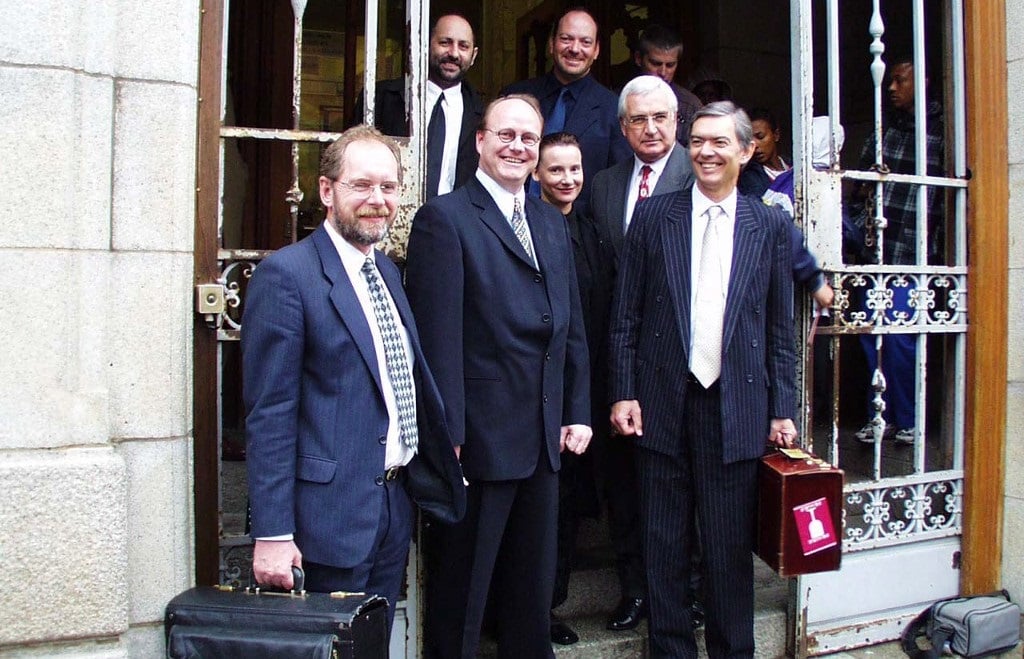
Jurgen Harksen, a convicted German fraudster who became notorious for orchestrating one of the most significant investment scams involving millions of rand, has passed away at the age of 63. His story is intertwined with tales of deception, legal battles, and controversial political connections. From living a lavish lifestyle in Cape Town while evading extradition to his eventual sentencing in Germany, Harksen’s life and crimes have left a lasting imprint on both South African and German legal histories. This comprehensive article delves into his criminal exploits, extradition saga, political controversies, and the aftermath of his death.
Jurgen Harksen first gained notoriety during the 1980s and 1990s for masterminding a large-scale investment fraud that defrauded dozens of investors out of millions of rand. His scheme reportedly swindled at least 70 individuals, accumulating losses estimated at R327 million. Using sophisticated tactics and false promises of lucrative returns, Harksen attracted a wide network of victims, enabling him to finance a lavish lifestyle.
During his time in South Africa, Harksen resided in Cape Town, where his ostentatious displays of wealth raised eyebrows. He was known to own multiple properties, indulge in luxury cars, and maintain an extravagant social life. Despite mounting suspicions, he managed to evade arrest for years, benefiting from legal loopholes and procedural delays.
Harksen's fraudulent activities extended beyond mere financial deception; they undermined investor confidence and highlighted vulnerabilities in South Africa’s financial regulatory environment. His ability to operate undetected for so long exposed gaps in law enforcement coordination, particularly concerning international financial crimes.
One of the most dramatic chapters of Harksen’s story was his prolonged battle against extradition from South Africa to Germany. After fleeing Germany to avoid prosecution, he settled in Cape Town and used the local legal system to contest extradition requests. For nearly a decade, he exploited legal technicalities and procedural challenges to avoid being sent back to face charges.
In 2000, a key court ruling in Cape Town found insufficient evidence to extradite him immediately, allowing Harksen to maintain his freedom temporarily. This legal victory was seen as a setback for German authorities and a testament to the complexities of international criminal law and extradition treaties.
Eventually, after years of legal wrangling and mounting pressure from German officials, Harksen consented to return to Germany in 2002. His extradition marked the end of a long saga, but not before he had managed to live comfortably in South Africa for many years, despite the allegations looming over him.
Following his extradition, Jurgen Harksen was tried in Hamburg, Germany, where he faced charges related to fraud and financial crimes. In 2003, he was sentenced to several years in prison, a verdict that brought some measure of closure to his victims and law enforcement agencies.
The conviction underscored the seriousness of his offenses and the judicial system's commitment to holding white-collar criminals accountable. Despite his attempts to evade capture, the German courts ensured that justice was served, reinforcing international cooperation in combating financial crime.
After serving his sentence, Harksen reportedly relocated to Palma de Mallorca. His post-prison life remains relatively private, but his criminal legacy continues to be a cautionary tale about the dangers of investment fraud and the importance of vigilant regulatory oversight.
Jurgen Harksen’s criminal activities were not limited to financial fraud; he was also implicated in a political donation scandal involving South Africa’s Democratic Alliance (DA). Allegations surfaced that Harksen had channelled more than R1 million in donations to the DA through prominent political figures, including former Western Cape provincial leader Gerald Morkel and ex-finance MEC Leon Markovitz.
These allegations prompted investigations by the Desai Commission, which was tasked with probing irregular political donations. Although Morkel, who passed away in 2018, denied accepting any money from Harksen, the scandal raised serious questions about transparency and ethics within political fundraising in South Africa.
The controversy highlighted the broader issue of how illicit funds can infiltrate political systems, potentially undermining democratic processes. Harksen’s involvement in this scandal further cemented his notoriety and demonstrated the wide-reaching consequences of his fraudulent endeavors.
The fallout from Jurgen Harksen’s crimes was deeply felt by his victims, many of whom suffered significant financial losses that affected their livelihoods and trust in investment opportunities. The R327 million lost in the scam represented hard-earned savings for numerous individuals, many of whom found themselves struggling to recover.
Beyond the immediate financial damage, Harksen’s actions contributed to a climate of skepticism and wariness among investors in South Africa, particularly concerning high-yield investment schemes. The scam underscored the need for improved investor education and stricter regulatory frameworks to protect the public from similar fraudulent schemes.
Financial institutions and regulatory bodies in South Africa have since intensified efforts to detect and prevent investment fraud, but the Harksen case remains a stark reminder of the vulnerabilities that can exist within financial markets when oversight is inadequate.
The Jurgen Harksen saga exposed critical weaknesses in both South African and international legal systems concerning the prosecution of white-collar crime. His ability to evade extradition for nearly a decade revealed gaps in cooperation between jurisdictions and highlighted the importance of streamlined extradition processes.
In response, there has been increased emphasis on enhancing cross-border legal collaboration and improving the mechanisms for tracking and prosecuting financial criminals who operate transnationally. The case serves as a blueprint for addressing similar challenges in the future.
Moreover, the Harksen case prompted regulatory agencies to review and tighten financial compliance requirements, emphasizing the need for transparency and accountability in investment operations. It also reinforced the necessity for robust whistleblower protections to detect and deter fraudulent activities early.
Jurgen Harksen’s death at the age of 63 marks the conclusion of a turbulent chapter in the history of financial crime in South Africa and Germany. Confirmed by his lawyer Gerhard Strate and reported by major German publications, his passing has reignited discussions about his extensive criminal past and its repercussions.
While his death brings finality to his personal story, the legacy of his actions continues to resonate. His case remains a cautionary example of how fraudulent schemes can devastate lives and challenge legal systems. It also serves as a somber reminder of the ongoing battle against financial crime worldwide.
As the public reflects on Harksen’s life and crimes, there is an opportunity to reinforce commitments to justice, transparency, and investor protection, ensuring that similar fraudsters are identified and prosecuted before they can cause comparable harm.
In the wake of the Harksen scandal, financial authorities, policymakers, and investors must prioritize the development of more effective tools and strategies to combat fraud. This includes leveraging technology for better fraud detection, enhancing regulatory oversight, and fostering international cooperation.
Investor education campaigns are equally vital to empower individuals with the knowledge to recognize and avoid fraudulent schemes. By promoting financial literacy, the public can become a frontline defense against deception and financial exploitation.
Ultimately, the lessons from Jurgen Harksen’s criminal activities underscore the need for a multifaceted approach to financial crime prevention—one that combines legal rigor, regulatory vigilance, and public awareness to safeguard economic integrity.
Jurgen Harksen’s life story is a compelling narrative of deception, legal battles, and the far-reaching consequences of financial fraud. His ability to manipulate legal systems and political structures underscores the complexities involved in tackling white-collar crime on a global scale. While his death marks the end of his personal journey, the lessons drawn from his crimes continue to resonate, driving ongoing reforms and vigilance in the fight against financial fraud. As the world advances, it remains imperative to strengthen legal frameworks, enhance investor protections, and foster international collaboration to ensure that such fraudulent schemes are detected early and justice is swiftly served.
Source: news24.com. Originally reported there; this article has been adapted for Tamfitronics readers.
Keep reading
Top Stories
NEWYou can now listen to Fox News articles! Researchers recently uncovered a long-lost medieval convent in an unusual location in Denmark: a soccer field…
News
By Engr. Tamunofiniarisa BrownReading Time: 6 Minutes The conflict between Russia and Ukraine is often framed in the media as a simple battle between…
TAMFIS NIG LTD
Electrical and instrumentation engineering, bid preparation and consulting, IT and software.