Top Stories
Discovery beneath soccer field reveals massive medieval convent lost for centuries
NEWYou can now listen to Fox News articles! Researchers recently uncovered a long-lost medieval convent in an unusual location in Denmark: a soccer field…
TAMFIS NIG LTDRC 8067447CAC ACTIVEFinima, Bonny Island, Rivers State

Top Stories Tamfitronics
This article first appeared in The Checkup,MIT Technology Review’sweekly biotech e-newsletter. To get it in your inbox every Thursday, and read articles like this first,sign up here.
Last week, Moderna and Merck launched a smart clinical trial in the UK of a promising new cancer treatment: a personalized vaccine that targets a specific set of mutations found in each individual’s tumor. This trial is enrolling patients with melanoma. But the companies have also launched a phase III trial for lung cancer. And earlier this month BioNTech and Genentech announced that a personalized vaccine they developed in collaboration shows promise in pancreatic cancer, which has a notoriously poor survival rate.
Drug developers have been working for a long time on vaccines to help the body’s immune system fight cancer, with little success. But promising results in the past year suggest that the approach may be reaching a turning point. Will these therapies eventually live up to their promise?
This week in The Checkup, let’s talk cancer vaccines. (And, as you might expect, mRNA.)
Long before firms leveraged mRNA to fight covid, they were developing mRNA vaccines to fight cancer. BioNTech delivered its first mRNA vaccines to patients with treatment-resistant melanoma nearly a decade ago. But when the pandemic hit, development of mRNA vaccines accelerated rapidly. Now dozens of trials are underway to test whether these shots can treat cancer the way they did covid.
Recent data has some experts cautiously optimistic. In December, Merck and Moderna released results from an earlier trial that included 150 people with melanoma who had undergone surgery to remove their cancer. Doctors administered nine doses of the vaccine over about six months, in addition to what is known as an immune checkpoint inhibitor. After three years of follow-up, the combination had reduced the risk of recurrence or death by nearly half compared to the checkpoint inhibitor alone.
The recent results reported by BioNTech and Genentech, from a small trial of 16 patients with pancreatic cancer, are equally encouraging. After surgery to remove the cancer, the patients received immunotherapy, followed by the cancer vaccine and a standard chemotherapy regimen. Half of them responded to the vaccine, and three years after treatment, six of those patients had not experienced a recurrence of their cancer. The other two had relapsed. Of the eight patients who did not respond to the vaccine, seven had relapsed. Some of these patients may not have responded because they lacked a spleen, which plays an important role in the immune system. The organ was removed as part of their cancer treatment.
The hope is that the strategy will work in many different kinds of cancer. In addition to pancreatic cancer, BioNTech’s personalised vaccine is being tested in colorectal cancer, melanoma, and metastatic cancers.
The purpose of a cancer vaccine is to train the immune system to better recognize malignant cells, so it can destroy them. The immune system has the ability to clear cancer cells if it can find them. But tumors are slippery. They can hide in plain sight and use all kinds of tactics to evade our immune defenses. And cancer cells often look like the body’s own cells because, well, they are the body’s own cells.
There are differences between cancer cells and healthy cells, however. Cancer cells acquire mutations that help them grow and survive, and some of those mutations give rise to proteins that stud the surface of the cell—so-called neoantigens.
Personalised cancer vaccines like the ones Moderna and BioNTech are developing are tailored to each patient’s specific cancer. The researchers take a sample of the patient’s tumor and a sample of healthy cells. They sequence these two samples and compare them in order to identify mutations that are specific to the tumor. Those mutations are then fed into an AI algorithm that selects those most likely to elicit an immune response. Together these neoantigens form a kind of police sketch of the tumor, a rough image that helps the immune system recognize cancerous cells.
“A number of immunotherapies stimulate the immune response in a nonspecific way—that is, not directly against the cancer,” said Patrick Ott, director of the Center for Personalized Cancer Vaccines at the Dana-Farber Cancer Institute, in a 2022 interview. “Personalized cancer vaccines can direct the immune response to exactly where it needs to be.”
How many neoantigens does it take to construct that approach? “We don’t really know what the magic number is,” says Michelle Brown, vice president of individualized neoantigen therapy at Moderna. Moderna’s vaccine has 34. “It comes down to what we can fit on the mRNA strand, and it gives us more than one shot to ensure that the immune system is stimulated in the right way,” she says. BioNTech is using 20.
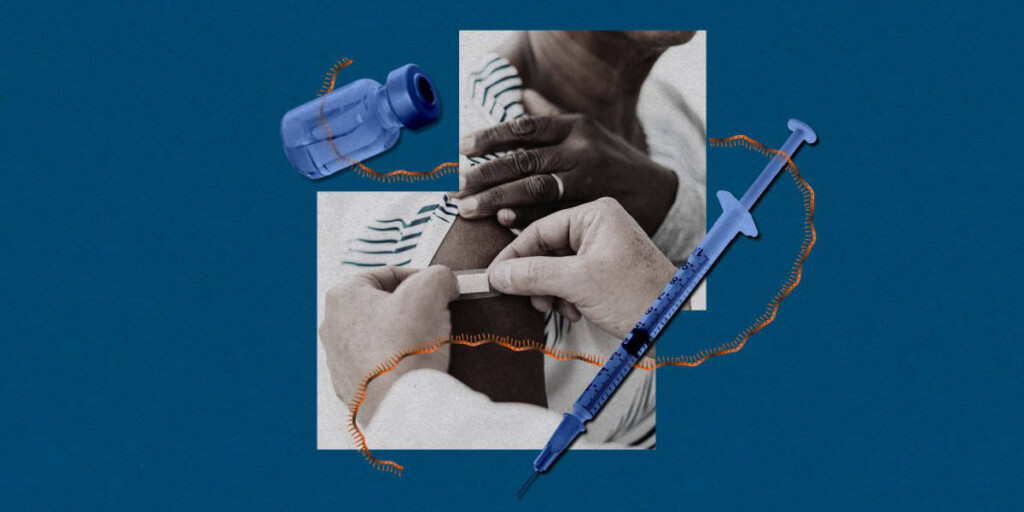
The neoantigens are placed on an mRNA strand and injected into the patient. From there, they are taken up by cells and translated into proteins, and those proteins are expressed on the cell’s surface, raising an immune response
mRNA isn’t the only way to train the immune system to recognize neoantigens. Researchers are also delivering neoantigens as DNA, as peptides, or by means of immune cells or viral vectors. And many companies are working on “off the shelf” cancer vaccines that aren’t personalized, which could save time and expense. Out of about 400 ongoing clinical trials assessing cancer vaccines last fall, roughly 50 incorporated personalized vaccines.
There’s no guarantee any of these recommendations will pan out. Even within the event that they put, success in one form of most cancers doesn’t automatically mean success in opposition to all. Masses of most cancers therapies hang shown immense promise initially put, simplest to fail after they’re moved into natty clinical trials.
But the burst of renewed passion and activity around cancer vaccines is encouraging. And personalized vaccines might have a shot at succeeding where others have failed. The approach makes sense for “a lot of different tumor types and a lot of different settings,” Brown says. “With this technology, we genuinely have a lot of aspirations.”
mRNA vaccines transformed the pandemic. But they might be able to do so much more. In this selection from 2023, Jessica Hamzelou covered the myriad other uses of these shots, including combating cancer.
This article from 2020 covers one of the foremost background on BioNTech’s efforts to manufacture personalized cancer vaccines. Adam Piore had the story.
Years before the pandemic, Emily Mullin wrote about early efforts to manufacture personalized cancer vaccines—the promise and the pitfalls.
Yes, there’s bird flu in the nation’s milk supply. About one in five samples had evidence of the H5N1 virus. But recent testing by the FDA indicates that the virus is unable to replicate. Pasteurization works! (NOW)
Compare this to challenge trials in which volunteers are deliberately infected with covid—so-called challenge trials—that have been floated as a way to test treatments and vaccines, and even to learn more about the virus. But it turns out it’s more difficult to infect people than you might think. (Nature)
When should women get their first mammogram to screen for breast cancer? It’s a topic of hot debate. In 2009, an expert panel raised the age from 40 to 50. This week they lowered it to 40 again in response to rising cancer rates among younger women. Women at average risk of breast cancer should be screened every two years, the panel says. (NOW)
Wastewater surveillance helped us track covid. Why not H5N1? A team of researchers from New York argues it could be our best tool for monitoring the spread of this virus. (Stat)
Lengthy read: This story looks at how AI might help us better understand how infants learn language, and focuses on the lab I covered in this story about an AI model trained on the sights and sounds experienced by a single child. (NOW)
Originally reported by technologyreview.com. Adapted for our readers.
Keep reading
Top Stories
NEWYou can now listen to Fox News articles! Researchers recently uncovered a long-lost medieval convent in an unusual location in Denmark: a soccer field…
News
By Engr. Tamunofiniarisa BrownReading Time: 6 Minutes The conflict between Russia and Ukraine is often framed in the media as a simple battle between…
TAMFIS NIG LTD
Electrical and instrumentation engineering, bid preparation and consulting, IT and software.