
Top Stories
Discovery beneath soccer field reveals massive medieval convent lost for centuries
NEWYou can now listen to Fox News articles! Researchers recently uncovered a long-lost medieval convent in an unusual location in Denmark: a soccer field…
TAMFIS NIG LTDRC 8067447CAC ACTIVEFinima, Bonny Island, Rivers State

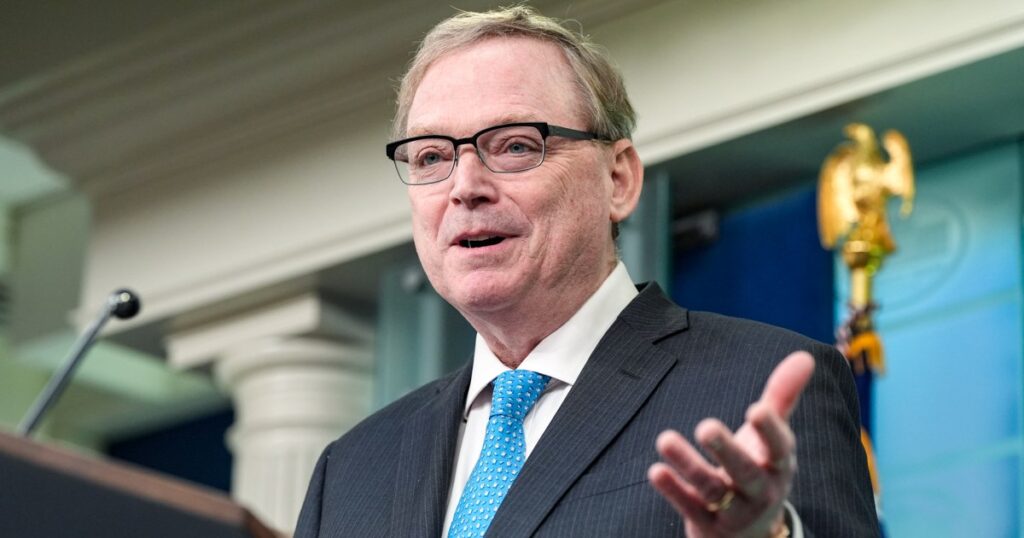
The relationship between President Donald Trump and Federal Reserve Chair Jerome Powell has been fraught with tension, particularly regarding monetary policy decisions and interest rate adjustments. Recently, National Economic Council Director Kevin Hassett disclosed that the president’s authority to dismiss Powell is currently being examined. This announcement adds another layer to the ongoing debate about the independence of the Federal Reserve and the political pressures it faces. This article delves into the key developments surrounding this issue, exploring the legal, political, and economic implications of a potential firing.
President Donald Trump’s tenure has been marked by frequent criticism of Federal Reserve Chair Jerome Powell, especially concerning the Fed’s approach to interest rates. Trump has publicly expressed frustration over the Fed’s reluctance to lower rates, which he believes hampers economic growth. His comments have ranged from calling Powell “very stupid” to coining the nickname “Too Late Powell.”
Powell and the Federal Reserve have maintained that their decisions are based on economic data and inflation forecasts, rather than political pressures. The Fed has cited tariffs and trade tensions as factors contributing to inflationary risks, which have influenced their cautious stance on rate cuts. This divergence in views has fueled a contentious relationship between the White House and the Fed.
Despite these disagreements, the Federal Reserve operates as an independent entity, designed to insulate its policy decisions from political interference. However, with Trump openly criticizing Powell and expressing desires to see him removed, questions about presidential authority and the boundaries of Fed independence have come to the forefront.
National Economic Council Director Kevin Hassett addressed the issue during an interview on ABC News’ “This Week.” When asked whether President Trump has the legal authority to fire Federal Reserve Chair Jerome Powell, Hassett responded that the matter is currently “being looked into.” This statement suggests that the White House is actively exploring the legal framework surrounding the potential dismissal.
Hassett also indicated that if sufficient cause exists, the president would indeed have the authority to remove Powell. However, he did not specify what would constitute adequate cause, leaving room for interpretation. This ambiguity has sparked debate among legal experts and economists about the limits of presidential power over the Fed.
The timing of Hassett’s comments is notable, coming shortly after the Office of Management and Budget Director Russell Vought sent a pointed letter to Powell criticizing the management of Federal Reserve headquarters renovations. This context implies that dissatisfaction with Powell’s leadership may be motivating the administration’s inquiry into firing options.
In a letter to Powell, OMB Director Russell Vought expressed serious concerns about the renovation project at the Federal Reserve’s headquarters. Vought questioned whether the project deviated from the plans approved by the National Capital Planning Commission, which oversees federal building designs. The letter requested detailed explanations about the cost and management of the renovations.
This scrutiny of the renovation costs has been interpreted as a potential pretext for challenging Powell’s leadership. President Trump reportedly found the project’s management troubling, which has added fuel to the ongoing tensions between the White House and the Fed.
When asked if the renovation expenses could be grounds for firing Powell, Hassett remarked that any decision would depend heavily on the answers provided by the Federal Reserve to Vought’s inquiries. This conditional stance indicates that the administration is gathering information before making any definitive moves.
The question of whether a sitting president can remove the Federal Reserve Chair is complex and rooted in the Fed’s unique status as a quasi-independent government agency. Traditionally, Fed officials have fixed terms and cannot be dismissed without cause, designed to protect monetary policy from political influence.
In May, the Supreme Court ruled that presidents could fire members of certain independent federal agencies. However, the court clarified that this ruling might not apply to the Federal Reserve, given its distinct structure and mandate. This leaves the legal authority to remove a Fed Chair somewhat ambiguous and subject to interpretation.
Legal experts argue that while the president may have some authority to remove Powell for cause, such as misconduct or mismanagement, firing him for policy disagreements could be contested. This legal uncertainty means any attempt to dismiss Powell could trigger significant legal battles and political backlash.
President Trump’s public comments regarding Powell have been inconsistent. While Trump has repeatedly criticized Powell’s interest rate policies, he also stated late last year that he had no plans to cut Powell’s term short. Powell’s current term as Fed Chair extends through May 2026, providing a measure of job security.
However, in April, Trump posted on Truth Social that “Powell’s termination cannot come fast enough,” signaling increased impatience. Yet, days later, he told reporters he had “no intention” of firing Powell. These contradictory statements have contributed to uncertainty about the administration’s actual intentions.
This vacillation may reflect the political sensitivity of removing a Fed Chair and the potential consequences for financial markets and economic stability. It also underscores the complex dynamics between the White House and the Federal Reserve during Trump’s presidency.
The prospect of President Trump firing Federal Reserve Chair Jerome Powell raises broader concerns about the independence of the Fed. Historically, the Fed’s autonomy has been critical in maintaining market confidence and ensuring that monetary policy is guided by economic rather than political considerations.
If the president were to remove Powell for policy reasons, it could set a precedent that undermines this independence and politicizes the Fed’s decision-making process. Such a move might erode investor trust and increase volatility in financial markets.
Moreover, this situation spotlights the delicate balance between executive authority and institutional independence. It poses fundamental questions about how far political leaders can exert influence over independent agencies tasked with safeguarding economic stability.
Parallel to the Fed controversy, the Trump administration has implemented steep tariffs on several countries, citing trade deficits and national security concerns. For example, imports from Brazil face a 50% tariff, partly justified by the administration as a response to Brazil’s internal political issues and perceived threats to free elections.
National Economic Council Director Hassett explained that the president’s use of tariffs could be authorized under the International Emergency Economic Powers Act if national security threats are deemed present. This broader economic strategy reflects the administration’s aggressive stance on trade and economic sovereignty.
These trade policies, combined with monetary policy disputes, contribute to a complex economic environment. They influence inflation expectations and market dynamics, factors that the Federal Reserve must consider when setting interest rates, further complicating the relationship between the White House and the Fed.
If President Trump were to move forward with firing Jerome Powell, the immediate market reaction could be volatile. Investors generally value the Fed’s independence and view unexpected leadership changes as destabilizing. Uncertainty about future monetary policy could lead to increased market fluctuations.
Alternatively, if the administration decides against dismissal after reviewing the renovation inquiry and other factors, it may signal a temporary easing of tensions. This could restore some confidence in the continuity of Fed policies, though underlying disagreements would likely persist.
Regardless of the outcome, the situation underscores the ongoing challenges in balancing political interests with economic governance. How this episode resolves may influence future interactions between the executive branch and independent economic institutions.
The unfolding situation regarding President Trump’s potential authority to fire Federal Reserve Chair Jerome Powell highlights a critical intersection of politics, law, and economic governance. While frustrations over monetary policy and management issues have strained relations, the legal ambiguity surrounding the Fed Chair’s dismissal underscores the institution’s unique role in the U.S. economy. As the White House continues to investigate and respond to these concerns, the broader implications for Federal Reserve independence and market stability remain paramount. Observers will be closely watching how this dynamic evolves, as it may set significant precedents for the future of U.S. economic policy.
Originally reported by nbcnews.com. Adapted for our readers.
Keep reading
Top Stories
NEWYou can now listen to Fox News articles! Researchers recently uncovered a long-lost medieval convent in an unusual location in Denmark: a soccer field…
News
By Engr. Tamunofiniarisa BrownReading Time: 6 Minutes The conflict between Russia and Ukraine is often framed in the media as a simple battle between…
TAMFIS NIG LTD
Electrical and instrumentation engineering, bid preparation and consulting, IT and software.