
Top Stories
KFF Health News’ ‘What the Health?’: The Supreme Court and the Abortion Pill
Since the Supreme Court overturned Roe v. Wade in 2022, the landscape of abortion rights in the United S...
TAMFIS NIG LTDRC 8067447CAC ACTIVEFinima, Bonny Island, Rivers State

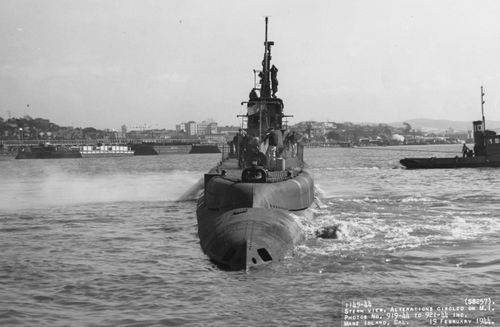
The recent discovery of the USS Harder (SS-257) wreck has reignited interest in the heroic exploits and tragic loss of one of the United States Navy’s most celebrated submarines from World War II. Lost in combat on August 24, 1944, during its sixth war patrol, the Harder sank with all 79 crew members off the northern coast of the Philippine island of Luzon. This submarine played a crucial role in the US Navy’s campaign to reclaim the Philippines from Japanese occupation. The find, located approximately 900 meters underwater, offers a rare and sobering glimpse into the vessel’s final moments and honors the valor of the men who served aboard her. This comprehensive article explores the discovery, historical background, and continuing significance of the USS Harder.
Commissioned in 1942, the USS Harder was a Gato-class submarine renowned for its aggressive tactics and remarkable success in the Pacific Theater. With a motto of “Hit ’em Harder,” the submarine became famous for its daring patrols and significant contributions to disrupting Japanese naval operations. Under the command of notable officers such as Commander Samuel D. Dealey, the Harder earned a reputation as one of the most effective and feared US submarines during World War II.
During its five successful war patrols, the Harder sank multiple enemy vessels, including destroyers and escort ships, significantly impacting Japanese maritime supply lines and naval capabilities. Commander Dealey’s leadership was especially distinguished during the submarine’s fifth patrol, where his tactical ingenuity led to the destruction of three Japanese destroyers in just a few days. For his extraordinary heroism, Dealey was posthumously awarded the Medal of Honor, underscoring the submarine’s legacy.
The Harder’s operational area included the waters surrounding the Philippines, a strategic region fiercely contested during the war. After the fall of the Philippines to Japanese forces in 1942, the US Navy focused on regaining control of the archipelago. The Harder’s missions were integral to this effort, engaging in reconnaissance, interdiction, and direct assaults on enemy vessels to weaken Japanese defenses ahead of planned Allied landings.
On August 22, 1944, the USS Harder sank two Japanese escort ships near the Bataan Peninsula, showcasing its continued operational effectiveness. Following this success, the submarine proceeded northward along the Luzon coast alongside two other US submarines, seeking additional targets to support the Allied campaign to liberate the Philippines.
The submarine’s last engagement occurred on the morning of August 24, 1944, when it encountered the Japanese escort ship CD-22. The Harder launched three torpedoes, all of which missed their target. In retaliation, the Japanese vessel conducted a series of depth charge attacks, ultimately sinking the Harder. Tragically, all 79 crew members were lost with the submarine, marking a somber end to its distinguished service.
Japanese naval records, corroborated by US historical sources, detail the encounter and subsequent sinking. The loss of the Harder was a significant blow to the US submarine force, but its crew’s sacrifice contributed to the overall success of the campaign in the Pacific. The submarine’s fate remained a mystery for decades until its recent discovery.
After more than 80 years, the USS Harder’s wreck was located approximately 900 meters below the surface of the South China Sea, near northern Luzon. The discovery was made by the Lost 52 Project, an initiative dedicated to finding US submarines lost during World War II. Led by Tim Taylor, CEO of Tiburon Subsea, the project has successfully located several other sunken submarines, providing closure to families and historians alike.
The wreck of the Harder lies largely intact, resting quietly on the seabed with only damage behind its conning tower, believed to have been caused by a Japanese depth charge attack. Using advanced underwater scanning technology, the team created a detailed 4D photogrammetry model of the submarine, allowing researchers to study its condition and preserve its image digitally for future generations.
The identification of the Harder’s wreck was confirmed through a combination of historical records, sonar imagery, and the physical characteristics of the submarine. This discovery not only solves a long-standing naval mystery but also serves as a poignant reminder of the sacrifices made by the submarine’s crew and the strategic importance of undersea warfare during World War II.
The discovery of the USS Harder holds immense historical and cultural significance. As the final resting place of 79 American sailors, the wreck is considered a war grave and is protected as such, emphasizing the need for respect and preservation. It stands as a solemn monument to those who gave their lives in defense of freedom during one of the most challenging periods in modern history.
From a naval history perspective, the find enriches our understanding of submarine warfare tactics, vessel design, and the harsh realities faced by submariners. The detailed imagery and analysis of the wreck provide valuable data for historians, engineers, and military scholars, contributing to the broader narrative of World War II naval engagements in the Pacific.
Moreover, the discovery highlights the ongoing efforts of organizations like the Lost 52 Project to locate and honor submarines lost during wartime. These missions foster public awareness and appreciation for the sacrifices of military personnel, ensuring that their stories are not forgotten as time passes.
Commander Samuel D. Dealey, the captain of the USS Harder, is remembered as one of the most decorated and courageous submarine commanders in US Navy history. His leadership during the Harder’s fifth patrol earned him the Medal of Honor, the nation’s highest military decoration, awarded posthumously for his extraordinary heroism and tactical brilliance in sinking multiple enemy destroyers.
Dealey’s aggressive tactics, including the rare “down the throat” torpedo shot—a direct attack on a charging enemy vessel—demonstrate his fearless approach to combat. His actions not only inflicted significant damage on Japanese naval forces but also boosted the morale of Allied forces during a critical phase of the Pacific campaign.
The legacy of Commander Dealey and the USS Harder continues to inspire the US Navy and historians alike. Their story exemplifies the courage, sacrifice, and resilience of submariners who operated in perilous conditions far from home, often with little recognition during their lifetimes.
US submarines played a pivotal role in the Pacific Theater during World War II, conducting reconnaissance, disrupting enemy supply lines, and engaging in combat operations against Japanese naval and merchant vessels. Submarines like the USS Harder were instrumental in weakening Japan’s ability to sustain its war effort across vast ocean distances.
The strategic importance of submarines grew as the war progressed, especially in the campaign to retake the Philippines and other occupied territories. Submarines operated in hostile environments, often facing depth charges, enemy patrols, and mechanical challenges while performing their missions with remarkable stealth and effectiveness.
The success of the US submarine force contributed significantly to the eventual Allied victory in the Pacific. Despite comprising a small fraction of the Navy’s total assets, submarines were responsible for sinking a disproportionately large amount of Japanese shipping, underscoring their value as a force multiplier in naval warfare.
The USS Harder wreck is legally and morally recognized as a war grave, honoring the lives of the crew who perished aboard. International agreements and US Navy policies emphasize the protection of such sites from disturbance, looting, or unauthorized exploration, ensuring they remain hallowed grounds of remembrance.
Efforts to document and digitally preserve the Harder through photogrammetry and underwater imaging allow researchers to study the site without physical interference. These technologies also enable educational outreach, helping the public understand the submarine’s historical context and the sacrifices made by its crew.
Preserving the Harder and similar wrecks fosters respect for military history and serves as a tangible connection to the past. It encourages ongoing dialogue about the costs of war and the importance of honoring those who served, particularly in the silent and often unseen domain of undersea warfare.
The discovery of the USS Harder’s wreck is a profound reminder of the bravery and sacrifice of the US Navy’s submarine force during World War II. Resting quietly beneath the South China Sea, the Harder serves as a lasting tribute to the courage of its crew and the strategic importance of undersea warfare in the Pacific campaign. As efforts continue to preserve and study this war grave, the legacy of the Harder and her sailors endures, inspiring future generations to honor and remember the profound costs of freedom.
Originally reported by newsfinale.com. Adapted for our readers.
Keep reading
Top Stories
Since the Supreme Court overturned Roe v. Wade in 2022, the landscape of abortion rights in the United S...
Top Stories
Top Stories Tamfitronics One evening in May, nursing assistant Debra Ragoonanan’s vision blurred during her shift at a state-run Massachusetts vet...
TAMFIS NIG LTD
Electrical and instrumentation engineering, bid preparation and consulting, IT and software.

