News
RUSSIA versus NATO and BRICS vs. NATO Military SWOT
Recall that Poland’s Minister Sikorski’s core claim is partially supported by the numbers, but the framing “quite quickly” and “without the U.S.” does not…
TAMFIS NIG LTDRC 8067447CAC ACTIVEFinima, Bonny Island, Rivers State

Editor’s note: The following is AI-generated commentary and context on this topic, not original reporting.
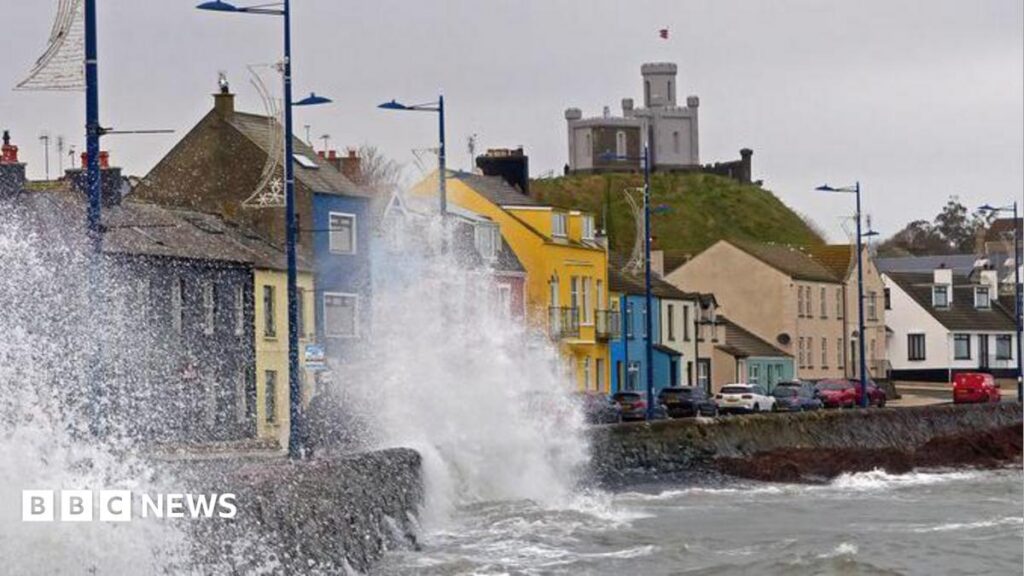
The small seaside town winning big from TV tourism is the kind of story that tends to prompt follow-up questions well beyond the initial facts reported, which is why additional context is often useful.
The small seaside town winning big from TV tourism has generated plenty of discussion, and understanding why requires looking past the headline to the forces and circumstances behind it, as well as the people and institutions directly involved.
In the specific case of “The small seaside town winning big from TV tourism,” the details below place the story in a wider frame rather than repeating claims that have not been independently verified.
Stories like this tend to sit at the intersection of individual circumstance and broader institutional or societal trends, which is part of why they attract sustained public interest.
Understanding the background typically requires looking at the people, organisations and structures involved, as well as the wider pattern of similar events or decisions that have preceded it.
Coverage of this kind of story usually unfolds in stages, with initial reporting followed by further detail, official statements and, in some cases, formal investigations or reviews.
The public reaction to stories like this is often shaped as much by the wider context — how it fits with existing concerns or debates — as by the specific facts involved.
Stories like this often prompt broader conversations about accountability, process and how institutions respond when something goes wrong or when circumstances change unexpectedly. That is usually why coverage extends well beyond the initial event itself.
Reaction to stories like this typically comes from those directly involved, alongside wider commentary from journalists, advocacy groups and members of the public who see the story as representative of broader issues.
Stories like this often serve as a prompt for broader public conversations about accountability, process and how institutions handle situations of this kind. The way it is ultimately resolved, and the precedent it sets, may well shape how similar situations are handled in future.
Stories like this often have effects that extend well beyond the initial news cycle, shaping policy, public attitudes or institutional practice over the longer term. It is often only with hindsight that the full significance of a particular event becomes clear.
When a story like this first breaks, early reporting can understandably be incomplete, and details sometimes shift as more information becomes available from official sources, witnesses or investigators. It is generally good practice to treat initial figures, attributions or characterisations with some caution until they have been corroborated by multiple independent outlets, and to be especially wary of unverified claims circulating on social media before official confirmation. Established news organisations with a track record of corrections and editorial standards, alongside official statements from relevant authorities, remain the most reliable way to track how a story like this develops. That said, the broader themes it raises, whether about accountability, public safety, or the responsiveness of institutions, are often worth engaging with even while some of the specific facts are still being established.
As with many developing stories, the coming days are likely to bring further detail, official statements or responses from those directly involved. It remains to be seen exactly how the situation will be resolved, but it is one that is likely to continue generating public interest and commentary in the near term.
Further details are likely to emerge in the coming days and weeks as the situation develops, with continued attention from journalists, affected parties and, where relevant, official bodies responsible for oversight or investigation.
Stories like this typically move through an initial reporting phase, followed by further detail, official responses and, in some cases, formal review or investigation. Readers following closely should expect the full picture to become clearer over the coming days and weeks, as is common with fast-moving news.
This piece offers background and analysis rather than original reporting, so specific facts, figures and direct quotes beyond what is already reflected in the headline and any existing draft text are deliberately left to primary journalistic sources. Readers seeking full verified detail should consult established news organisations covering the story directly.
The small seaside town winning big from TV tourism is, at its core, a story about how a specific event connects to larger, ongoing questions in its field. The details above are offered as background rather than a substitute for primary reporting, and readers wanting the fullest, most current picture should keep an eye on official statements and established news coverage as the story continues to unfold in the days ahead.
Ultimately, how this story is remembered will depend on what follows in the days and weeks ahead, and readers are encouraged to look out for further reporting as the situation develops. Context like this is often just as important as the headline itself in understanding what actually happened and why it matters.
As with most stories of this kind, the full picture will likely become clearer with time, as more information emerges and the immediate reaction gives way to more considered analysis. Readers who want to follow the story closely should expect further updates as circumstances develop and official responses are issued.
For now, The small seaside town winning big from TV tourism stands as a snapshot of a moment that is still unfolding, and it is one worth revisiting as further details come to light. It is a useful illustration of how quickly a single event can generate wider debate about the issues surrounding it.
Originally reported by bbc.co.uk. Adapted for our readers with AI assistance.
Keep reading
News
Recall that Poland’s Minister Sikorski’s core claim is partially supported by the numbers, but the framing “quite quickly” and “without the U.S.” does not…
News
Thousands of young protesters in Delhi continue to demand education reforms and the resignation of Education Minister Dharmendra Pradhan after a police crackdown. The…
News
Facing a looming financial collapse, Thames Water’s main lenders have offered the UK government a ‘golden share’ and increased local authority involvement to avoid…
TAMFIS NIG LTD
Electrical and instrumentation engineering, bid preparation and consulting, IT and software.