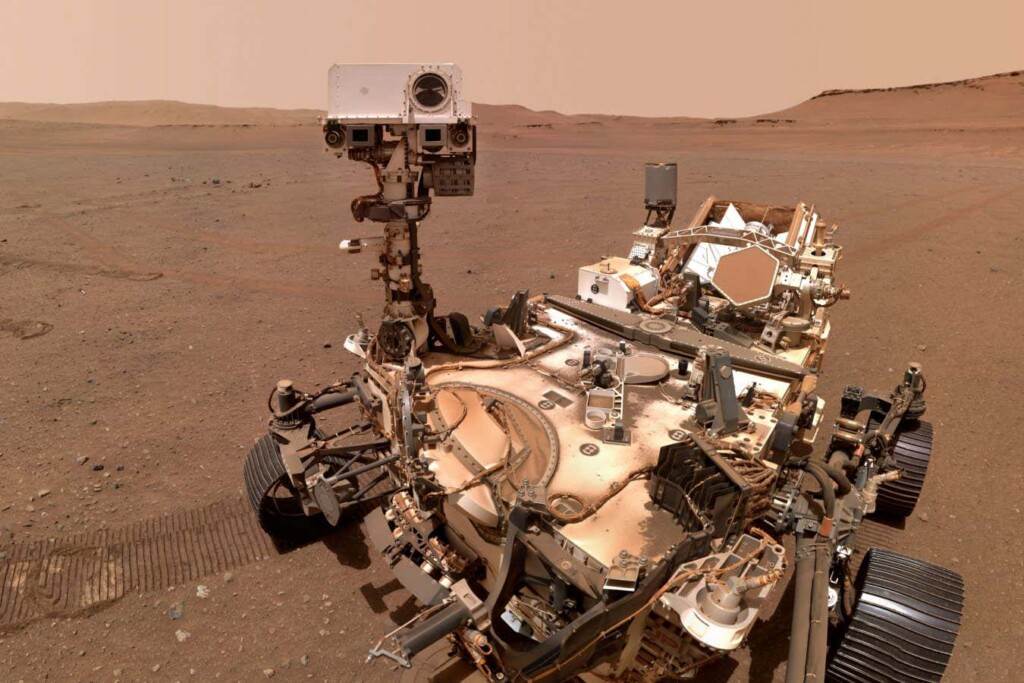
Visible aurora spotted for the first time on Mars by NASA rover
Auroras, the dazzling light displays caused by charged particles interacting with a planet’s atmosphere, have long fascinated scientists and skywatchers on Earth. Until recently, auroras on Mars were only detected in ultraviolet wavelengths, invisible to the human eye. However, NASA's Perseverance rover has now recorded the first visible aurora on the Red Planet, marking a groundbreaking milestone in planetary science. This remarkable discovery not only enhances our understanding of Martian atmospheric processes but also suggests that future explorers on Mars might witness spectacular light shows similar to those on Earth.
Understanding Auroras: Earth vs. Mars
Auroras occur when charged particles from solar winds collide with a planet's atmosphere, energizing atmospheric gases and causing them to emit light. On Earth, this phenomenon creates the famous Northern and Southern Lights, visible as shimmering curtains of green, red, and purple across polar skies. These displays result primarily from interactions with oxygen and nitrogen molecules in Earth's atmosphere.
Mars, with its thin atmosphere and weak magnetic field, experiences auroras differently. Unlike Earth’s global magnetic field, Mars has localized crustal magnetic fields, which influence where auroras can form. Prior to the recent discovery, Martian auroras were only detected in ultraviolet light by orbiters, making them invisible to human observers on the surface.
The visible aurora spotted by Perseverance represents a significant departure from previous observations. It indicates that under certain solar conditions, such as intense solar flares, the interaction of charged particles with Martian atmospheric components can produce visible light, a discovery that deepens our understanding of how Mars’s atmosphere responds to space weather.
NASA’s Perseverance Rover: A Front-Row Seat to Martian Aurora
Launched in July 2020 and landing in Mars’ Jezero Crater in February 2021, NASA’s Perseverance rover has been instrumental in studying Mars’ geology, climate, and potential for past life. Equipped with advanced scientific instruments, it has also provided unique opportunities to study atmospheric phenomena firsthand.
The visible aurora was detected during a period of heightened solar activity, specifically following a powerful solar flare that intensified the influx of charged particles into Mars’ atmosphere. Perseverance’s sensitive cameras and sensors captured the aurora’s glow, marking the first time such a phenomenon has been recorded in visible wavelengths on Mars.
This observation highlights the rover’s versatility beyond geological research, showcasing its ability to contribute valuable data to planetary atmospheric science. It also underscores the importance of continuous surface-based monitoring for capturing transient and dynamic phenomena on Mars.
The Science Behind Martian Auroras
Martian auroras differ fundamentally from their Earth counterparts due to Mars’ atmospheric composition and magnetic environment. The Red Planet’s atmosphere is predominantly carbon dioxide, with trace amounts of oxygen and nitrogen, which influence the color and intensity of auroral emissions.
The aurora observed by Perseverance was primarily caused by energized oxygen atoms, which, when excited by charged particles from the solar wind, emit a faint visible glow. This contrasts with ultraviolet auroras previously detected, which were invisible to the human eye and required specialized instruments to observe.
Moreover, the localized crustal magnetic fields on Mars channel these charged particles to specific regions, creating auroral displays that are patchy and confined, unlike Earth’s widespread auroras. Understanding these interactions helps scientists learn more about Mars’ magnetic anomalies and atmospheric escape processes.
Implications for Future Mars Exploration
The detection of visible auroras on Mars has exciting implications for future human missions. Astronauts on the Martian surface could witness spectacular natural light shows, enhancing the experience of living on another planet and providing unique opportunities for scientific observation and public engagement.
Additionally, studying auroras on Mars can inform mission planning by providing insights into space weather effects on the planet. Solar flares and charged particle events influence radiation levels, which are critical for astronaut safety and the integrity of electronic equipment.
Understanding auroral activity also contributes to assessing atmospheric loss mechanisms on Mars. By analyzing how charged particles interact with the atmosphere, scientists can better predict long-term changes in Martian climate and habitability.
Comparing Martian and Terrestrial Auroras
While both Earth and Mars experience auroras caused by solar wind interactions, the fundamental differences in their atmospheres and magnetic fields create distinct manifestations. Earth’s global magnetic field produces auroras predominantly near the poles, visible as expansive light curtains.
Mars’ patchy crustal magnetic fields create localized auroras that are often faint and confined to smaller regions, making them harder to observe. The recent visible aurora discovery indicates that under intense solar conditions, these auroras can brighten enough to be seen with the naked eye.
These comparisons help scientists understand planetary magnetospheres and atmospheres across the solar system, providing context for how different planets respond to solar and cosmic phenomena.
Technological Advances Enabling the Discovery
The ability of Perseverance to detect visible auroras is a testament to advancements in rover instrumentation and imaging technology. High-sensitivity cameras and spectrometers designed for diverse scientific objectives enabled the capture of this rare atmospheric event.
Continuous monitoring and real-time data transmission allow scientists on Earth to analyze transient phenomena like auroras promptly, facilitating rapid follow-up studies and enhancing our knowledge of Martian atmospheric dynamics.
Furthermore, this discovery underscores the importance of integrating atmospheric science instruments in future planetary missions, enabling comprehensive studies of planetary environments beyond surface geology.
Future Research Directions and Challenges
Following this landmark observation, researchers aim to characterize the frequency, intensity, and spatial distribution of visible auroras on Mars. Long-term monitoring is essential to understand how solar cycles and planetary magnetic anomalies influence auroral activity.
Challenges remain in detecting and studying these faint phenomena due to Mars’ thin atmosphere and variable surface conditions. Developing more sensitive instruments and deploying additional surface or orbital platforms could enhance detection capabilities.
Collaborative efforts combining data from rovers, orbiters, and Earth-based telescopes will provide a holistic understanding of Martian auroras, contributing to broader planetary science and aiding future exploration missions.
Conclusion
The first-ever detection of visible auroras on Mars by NASA’s Perseverance rover marks a monumental step in planetary exploration and atmospheric science. This discovery not only enriches our understanding of Mars’ unique magnetic and atmospheric environment but also promises awe-inspiring experiences for future human explorers. As research continues, these Martian light shows will illuminate more about the Red Planet’s past, present, and potential for sustaining life, highlighting the intricate dance between solar forces and planetary atmospheres across our solar system.
Originally reported by newscientist.com. Adapted for our readers.
Author of the article: Published Sep 18, 2026 11 minute read Article content Kyndryl Canada has been engaged to deliver a commercialization strategy and…
The National Agency for Science and Engineering Infrastructure (NASENI) on Friday 4th September 2026, marked three years of institutional transformation under its Executive Vice…
Municipal Administration Minister P. Narayana speaks to residents after laying the foundation stone for the slum redevelopment project at Velampeta, near Lakshmi Nagar in…