
AI Trends & News
Surface Laptop Ultra Pre-orders Open: Price, Release Date and AI Features
Microsoft opens Surface Laptop Ultra pre-orders from US$2,599.99. Explore its launch date, NVIDIA RTX Spark features and implications for Nigerian businesses.
TAMFIS NIG LTDRC 8067447CAC ACTIVEFinima, Bonny Island, Rivers State

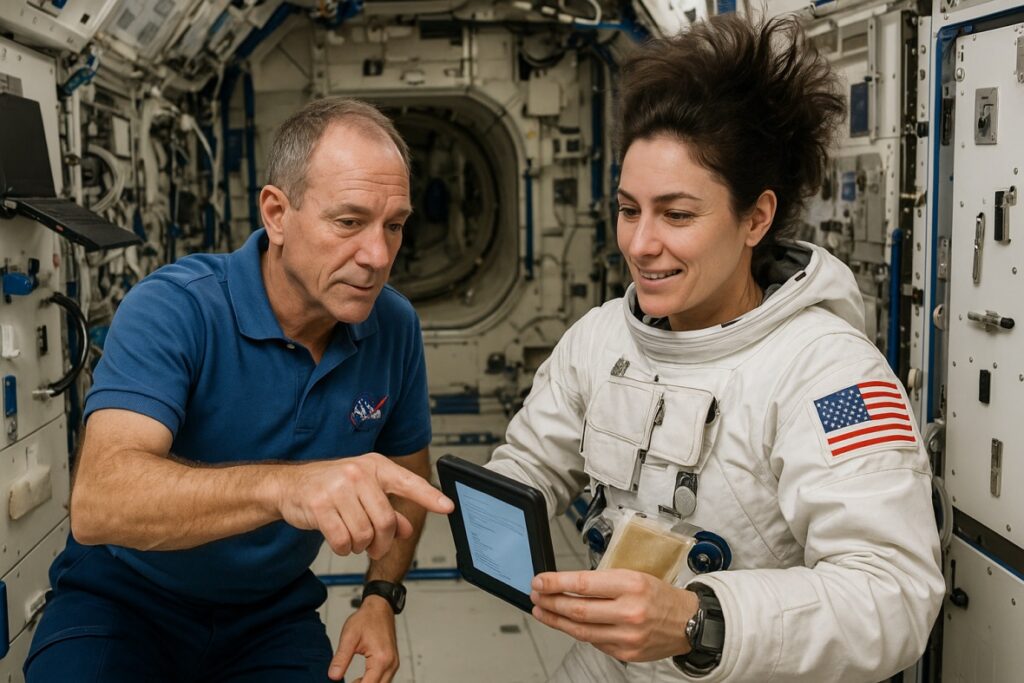
When envisioning the design of space stations, many imagine sophisticated instruments, advanced robotics, and complex engineering marvels. However, amid this high-tech environment, one modest invention quietly ensures order and safety: Velcro. This hook-and-loop fastener, often overlooked, addresses unique challenges posed by the absence of gravity. From securing tools to organizing personal items, Velcro has become indispensable in the daily lives of astronauts living and working in space. This article examines the multifaceted roles Velcro plays aboard space stations, highlighting its significance beyond Earth’s confines.
On Earth, gravity naturally keeps objects grounded. A coffee cup left on a desk remains stationary, and tools rest securely on benches. In the microgravity environment of space, however, these everyday conveniences vanish. Without gravity, items float freely, creating potential hazards and inefficiencies. Even a small object like a pen can drift unpredictably, posing risks to both equipment and crew safety.
Velcro, officially known as hook-and-loop fastener, offers a practical solution. It consists of two complementary surfaces: one covered with tiny hooks and the other with soft loops. When pressed together, they form a secure yet easily separable bond. This simple mechanism allows astronauts to anchor objects firmly in place, preventing them from drifting away and causing disruptions.
In the confined and weightless environment of the International Space Station (ISS), organization is critical. Astronauts rely on Velcro to keep essential items accessible and secure. Food pouches, for example, are often backed with Velcro strips, enabling them to be attached to walls or workstations during meals to prevent floating food particles.
Tools used for repairs and experiments are fastened to designated spots with Velcro, ensuring they remain within reach and do not float away mid-task. Writing instruments, tablets, and notebooks also feature Velcro attachments, allowing crew members to maintain an orderly workspace. This system reduces time spent searching for items and minimizes distractions, enhancing overall mission efficiency.
Beyond personal belongings, Velcro is instrumental in managing larger equipment aboard the space station. Scientific instruments, cables, and storage containers are often secured with Velcro straps to prevent accidental movement that could damage sensitive devices or obstruct pathways.
During experiments, astronauts attach cameras and monitoring devices using Velcro strips. This setup facilitates stable, hands-free operation essential for conducting precise measurements and observations in microgravity. Additionally, Velcro’s adaptability allows equipment to be repositioned or swapped out quickly as research needs evolve, providing valuable flexibility in a dynamic environment.
Velcro’s utility extends beyond the interior of the space station to the spacesuits astronauts wear during extravehicular activities (EVAs). These suits incorporate multiple Velcro patches designed to hold tools, gloves, and other accessories securely.
In the vacuum of space, losing a tool is not merely inconvenient—it can be hazardous. Floating objects can collide with delicate instruments, block critical hatches, or become dangerous projectiles due to microgravity dynamics. By fastening tools to their suits with Velcro, astronauts minimize these risks while keeping necessary equipment readily accessible during complex spacewalks.
Space stations require ongoing maintenance and upgrades, often under challenging conditions. Velcro contributes to this process by enabling rapid attachment and removal of panels, wiring, and equipment without the need for specialized hardware.
Its use in modular design allows astronauts and engineers to adapt swiftly to unexpected issues. When components malfunction or need modification, Velcro strips provide a straightforward method for making adjustments or replacements. This capability is crucial for maintaining station functionality and crew safety without extensive downtime.
Living in space for extended periods can be mentally taxing. Maintaining a clean, organized environment plays a significant role in supporting astronauts’ psychological health.
Velcro aids in reducing clutter by keeping items secured and designated to specific locations. This organization minimizes the time and frustration associated with searching for tools or supplies, allowing crew members to focus on their tasks and reducing stress.
An orderly workspace also lowers the risk of accidents, which is vital in an environment where even minor mistakes can have serious consequences. Thus, Velcro’s contribution extends beyond physical utility to enhancing the overall quality of life aboard the station.
Velcro’s presence in space station design exemplifies how simple inventions can have profound impacts in complex settings. Despite the advanced technology surrounding astronauts, this modest fastener addresses fundamental challenges posed by microgravity.
Its reliability, ease of use, and versatility have made Velcro a cornerstone of space mission design worldwide. From securing everyday items to supporting critical operations, Velcro demonstrates that innovation does not always require complexity—sometimes, the most effective solutions are those that embrace simplicity and adaptability.
While space exploration often conjures images of cutting-edge technology and sophisticated engineering, Velcro stands out as a humble yet indispensable component of life in orbit. Its ability to secure objects, organize workspaces, and support safety measures illustrates how simple innovations can solve complex problems. As astronauts continue to live and work in challenging microgravity environments, Velcro remains a vital tool, quietly holding the cosmos together one hook and loop at a time. Recognizing the importance of such everyday technologies enriches our understanding of the ingenuity required to sustain human presence in space.
Originally reported by thetrentonline.com. Adapted for our readers with AI assistance.
Keep reading
AI Trends & News
Microsoft opens Surface Laptop Ultra pre-orders from US$2,599.99. Explore its launch date, NVIDIA RTX Spark features and implications for Nigerian businesses.
Science & Technology
DJI’s IBC recognition puts pocket gimbal and panoramic capture in the spotlight. Here is how creators can assess framing, editing effort and recording workflows.
Business News
App store steering is about more than permission to add a link. Explore fees, renewal terms, customer experience and the UK consultation.
TAMFIS NIG LTD
Electrical and instrumentation engineering, bid preparation and consulting, IT and software.

