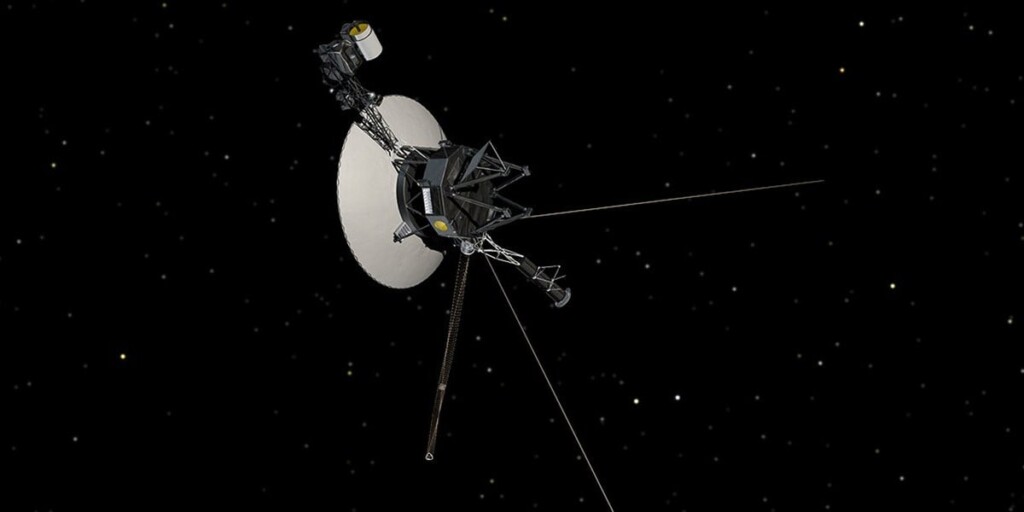
Unbreakable Voyager space probes close in on a 50 year mission
Since their launch in 1977 during the presidency of Jimmy Carter, the Voyager 1 and Voyager 2 spacecraft have embarked on an unprecedented journey through our solar system and beyond. Now, nearly half a century later, these probes are nearing the milestone of 50 years in space. Their durability and continued operation are testaments to the visionary engineering and dedicated teams at NASA’s Jet Propulsion Laboratory (JPL). This article explores the challenges the Voyager missions have faced, the technological marvels that keep them functioning, and the significance of their enduring legacy in space exploration.
The Genesis of the Voyager Missions
The Voyager program was conceived in the early 1970s to take advantage of a rare planetary alignment that would allow a single spacecraft to visit multiple outer planets using gravity assists. Voyager 2 launched first on August 20, 1977, followed by Voyager 1 on September 5, 1977, with the latter being sent on a faster trajectory to reach Jupiter and Saturn first.
Equipped with advanced scientific instruments for the time, including cameras, magnetometers, plasma detectors, and cosmic ray sensors, both probes were designed to collect detailed data about the outer planets and their moons. The mission’s objectives expanded as the spacecraft continued their journeys beyond the heliosphere into interstellar space.
The Voyager probes carry Golden Records containing sounds and images representing life on Earth, symbolizing humanity’s message to potential extraterrestrial civilizations. These records highlight the profound cultural and scientific significance embedded in the Voyager missions beyond pure exploration.
Engineering Marvels: Design and Durability
The Voyager spacecraft were built with robust engineering principles focused on longevity and redundancy. Each probe is powered by three Radioisotope Thermoelectric Generators (RTGs), which convert heat from decaying plutonium-238 into electricity. This power source was chosen for its reliability over solar panels, especially in the distant, dark regions of space.
Redundant systems and backup components were integral to the design, allowing the probes to switch to alternate circuits if primary systems failed. This foresight has been critical as the spacecraft have endured harsh radiation environments, extreme temperatures, and cosmic hazards over decades.
The onboard computers and software were designed with simplicity and reliability in mind, utilizing early 1970s technology yet optimized for autonomous operation millions of miles from Earth. Despite their age, the probes’ systems have been maintained and updated remotely by the dedicated Voyager operations team.
Power Challenges and Management
As the RTGs’ plutonium fuel decays, the power output steadily decreases, presenting an ongoing challenge for mission controllers. The Voyager team has had to make difficult decisions to balance power consumption among communication systems, scientific instruments, and spacecraft heating.
In recent years, some instruments, such as the plasma science instrument on Voyager 2, have been turned off to conserve energy. The team prioritizes keeping at least one science instrument operational along with the high-gain antenna to maintain communication with Earth.
Innovative power management strategies include shutting down non-essential systems and carefully scheduling instrument operation times. Despite these challenges, NASA aims to keep the probes functional well into the early 2030s, allowing them to continue gathering data from the interstellar medium.
Communication Hurdles and Solutions
Maintaining communication across billions of miles is a monumental task. The Voyager spacecraft transmit data via the Deep Space Network (DSN), a global array of large radio antennas capable of detecting faint signals. Over the years, the DSN has been upgraded to enhance sensitivity and data processing capabilities.
In 2023, Voyager 1 encountered a temporary communication disruption after a command to activate a heater inadvertently triggered the probe’s fault protection system. This system reduced transmitter power, causing the loss of the usual high-power X-band signal and a switch to the weaker S-band signal, last used in 1981.
Engineers at JPL successfully detected the faint S-band transmissions and diagnosed the issue, restoring Voyager 1’s communications. This incident underscored the resilience of both the spacecraft and the ground teams, as well as the importance of continuous technological upgrades and expert problem-solving.
Scientific Contributions Over Five Decades
The Voyager missions have revolutionized our understanding of the outer planets and their moons. They provided the first close-up images of Jupiter’s turbulent atmosphere, Saturn’s rings, Uranus’s tilted magnetic field, and Neptune’s dynamic weather patterns, among many other discoveries.
Beyond planetary science, Voyager 1 and 2 have ventured into interstellar space, providing the first direct measurements of the heliosphere’s boundary and the properties of the interstellar medium. These data are invaluable for understanding the Sun’s influence and the environment beyond our solar system.
The longevity of the Voyager probes allows for continuous monitoring of cosmic rays, magnetic fields, and plasma waves in regions never previously explored. This unique long-term data set is a treasure trove for astrophysicists and space scientists worldwide.
The Human Element: Teams Behind the Mission
The Voyager program’s success is as much about the people behind the scenes as the spacecraft themselves. Scientists, engineers, and technicians at NASA’s Jet Propulsion Laboratory have dedicated decades to maintaining and operating the probes, often innovating on the fly to solve unexpected problems.
As the original Voyager engineers and scientists retire, a new generation has taken up the mantle, blending institutional knowledge with fresh perspectives and advanced technology. This continuity has been crucial in extending the mission’s lifespan beyond initial expectations.
The recent passing of Dr. Ed Stone, the Voyager project scientist and former JPL director, marked the end of an era but also reinforced the lasting impact of his leadership and vision. Memorials and tributes celebrate his contributions, inspiring current and future space explorers.
Looking Ahead: The Future of Voyager and Space Exploration
NASA anticipates that the Voyager spacecraft will continue sending data until their power sources can no longer sustain communication, expected sometime in the early 2030s. Even after contact is lost, the probes will remain silent ambassadors of humanity, drifting through interstellar space.
The Voyager missions have paved the way for new deep space exploration missions, informing the design and objectives of spacecraft destined for the outer planets and beyond. Their legacy influences current projects such as the James Webb Space Telescope and future interstellar probes.
As technology advances, the lessons learned from Voyager’s endurance and adaptability will guide engineers in building more resilient spacecraft. The spirit of exploration embodied by Voyager continues to inspire humanity’s quest to understand the cosmos.
Key Challenges and Lessons Learned
The Voyager missions have faced numerous technical and environmental challenges, from power depletion and communication interruptions to hardware anomalies caused by cosmic radiation. Each obstacle has required innovative solutions and meticulous planning.
One critical lesson is the importance of redundancy and simplicity in spacecraft design, allowing systems to continue functioning even when components fail. This approach has extended Voyager’s operational life far beyond initial mission plans.
The mission also highlights the value of ground-based infrastructure like the Deep Space Network, which must evolve alongside spacecraft to maintain contact over ever-increasing distances. Continuous investment in such infrastructure is vital for future deep space missions.
Conclusion
The Voyager spacecraft stand as enduring symbols of human curiosity, ingenuity, and perseverance in exploring the unknown. Approaching their 50th anniversary, these unbreakable probes continue to defy expectations, sending back invaluable scientific data from the edge of interstellar space. Their story is not only one of technological triumph but also of the dedicated individuals who have nurtured their mission across generations. As we look to the future of space exploration, Voyager’s legacy will continue to inspire and inform humanity’s quest to unravel the mysteries of the cosmos.
Recent advances in machine perfusion technology are not only preserving donated livers but also making them biologically younger at a molecular level. This breakthrough…
What happens when human imagination, artificial intelligence, art and technology come together? From September 1 to 6, Samsung Electronics presented a special exhibition themed…