Tristar Eships contracts Wärtsilä to diminish ships’ carbon footprint
The maritime industry is under increasing pressure to reduce its environmental impact and transition towards sustainable operations. Recognizing this imperative, Tristar Eships, the maritime logistics division of the Dubai-based Tristar Group, has recently contracted Wärtsilä, a Finnish technology and services provider, to help diminish the carbon footprint of its vessels. This strategic collaboration focuses on implementing Wärtsilä’s Decarbonisation Services on two of Tristar Eships’ prominent tankers. By leveraging cutting-edge technologies and thorough operational assessments, the partnership aims to optimize fuel efficiency, reduce greenhouse gas emissions, and set a benchmark in sustainable shipping practices. This article delves into the significance of this collaboration and the innovative solutions Wärtsilä brings to the table.
Overview of Tristar Eships and Wärtsilä Partnership
Tristar Eships operates as the maritime logistics division of the Tristar Group, a Dubai-based conglomerate specializing in energy and logistics solutions. With a fleet that spans various vessel types including oil and chemical tankers, Tristar Eships plays a crucial role in global maritime transportation. In line with the rising demand for environmental responsibility, the company has prioritized decarbonization as a core objective.
Wärtsilä, headquartered in Finland, is a leading global provider of smart technologies and lifecycle solutions for the marine and energy markets. The company has established a reputation for pioneering energy-efficient and sustainable solutions that help shipping companies reduce emissions and comply with environmental regulations.
The partnership between Tristar Eships and Wärtsilä represents a strategic move to combine Tristar’s operational expertise with Wärtsilä’s technological innovations. This collaboration is designed to implement advanced decarbonization measures on Tristar’s vessels, ultimately enabling a cleaner and more sustainable maritime industry.
Wärtsilä’s Decarbonisation Services Explained
Wärtsilä’s Decarbonisation Services encompass a comprehensive range of solutions aimed at reducing the carbon intensity of maritime operations. The process begins with a detailed diagnosis of a ship’s operational profile, assessing fuel consumption, engine performance, and voyage patterns to identify opportunities for efficiency improvements.
Following this analysis, Wärtsilä provides tailored recommendations that may include the integration of energy-saving devices such as optimized propellers, advanced shaft generators, and hull modifications. Additionally, the ability to utilize alternative fuels like biofuels is evaluated and supported to further reduce emissions.
These services are not only focused on immediate emission reductions but also designed to offer long-term sustainability by enabling vessels to adapt to evolving environmental regulations and market demands. Wärtsilä’s approach ensures that the solutions are both economically viable and technically feasible for shipowners.
Target Vessels: Solar Nesrin and Silver Muna
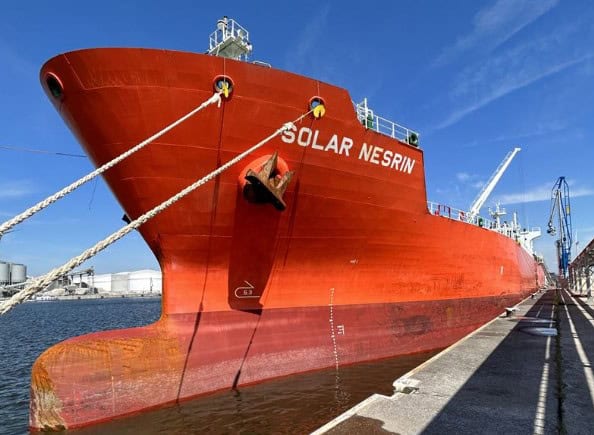
The initial phase of the project involves applying Wärtsilä’s Decarbonisation Services to two of Tristar Eships’ key vessels: the Solar Nesrin and the Silver Muna. The Solar Nesrin is a 169-meter chemical tanker, while the Silver Muna is a larger, 183-meter oil tanker. Both vessels are integral to Tristar’s fleet and represent significant opportunities for emission reductions.
These tankers were selected due to their operational profiles and potential for efficiency gains. By focusing on these vessels first, Tristar aims to demonstrate the tangible benefits of decarbonization technologies and set a precedent for future retrofits across its fleet.
The upgrades on these ships will include Wärtsilä’s EnergoFlow technology, EnergoProFin, optimized propellers, and shaft generators, along with enabling compatibility with biofuels. Collectively, these enhancements are expected to deliver substantial reductions in carbon emissions and improve overall fuel efficiency.
Challenges in Maritime Decarbonization
Decarbonizing maritime operations is complex due to the diversity of vessel types, operational demands, and regulatory frameworks. Selecting the most appropriate technologies requires a nuanced understanding of each ship’s unique profile and trade routes, as well as economic considerations.
The maritime industry also faces challenges related to the availability and cost of alternative fuels, infrastructure for fuel supply, and the need to maintain operational reliability and safety. Balancing these factors while achieving meaningful emission reductions is a key hurdle for shipowners.
Wärtsilä’s Decarbonisation Services address these challenges by providing customized solutions that optimize existing assets without compromising performance. Their data-driven approach ensures that interventions are targeted and effective, helping shipowners navigate the transition to greener shipping.
Technologies Driving Emission Reductions
Among the technologies Wärtsilä employs, EnergoFlow is designed to enhance hydrodynamic efficiency by optimizing the water flow around the hull and propeller. This reduces resistance and improves fuel consumption, directly lowering carbon emissions during voyages.
EnergoProFin, another innovation, involves the installation of specialized fins on the rudder to stabilize the vessel and improve propulsion efficiency. This technology works in tandem with optimized propellers to maximize thrust while minimizing energy losses.
The integration of shaft generators enables vessels to produce electrical power more efficiently while underway, reducing reliance on auxiliary engines that typically consume more fuel. Additionally, enabling the use of biofuels provides a renewable energy source that can significantly cut carbon footprints.
Environmental and Economic Benefits for Tristar Eships
By adopting Wärtsilä’s Decarbonisation Services, Tristar Eships expects to achieve considerable reductions in greenhouse gas emissions, aligning with global maritime environmental targets such as those set by the International Maritime Organization (IMO). This proactive approach enhances the company’s reputation as a responsible operator.
Beyond environmental gains, improving fuel efficiency translates into significant cost savings, given that fuel expenses constitute a major portion of operational costs for shipping companies. Enhanced efficiency also extends vessel lifespan and reduces maintenance requirements, contributing to long-term financial sustainability.
Moreover, early adoption of decarbonization technologies positions Tristar Eships favorably in a market that increasingly values green shipping credentials. This can open new business opportunities and partnerships with clients prioritizing sustainable supply chains.
Industry Implications and Future Outlook
The collaboration between Tristar Eships and Wärtsilä exemplifies a growing trend within the maritime sector to invest in innovative solutions for carbon reduction. Such partnerships are essential for meeting stringent emission regulations and fostering industry-wide sustainability.
As more shipowners recognize the benefits of decarbonization services, demand for tailored technological solutions is expected to increase. This will likely accelerate the development and adoption of advanced marine technologies, including alternative fuel systems and digital optimization tools.
Looking ahead, the success of projects like that of Tristar Eships will serve as a blueprint for other operators seeking to balance operational efficiency with environmental responsibility. Continuous innovation and collaboration will be key to achieving the maritime industry’s climate goals.
Conclusion: A Strategic Step Towards Sustainable Shipping
Tristar Eships’ decision to contract Wärtsilä for the decarbonization of its fleet marks a significant milestone in sustainable maritime logistics. By leveraging Wärtsilä’s advanced Decarbonisation Services, the company demonstrates a strong commitment to reducing its environmental impact while enhancing operational efficiency.
The targeted improvements on the Solar Nesrin and Silver Muna tankers underscore the practical benefits of integrating cutting-edge technologies and data-driven solutions into fleet management. This initiative not only supports global emissions reduction targets but also strengthens Tristar Eships’ competitive edge.
Ultimately, this partnership highlights the critical role of innovation and collaboration in transforming the maritime industry. As shipping companies worldwide seek to address climate challenges, models like the Tristar-Wärtsilä alliance will be instrumental in shaping a greener future for global trade.
Conclusion
The collaboration between Tristar Eships and Wärtsilä represents a forward-thinking approach to tackling the maritime sector’s carbon footprint. By deploying Wärtsilä’s sophisticated Decarbonisation Services on its key vessels, Tristar Eships is not only meeting environmental responsibilities but also enhancing operational efficiency and economic sustainability. This partnership sets an important example within the shipping industry, showcasing how targeted technological interventions can enable meaningful progress toward global emission reduction goals. As the maritime world continues to evolve, such initiatives will be critical in steering the sector towards a greener, more sustainable future.
Author of the article: Published Sep 18, 2026 11 minute read Article content Kyndryl Canada has been engaged to deliver a commercialization strategy and…
The National Agency for Science and Engineering Infrastructure (NASENI) on Friday 4th September 2026, marked three years of institutional transformation under its Executive Vice…
Municipal Administration Minister P. Narayana speaks to residents after laying the foundation stone for the slum redevelopment project at Velampeta, near Lakshmi Nagar in…