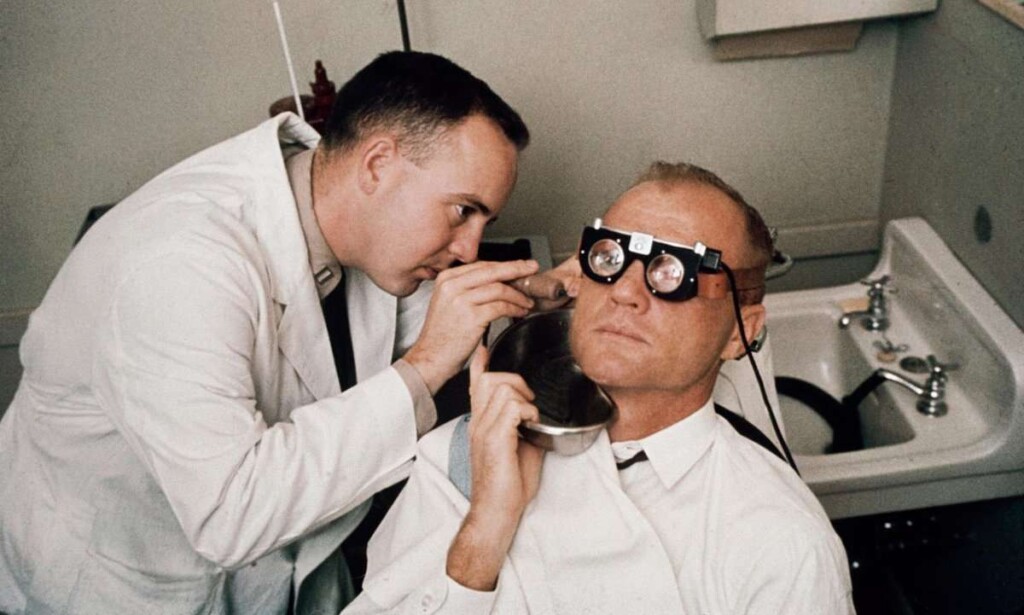
The historical previous-altering clinical mystery of an astronaut who fell in the lavatory
On February 26, 1964, John Glenn, the first American to orbit the Earth and a national hero, experienced a seemingly mundane yet consequential accident. While staying at a hotel, Glenn slipped in the bathroom, hitting his head on the bathtub. Although the fall appeared minor at first, it triggered a complex medical mystery that would reshape how scientists and physicians approached the health challenges of space travel. This incident exposed vulnerabilities in human physiology under spaceflight conditions and inspired groundbreaking research that ultimately transformed astronaut care and space medicine.
John Glenn: America's First Orbital Astronaut
John Glenn’s historic orbit around the Earth in 1962 marked a pivotal moment in the Space Race, making him a symbol of American courage and technological prowess. His mission aboard Friendship 7 proved that humans could endure spaceflight’s rigors and return safely. Following his successful spaceflight, Glenn remained an active figure in NASA and public life, embodying the intersection of human ambition and scientific progress.
Despite his heroic status, Glenn’s post-flight health became a matter of concern when he experienced unexplained symptoms. The pressures of being a pioneering astronaut, combined with the novelty of space medicine, meant that doctors were still learning how space environments impacted astronauts’ bodies. Glenn’s health issues would soon become a focal point for medical inquiry.
The 1964 hotel bathroom incident added a new layer of complexity to Glenn’s health story. His fall, initially dismissed as an unfortunate accident, soon revealed symptoms that puzzled medical experts and hinted at deeper physiological effects potentially linked to his space missions.
The Incident: A Slip in the Lavatory
On that February day, Glenn was staying at a hotel when he slipped in the bathroom, hitting his head on the bathtub. The fall caused immediate pain and discomfort, but Glenn did not initially report severe injuries. However, subtle symptoms soon emerged, including dizziness, headaches, and balance issues, raising concerns among his medical team.
The incident’s location—a bathroom, often slippery and hazardous—was not unusual, but for an astronaut with recent exposure to spaceflight conditions, the consequences were unexpected. The fall’s impact appeared to exacerbate or reveal underlying health problems that had not been fully diagnosed or understood.
This seemingly minor accident became a catalyst for a broader investigation into how microgravity and space travel might affect neurological and vestibular functions, particularly when combined with trauma like a head injury. The mystery deepened as Glenn’s symptoms persisted and defied straightforward explanation.
Medical Mystery Unfolds: Symptoms and Investigations
Following the fall, Glenn experienced a range of debilitating symptoms including persistent headaches, nausea, and balance disturbances. These symptoms raised alarms because they mirrored conditions sometimes linked to spaceflight, such as vestibular dysfunction and intracranial pressure changes. Physicians struggled to pinpoint the exact cause.
Comprehensive medical evaluations were conducted, utilizing the best available diagnostic tools of the 1960s. Despite these efforts, doctors faced difficulties distinguishing whether Glenn’s symptoms stemmed primarily from the fall’s trauma or from spaceflight-induced physiological changes. This ambiguity highlighted gaps in medical knowledge regarding astronaut health.
The medical mystery surrounding Glenn’s condition underscored the need for specialized research into the effects of space travel on the human nervous system. It also emphasized the importance of monitoring astronauts not only during but also after their missions, as delayed symptoms could emerge long after returning to Earth.
Spaceflight and Human Physiology: Emerging Concerns
Glenn’s case brought attention to critical concerns about how spaceflight affects human physiology, particularly the brain and vestibular system. Microgravity environments disrupt normal fluid distribution and sensory inputs, potentially leading to symptoms like dizziness, disorientation, and headaches. Glenn’s post-fall symptoms mirrored these issues, suggesting a possible connection.
Prior to this incident, space medicine was still in its infancy, with limited understanding of long-term physiological changes caused by space travel. Glenn’s experience highlighted the urgent need to explore these effects more deeply to safeguard astronaut health on extended missions.
The incident also raised questions about how injuries sustained on Earth might interact with spaceflight-related physiological changes. This intersection became a new frontier for medical research, prompting NASA and affiliated scientists to develop protocols for injury prevention and management tailored for astronauts.
Impact on Space Medicine and Research
Glenn’s fall and subsequent medical mystery served as a turning point for space medicine. NASA intensified its efforts to study the neurological and physiological effects of spaceflight, leading to innovations in monitoring technologies and medical protocols designed specifically for astronauts.
Research inspired by Glenn’s case contributed to the development of vestibular rehabilitation techniques, improved diagnostic imaging, and better understanding of intracranial pressure dynamics in microgravity. These advances have been critical in preparing astronauts for longer and more complex missions, such as those to the International Space Station and beyond.
Moreover, Glenn’s experience underscored the need for comprehensive post-mission medical follow-up. NASA implemented more rigorous health screenings and long-term studies to track astronaut well-being, recognizing that space-related health issues might manifest well after the mission’s completion.
Broader Implications for Human Space Exploration
The medical mystery surrounding Glenn’s fall transcended individual health concerns, impacting broader strategies for human space exploration. Understanding how spaceflight interacts with injury and illness became essential for mission planning and astronaut safety.
The incident prompted NASA to incorporate environmental safety measures in spacecraft and habitat design, minimizing risks of slips and falls in microgravity. It also influenced training programs, emphasizing physical conditioning and injury prevention tailored to space environments.
As space agencies worldwide look toward missions to the Moon, Mars, and beyond, Glenn’s story remains a cautionary tale about the unpredictable challenges of human physiology in space, reinforcing the importance of medical vigilance and adaptive strategies for future explorers.
Legacy of John Glenn’s Lavatory Fall
John Glenn’s lavatory fall is more than a footnote in space history; it is a defining moment that shaped the trajectory of space medicine. The incident illuminated vulnerabilities in astronaut health and catalyzed research that continues to protect space travelers today.
Glenn’s courage and willingness to confront his medical challenges publicly helped destigmatize health issues related to spaceflight. His experience underscored the human aspect of space exploration—reminding us that even heroes are susceptible to unexpected medical mysteries.
The legacy of this event endures in the protocols, technologies, and scientific knowledge that safeguard astronauts. It also serves as a powerful narrative illustrating how a single accident can prompt profound advancements in science and human understanding.
Future Directions in Space Health Research
Building on lessons from Glenn’s experience, current space health research focuses on mitigating neurological risks and enhancing injury prevention strategies. Advances in wearable sensors, artificial intelligence, and telemedicine offer promising tools for real-time monitoring and intervention during missions.
Researchers are also investigating the long-term effects of space radiation and microgravity on brain structure and function, aiming to develop countermeasures that preserve cognitive and physical health. Glenn’s case remains a foundational reference point for these studies.
As commercial spaceflight expands, the medical community is adapting Glenn’s legacy to new contexts, ensuring that all space travelers benefit from improved safety standards and medical preparedness, ultimately supporting humanity’s sustainable presence beyond Earth.
Conclusion
John Glenn’s seemingly simple fall in a hotel lavatory in 1964 unveiled a profound medical mystery that forever changed the landscape of space medicine. This incident exposed the complex interplay between trauma and spaceflight-induced physiological changes, driving NASA and the scientific community to deepen their understanding of human health in space. The advances born from this mystery have not only safeguarded astronauts but have also paved the way for safer, longer, and more ambitious space missions. Glenn’s story remains a testament to the resilience of the human spirit and the ceaseless pursuit of knowledge that defines space exploration.
Originally reported by popsci.com. Adapted for our readers.
Recent advances in machine perfusion technology are not only preserving donated livers but also making them biologically younger at a molecular level. This breakthrough…
What happens when human imagination, artificial intelligence, art and technology come together? From September 1 to 6, Samsung Electronics presented a special exhibition themed…