
AI Trends & News
Surface Laptop Ultra Pre-orders Open: Price, Release Date and AI Features
Microsoft opens Surface Laptop Ultra pre-orders from US$2,599.99. Explore its launch date, NVIDIA RTX Spark features and implications for Nigerian businesses.
TAMFIS NIG LTDRC 8067447CAC ACTIVEFinima, Bonny Island, Rivers State

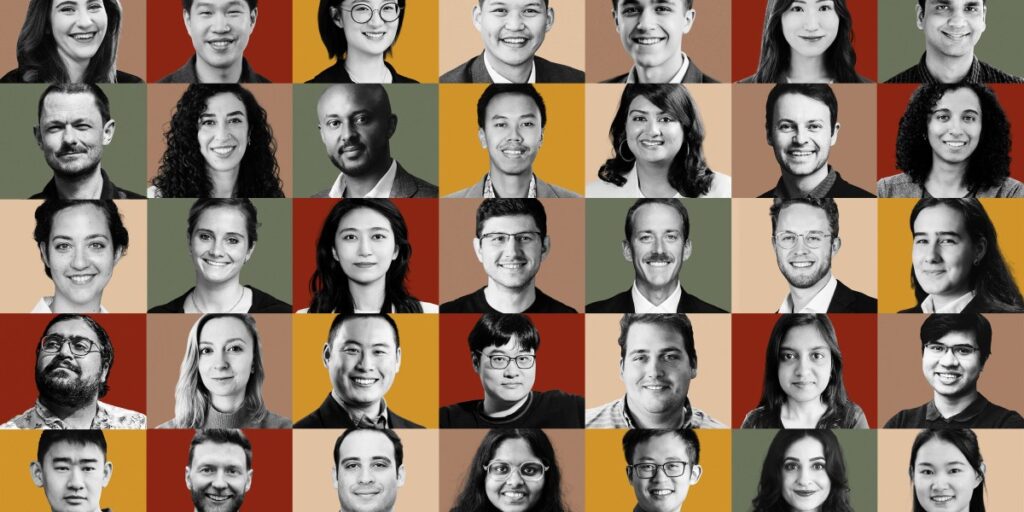
MIT Technology Review has published its annual 35 Innovators Under 35 list for 2025, spotlighting early-career researchers and founders tackling challenges from climate change and disease to the physical limits of computing. The cohort, chosen from hundreds of nominees by expert judges and the publication's newsroom, includes the 2025 Innovator of the Year alongside 34 peers working across academic labs and start-ups worldwide. The announcement coincides with a pointed essay from materials scientist Julia R. Greer — herself a 2008 honoree and a judge this year — arguing that proposed White House budget cuts to federally funded university research risk strangling the discovery pipeline that produced today's nanometre-scale transistors and tomorrow's unknown breakthroughs.
The 35 innovators hail from institutions and companies across North America, Europe, Asia and the Middle East. Their work clusters around several themes: next-generation materials for cleaner energy, AI systems that reason more reliably, low-cost diagnostics for neglected diseases, and robotics platforms designed to operate safely alongside humans. Several honourees have already spun out venture-backed companies; others lead research groups at universities such as Caltech, ETH Zurich, Tsinghua University and the University of Cape Town. The list deliberately mixes disciplines — computer scientists sit beside synthetic biologists, mechanical engineers beside neuroscientists — reflecting the increasingly interdisciplinary nature of high-impact innovation.
In her accompanying essay, Julia Greer draws a direct line between the fingernail-sized chips powering every smartphone and decades of curiosity-driven research funded by US federal agencies. A modern processor contains tens of billions of silicon transistors, each measured in nanometres — smaller than many viruses. The physics, materials science and fabrication techniques that made this possible emerged from university labs supported by agencies such as the National Science Foundation, the Department of Energy and DARPA. Greer warns that proposed budget cuts have already forced some universities to freeze graduate admissions, cancel summer internships and scale back undergraduate research programmes. Those decisions, she argues, will reverberate for decades because the talent pipeline and the exploratory projects that seed future industries are being dismantled simultaneously.
The same edition of The Download highlights a Bloomberg report that the US is considering annual chip supply permits for South Korean manufacturers Samsung and SK Hynix operating in China. The move would add another layer of licensing uncertainty to an already fractured semiconductor supply chain. For the innovators working on next-generation memory, logic and packaging technologies, regulatory unpredictability compounds the technical difficulty of scaling new architectures. Several honourees this year are developing alternatives to traditional silicon — including two-dimensional materials, photonic interconnects and neuromorphic chips — precisely because the geopolitical and physical limits of the current roadmap are becoming clearer.
OpenAI's ongoing investigation into why large language models hallucinate — confidently presenting falsehoods as fact — underscores a theme visible across multiple innovator profiles: the shift from model performance on benchmarks to deployable reliability. Honourees are building verification layers, uncertainty quantification tools and retrieval-augmented frameworks that make AI output auditable in high-stakes settings such as medical diagnosis, legal review and engineering design. The commercial imperative is clear: enterprises will not adopt generative AI at scale until error rates are bounded and explainable. This year's list includes founders whose start-ups sell exactly that infrastructure to regulated industries.
A profile of Zachary Cefaratti, the dealmaker connecting Silicon Valley capital to Middle Eastern data-centre projects, illustrates how the AI compute arms race is reshaping energy infrastructure in the Gulf. The region's abundant solar resources, sovereign wealth funds and permissive regulatory regimes are attracting hyperscale build-outs that dwarf previous cloud deployments. Several innovators are working on liquid-cooling systems, high-voltage direct-current distribution and waste-heat recovery tailored for these mega-clusters. Their solutions address a bottleneck that is as much thermodynamic as computational: training frontier models now consumes gigawatt-hours, and the next generation will require tens of gigawatts of reliable, low-carbon power.
The newsletter's must-reads section juxtaposes a Wall Street Journal report on billionaires funding longevity research with the re-emergence of screwworm in the United States after a 50-year absence — a reminder that basic public health surveillance remains fragile. Among the innovators are researchers developing low-cost, CRISPR-based diagnostics for parasitic diseases and engineers building automated insect-surveillance networks. Their work exemplifies a recurring pattern: tools created for one domain (pandemic pathogen detection) find unexpected utility in another (agricultural pest monitoring), but only if the underlying platform science was funded in the first place.
Tesla's latest Master Plan, as reported by The Atlantic, centres on humanoid robots rather than electric vehicles. Chinese EV giants are making the same bet. Several 2025 innovators lead teams developing tactile sensing, whole-body control and sim-to-real transfer for legged robots intended for logistics, elder care and hazardous inspection. The convergence of cheap inference compute, high-torque density actuators and large-scale simulation is finally making general-purpose humanoids economically plausible — if reliability and safety can be certified. That 'if' is where multiple honourees are focusing their efforts.
Vodafone's deployment of a synthetic TikTok influencer, built with Synthesia's expressive avatar technology, signals that AI-generated spokespeople have moved from novelty to media plan line item. Innovators in this year's cohort are pushing the next frontier: real-time interactive avatars that can hold unscripted conversations in multiple languages, with applications in customer support, training and telehealth. The commercial adoption curve is steepening; brands are learning that audiences accept synthetic presenters provided the disclosure is clear and the interaction feels responsive rather than uncanny.
MIT Technology Review's 2025 Innovators Under 35 list functions as both a snapshot of emerging technical leadership and a leading indicator of where the next generation of venture capital, government procurement and corporate R&D budgets will flow. The accompanying commentary from Julia Greer and the newsletter's curated must-reads frame a coherent tension: the individuals honoured this year are building on a foundation of basic science that current policy choices may erode. For business leaders, investors and procurement officers, the practical signal is clear — the technologies nearing commercial readiness (reliable AI, humanoid robotics, low-carbon compute infrastructure, CRISPR diagnostics) trace back to research decisions made a decade or two ago. Protecting the discovery pipeline is not abstract philanthropy; it is supply-chain security for the innovations that will define the 2040s.
Originally reported by technologyreview.com. Adapted for our readers with AI assistance.
Keep reading
AI Trends & News
Microsoft opens Surface Laptop Ultra pre-orders from US$2,599.99. Explore its launch date, NVIDIA RTX Spark features and implications for Nigerian businesses.
Science & Technology
DJI’s IBC recognition puts pocket gimbal and panoramic capture in the spotlight. Here is how creators can assess framing, editing effort and recording workflows.
Business News
App store steering is about more than permission to add a link. Explore fees, renewal terms, customer experience and the UK consultation.
TAMFIS NIG LTD
Electrical and instrumentation engineering, bid preparation and consulting, IT and software.

