
AI Trends & News
Surface Laptop Ultra Pre-orders Open: Price, Release Date and AI Features
Microsoft opens Surface Laptop Ultra pre-orders from US$2,599.99. Explore its launch date, NVIDIA RTX Spark features and implications for Nigerian businesses.
TAMFIS NIG LTDRC 8067447CAC ACTIVEFinima, Bonny Island, Rivers State

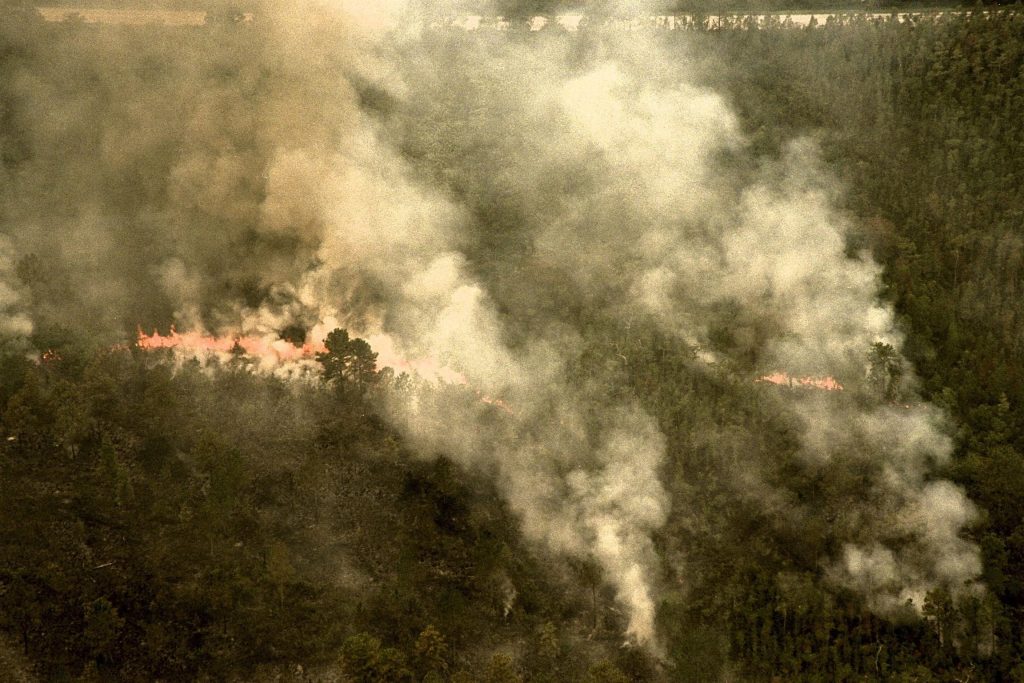
In the late 1990s, Kennedy Space Center in Florida faced an unprecedented environmental challenge that tested the limits of its operational resilience. While lightning strikes had long been recognised as hazards to space launches – famously disabling Apollo 12 in 1969 and claiming a worker's life in earlier years – the events of mid-1998 presented a different kind of threat. A single lightning strike in eastern central Florida sparked a wildfire that, due to a combination of climatic conditions and historical land management practices, grew into a massive inferno consuming approximately 500,000 acres. This blaze, known as the 1998 Florida Firestorm, not only disrupted regional infrastructure and endangered communities but also directly impacted NASA's launch preparations, forcing the agency to confront wildfire smoke as a critical factor in flight safety assessments. The incident ultimately led to lasting changes in how space centres manage their surrounding environments, particularly through the adoption of prescribed burning programmes.
Central Florida's ecosystem has historically depended on periodic, low-intensity wildfires to maintain ecological balance. These natural fires, typically ignited by lightning, serve to clear flammable undergrowth and promote forest health. However, beginning in the mid-20th century, a policy of aggressive fire suppression became standard practice among residents and local officials. The intention was to protect property and lives, but the unintended consequence was a dangerous accumulation of combustible material in woodlands across the region.
This buildup was particularly pronounced following an unusually wet winter in early 1998, which promoted dense growth of low-lying vegetation. When spring drought conditions arrived, the landscape was primed for combustion. A lightning strike in May 1998 ignited a fire that, instead of being quickly extinguished by rain as was typical, found ample fuel in the overgrown undergrowth. The blaze rapidly intensified, merging with other lightning-sparked fires to form a vast conflagration that defied containment efforts.
Brevard County Assistant Fire Chief Jeffrey Mahoney became a prominent voice during the crisis, publicly stating that the 500 firefighters initially deployed were 'being asked to do the impossible' against the scale of the inferno. His appeals led to increased state and federal resource allocation, ultimately bringing thousands of personnel to bear on the firefighting effort across Florida.
Despite the growing threat, NASA initially maintained normal operations at Kennedy Space Center. In early June 1998, the agency successfully launched and landed Space Shuttle mission STS-91, demonstrating that launch protocols could still function amid the developing crisis. However, as the fires spread, they began to encroach on centre property, creating tangible risks to both infrastructure and personnel safety.
By late June, firefighters were engaged in defending critical assets such as the South Repeater Building – a fibre-optics relay station and storage facility located on the southern edge of the Kennedy complex. The flames had already consumed 3,000 acres of the adjoining Merritt Island National Wildlife Refuge, and smoke density became so severe that officials were forced to close State Road 3. Kennedy employee Lisa Braden recounted driving on the road shortly before its closure, describing zero visibility due to thick smoke and returning to find flames crossing the street behind her.
The atmospheric conditions were extreme enough to warrant broader regional interventions: a 140-mile stretch of Interstate 95 was shut down, and NASCAR postponed its traditional July 4th race at Daytona International Speedway. These disruptions underscored the firestorm’s wide-reaching influence beyond immediate fire zones, affecting transportation, commerce, and public events across central Florida.
As the October 1998 launch of STS-95 approached, NASA’s safety teams incorporated lessons from the ongoing wildfire situation into their preparations. The STS-95 Flight Readiness Review document, produced in the weeks preceding launch, notably included two Smoke Plume Rule diagrams – visual tools designed to assess and mitigate risks posed by wildfire smoke to launch trajectories and ground operations.
These diagrams reflected a growing awareness among launch controllers, engineers, and safety officers that atmospheric conditions extending far beyond the immediate launch pad could jeopardize mission success. Smoke inhalation risks to crews, potential corrosion of sensitive equipment from particulate matter, and impaired visibility for tracking systems were all factored into the readiness assessment process.
Although STS-95 ultimately launched on 29 October 1998 under clear, smoke-free skies, the charred landscape visible from Space Shuttle Discovery’s ascent served as a stark reminder of the recent devastation. The mission proceeded successfully, but the experience left an indelible mark on NASA’s approach to environmental risk management.
In the aftermath of the 1998 Firestorm, NASA and neighbouring land management agencies shifted from reactive fire suppression to proactive ecological management. A key component of this new strategy has been the regular implementation of prescribed burns – controlled, low-intensity fires deliberately set under safe conditions to reduce undergrowth and mimic natural fire cycles.
These prescribed burns have since become routine across wooded areas of Kennedy Space Center and throughout Florida. By eliminating excess fuel loads in a controlled manner, they significantly lower the probability and intensity of future wildfires. This approach not only protects critical space infrastructure but also supports biodiversity and ecosystem health in the Merritt Island National Wildlife Refuge and surrounding regions.
As launch frequency at Kennedy Space Center increases – reaching a record 72 orbital launches in 2023 – and as climate change contributes to more frequent and severe weather patterns, the integration of wildfire preparedness into mission planning has become essential. The prescribed burn programme stands as a direct legacy of the 1998 crisis, illustrating how environmental stewardship and operational resilience can be advanced through science-based land management.
The 1998 Florida Firestorm serves as a powerful case study in how historical land management decisions, climatic factors, and institutional preparedness intersect to create large-scale environmental risks. For NASA, the event transformed abstract concerns about wildfire smoke into concrete procedural changes, most visibly reflected in the STS-95 Flight Readiness Review. More importantly, it catalysed a shift toward preventive ecology through prescribed burns, a practice that continues to protect both spaceflight operations and Florida’s natural habitats today. As spaceports around the world expand their activities and face growing climate-related challenges, the lessons from this firestorm underscore the necessity of integrating environmental stewardship into the core of mission preparedness – not as an afterthought, but as a fundamental component of operational excellence.
Originally reported by nasa.gov. Adapted for our readers with AI assistance.
Keep reading
AI Trends & News
Microsoft opens Surface Laptop Ultra pre-orders from US$2,599.99. Explore its launch date, NVIDIA RTX Spark features and implications for Nigerian businesses.
Science & Technology
DJI’s IBC recognition puts pocket gimbal and panoramic capture in the spotlight. Here is how creators can assess framing, editing effort and recording workflows.
Business News
App store steering is about more than permission to add a link. Explore fees, renewal terms, customer experience and the UK consultation.
TAMFIS NIG LTD
Electrical and instrumentation engineering, bid preparation and consulting, IT and software.

