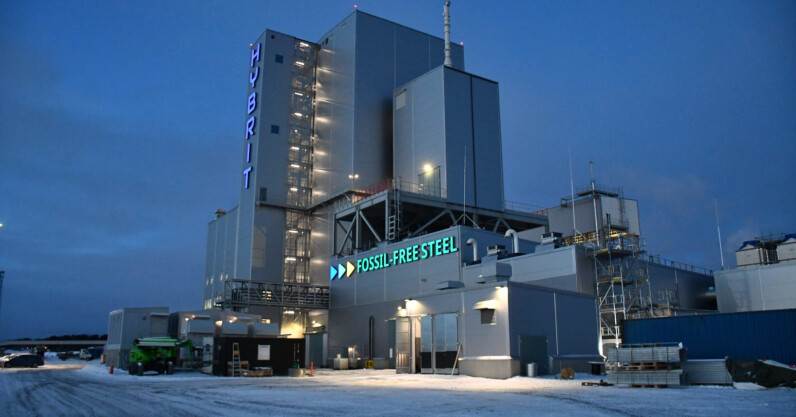
Sweden’s been stealthily using hydrogen to forge green steel. Now it’s ready to industrialise
Steel production is one of the most carbon-intensive industrial processes, responsible for approximately 11% of global CO2 emissions. Traditionally reliant on coal and coke in blast furnaces, the steel industry faces mounting pressure to decarbonize. Sweden has quietly been at the forefront of this challenge, developing an innovative hydrogen-based steelmaking process through the HYBRIT project. This initiative, a collaboration between energy giant Vattenfall, steel manufacturer SSAB, and mining firm LKAB, has demonstrated the viability of producing fossil-free steel on a semi-industrial scale. Now, after years of testing and refinement, Sweden is gearing up to industrialize green steel production, potentially revolutionizing the steel sector worldwide.
The Environmental Imperative Behind Green Steel
Steel is indispensable across multiple industries, from construction to automotive manufacturing, but its production is notoriously polluting. The conventional method involves blast furnaces that burn coal and coke to reduce iron ore, emitting vast amounts of CO2. With global steel demand projected to rise, the environmental impact of steelmaking poses a critical challenge for climate goals.
Decarbonizing steel production is essential to meet international climate targets, including the Paris Agreement. Traditional carbon capture solutions have limitations, prompting the search for fundamentally cleaner processes. Hydrogen-based steelmaking offers a promising alternative by replacing fossil fuels with green hydrogen, produced via renewable energy sources, thereby eliminating direct carbon emissions.
Sweden’s approach addresses this imperative by integrating renewable electricity and hydrogen in steel production. The country’s abundant clean energy resources, especially hydropower and wind, create ideal conditions for producing green hydrogen at scale. This synergy forms the backbone of Sweden’s strategy to transform the steel industry into a climate-friendly sector.
Understanding HYBRIT: The Technology Behind Hydrogen Steelmaking
HYBRIT, an acronym for Hydrogen Breakthrough Ironmaking Technology, represents a revolutionary process that replaces coke with hydrogen in iron ore reduction. Unlike the traditional blast furnace method, HYBRIT uses direct reduction to convert iron oxides into metallic iron without melting them. This process generates sponge iron, a porous form of iron that serves as a precursor to steel.
In the HYBRIT process, hydrogen reacts with oxygen in iron ore, producing water vapor as the sole byproduct, thereby eliminating CO2 emissions during reduction. Afterward, the sponge iron is melted in an electric arc furnace powered by renewable electricity, completing the steelmaking process without fossil fuels.
This innovative approach requires a reliable and large-scale supply of green hydrogen, produced through electrolysis powered by wind and hydropower. HYBRIT’s pilot plant in Luleå has successfully demonstrated this technology’s feasibility, producing thousands of tonnes of fossil-free sponge iron and proving that green steel is not only possible but commercially viable.
The HYBRIT Pilot Plant: From Concept to Semi-Industrial Scale
Established in 2020 in Luleå, northern Sweden, the HYBRIT pilot plant is a collaborative effort by Vattenfall, SSAB, and LKAB to validate hydrogen-based steel production on a semi-industrial scale. The facility has been operational for several years, steadily refining the process and overcoming technical challenges associated with hydrogen handling and iron reduction.
The pilot plant has produced over 5,000 tonnes of hydrogen-reduced iron, demonstrating that steel made using this method meets, and in some cases exceeds, the quality standards of conventional steel. Notably, the hydrogen-reduced steel exhibits enhanced strength and durability, making it attractive for demanding applications in automotive and construction industries.
Beyond production, the pilot phase has facilitated extensive research and development, leading to multiple patents and technological improvements. The project has also garnered attention from major industrial customers such as Volvo and Epiroc, who have begun incorporating green steel into their products, signaling strong market interest and confidence.
Scaling Up: Plans for Industrializing Green Steel Production
Buoyed by the success of the pilot plant, Sweden is now advancing plans to industrialize hydrogen steelmaking. The next major step involves constructing a larger production facility in Gällivare, located three hours north of Luleå in Swedish Lapland. This site will serve as a flagship plant, demonstrating the scalability of the technology.
The new industrial plant aims to produce significantly higher volumes of fossil-free steel, contributing to Sweden’s ambition of fully decarbonizing its steel sector. By replacing traditional blast furnaces with hydrogen-based direct reduction and electric arc furnaces, the project is expected to reduce Sweden’s national CO2 emissions by approximately 10%.
Long-term plans include expanding the hydrogen iron factories across the country, creating a comprehensive green steel value chain. This industrialization will require substantial investment in renewable energy infrastructure, hydrogen production capacity, and supply chain optimization to meet the anticipated demand.
Challenges in Producing Green Hydrogen at Scale
A critical bottleneck for hydrogen-based steelmaking is the production of green hydrogen itself. Generating sufficient quantities demands vast amounts of renewable electricity and efficient electrolyzers capable of operating continuously. Achieving this at an industrial scale presents technological and economic challenges.
Currently, green hydrogen is more expensive than fossil fuels, impacting the cost competitiveness of green steel. While electrolyzer costs have decreased over the years, the pace of reduction has not met early expectations. Additionally, ensuring a stable, renewable electricity supply amidst variable wind and solar generation requires robust grid management and energy storage solutions.
Addressing these challenges necessitates coordinated efforts among policymakers, industry stakeholders, and energy providers. Investments in renewable energy expansion, grid modernization, and innovation in hydrogen production technologies are essential to lower costs and secure a reliable green hydrogen supply for steelmaking.
Global Competition and the European Green Steel Landscape
Europe faces stiff competition in green steel development, particularly from the United States and Asia. While Sweden’s HYBRIT project leads in technological innovation, maintaining a competitive edge requires sustained policy support and funding. European steelmakers often contend with higher production costs compared to regions with cheaper fossil fuels or more generous subsidies.
For instance, ArcelorMittal, a major European steel producer, has voiced concerns about the competitiveness of green steel in global markets due to cost disparities. Without substantial governmental backing, European green steel initiatives risk being outpaced by international counterparts benefiting from large-scale public investments.
In response, European policymakers are urged to enhance climate technology funding and create supportive regulatory frameworks. Strengthened incentives for green steel production could help Europe retain leadership in sustainable steel, safeguard industrial jobs, and contribute meaningfully to global emission reduction efforts.
Economic and Environmental Impacts of Hydrogen Steelmaking
Hydrogen steelmaking promises significant environmental benefits by virtually eliminating CO2 emissions from one of the most polluting industries. This shift would play a crucial role in national and global climate strategies, helping countries meet emission reduction targets and transition to sustainable economies.
Economically, green steel production is poised to create new jobs in renewable energy, hydrogen technology, and advanced manufacturing sectors. The development of a hydrogen steel industry can stimulate regional economies, particularly in areas rich in renewable resources like northern Sweden.
However, the transition also entails short-term costs, including infrastructure investments and higher production expenses. Balancing these economic factors with environmental imperatives requires careful policy design, industry collaboration, and public-private partnerships to ensure a just and effective transition.
The Future Outlook: Sweden’s Role in Global Green Steel Innovation
Sweden’s pioneering efforts in hydrogen steelmaking position it as a global leader in sustainable industrial innovation. The success of the HYBRIT project and upcoming industrial plants could serve as a blueprint for other countries seeking to decarbonize their steel sectors.
International collaboration and knowledge sharing will be vital in accelerating the adoption of green steel technologies worldwide. Sweden’s experience highlights the importance of combining technological innovation with strategic investments in renewable energy and supportive policy environments.
Looking ahead, the continued development of cost-effective green hydrogen production and steelmaking processes will determine the pace of global decarbonization in heavy industry. Sweden’s stealthy but steady progress offers hope that a fossil-free steel future is within reach.
Conclusion
Sweden’s quiet but determined push to industrialize hydrogen-based steelmaking marks a pivotal moment in the global effort to decarbonize heavy industry. The HYBRIT project has proven that producing fossil-free steel at scale is achievable, combining innovative technology with renewable energy. While challenges remain, particularly in scaling green hydrogen production and ensuring economic competitiveness, Sweden’s model offers a compelling blueprint for sustainable steel production worldwide. As the world grapples with climate change, Sweden’s green steel revolution underscores the transformative potential of clean technology and collaborative innovation in building a sustainable industrial future.
Originally reported by thenextweb.com. Adapted for our readers.
Recent advances in machine perfusion technology are not only preserving donated livers but also making them biologically younger at a molecular level. This breakthrough…
What happens when human imagination, artificial intelligence, art and technology come together? From September 1 to 6, Samsung Electronics presented a special exhibition themed…