
AI Trends & News
Surface Laptop Ultra Pre-orders Open: Price, Release Date and AI Features
Microsoft opens Surface Laptop Ultra pre-orders from US$2,599.99. Explore its launch date, NVIDIA RTX Spark features and implications for Nigerian businesses.
TAMFIS NIG LTDRC 8067447CAC ACTIVEFinima, Bonny Island, Rivers State

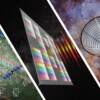
NASA’s relentless pursuit of innovation has given birth to some of the most imaginative and transformative technologies humanity has ever witnessed. Through the Innovative Advanced Concepts (NIAC) program, NASA is nurturing visionary projects that once seemed confined to the realm of science fiction. The 2024 NIAC Phase II awards spotlight six pioneering dwelling technologies designed to redefine the infrastructure and capabilities of future space missions. From fluidic telescopes capable of unveiling the universe’s earliest secrets to lunar railways enabling efficient surface transport, these technologies embody a leap toward sustainable and expansive human presence beyond Earth. This article delves deep into each of these revolutionary concepts, exploring their potential, challenges, and the profound impact they may have on the next era of space exploration.
The Fluidic Telescope (FLUTE) project, led by Edward Balaban at NASA’s Ames Research Center, aims to revolutionize astronomical observations by employing fluidic shaping of ionic liquids to form precise optical surfaces in space. Unlike traditional telescopes that rely on massive, rigid mirrors, FLUTE uses fluid dynamics to create adaptable, lightweight, and large-scale reflective surfaces, drastically reducing launch weight and complexity.
This technology could enable the construction of vast space observatories capable of probing some of the universe's most elusive phenomena, such as Earth-like exoplanets, first-generation stars, and young galaxies. By manipulating ionic liquids through electric fields, FLUTE can maintain mirror shapes with high precision, unlocking unprecedented resolution and sensitivity in space-based telescopes.
Beyond astrophysics, FLUTE’s fluidic approach may pave the way for modular, scalable observatories that can be deployed and maintained with relative ease in orbit. This adaptability could transform how humanity observes the cosmos, providing continuous, detailed data that fuels scientific discovery for decades to come.
Led by Brianna Clements of Howe Industries, the Pulsed Plasma Rocket concept introduces an innovative propulsion system utilizing fission-generated plasma packets to produce thrust. This technology promises to drastically reduce travel times within our solar system, especially for crewed missions to Mars and beyond, by delivering higher efficiency and greater thrust compared to conventional propulsion systems.
The pulsed nature of the plasma engine allows it to generate bursts of energetic plasma that accelerate spacecraft more effectively, potentially cutting transit durations and reducing astronaut exposure to cosmic radiation. This advancement could be a critical enabler for sustainable human exploration of distant planets.
In addition to its speed advantages, the Pulsed Plasma Rocket is designed with shielding technologies to protect onboard systems and crew from radiation and plasma emissions. If successfully developed, this propulsion system could mark a paradigm shift in how humans explore the solar system, making distant destinations more accessible and safer.
The Giant Observatory for Long Wavelengths (GO-LoW), spearheaded by Mary Knapp at WITH, proposes deploying a mega-constellation of hundreds of autonomous SmallSats to form a low-frequency radio telescope in space. This array would specialize in detecting faint magnetic fields emitted by exoplanets and studying the cosmic dark ages—the period before the first stars ignited.
GO-LoW’s unique architecture allows for unprecedented coverage and sensitivity at long wavelengths, which are typically blocked or distorted by Earth’s ionosphere, making ground-based observations challenging. By operating in space, GO-LoW can provide pristine data, enhancing our understanding of planetary magnetic environments and the early universe’s evolution.
This constellation approach also introduces redundancy and scalability, enabling the addition or replacement of satellites without compromising the network's integrity. GO-LoW could redefine radio astronomy by providing a new window into cosmic phenomena inaccessible by current observatories.
Stephen Polly from the Rochester Institute of Technology leads the development of the Radioisotope Thermoradiative Cell Energy Generator, an innovative in-space power source designed to operate with higher efficiency than traditional radioisotope thermoelectric generators (RTGs). This technology harnesses thermoradiative processes to convert heat from radioactive decay into electricity more effectively.
Such an energy generator could be a game-changer for small spacecraft and exploratory missions where conventional solar or nuclear power systems are impractical. Its compactness and efficiency make it ideal for deep-space probes or surface missions on shadowed regions of the Moon or Mars.
By providing reliable and sustained power, these generators would enable longer mission durations, enhanced scientific instrumentation, and improved communication capabilities. This advancement could significantly broaden the scope of robotic and human exploration in environments previously considered too challenging.
The Flexible Levitation on a Track (FLOAT) concept envisions a lunar railway system that employs magnetic levitation to transport payloads efficiently across the Moon’s surface. Developed to support sustainable lunar operations, FLOAT promises a self-sustaining, low-energy transport solution critical for establishing permanent lunar bases.
By minimizing friction and wear through magnetic levitation, the system can achieve high reliability and speed, facilitating the movement of supplies, equipment, and potentially crew between lunar habitats, resource extraction sites, and landing zones. This infrastructure could dramatically reduce logistical challenges associated with lunar colonization.
FLOAT’s design includes adaptability to the Moon’s rugged terrain and temperature extremes, ensuring consistent performance under harsh conditions. As a backbone for lunar surface mobility, FLOAT could play a pivotal role in enabling long-term human presence and activity on the Moon.
Collectively, these six NIAC Phase II projects represent a bold leap toward the technologies that will underpin future space habitats and exploration missions. By addressing critical challenges such as power generation, transportation, propulsion, and observation, NASA is laying the groundwork for sustainable extraterrestrial living and scientific advancement.
The integration of fluidic optics, pulsed plasma propulsion, mega-constellation observatories, and advanced energy systems illustrates a multidisciplinary approach to overcoming the limitations of current space technology. These innovations promise to enhance mission efficiency, safety, and scientific return.
Moreover, these projects exemplify NASA’s commitment to pushing the boundaries of possibility, transforming visionary concepts into viable technologies that could soon become integral components of space infrastructure, supporting human and robotic explorers alike.
While these technologies hold immense promise, they also face significant technical and economic hurdles. Achieving the required precision in fluidic telescope mirrors, managing plasma generation safely, and ensuring the reliability of mega-constellation satellites are complex engineering challenges that require rigorous testing and validation.
The NIAC Phase II funding of up to $600,000 per project over two years aims to address these barriers by advancing prototype development, refining designs, and conducting feasibility studies. Success in this phase could lead to further investment, transitioning these concepts from experimental to operational stages.
Collaboration across NASA centers, academia, and industry will be vital to overcoming obstacles and accelerating technology readiness levels. The iterative process of innovation and testing will ultimately determine which technologies become foundational for future missions.
The successful development and deployment of these six pioneering dwelling technologies could dramatically alter humanity's relationship with space. From enabling rapid travel to distant worlds to constructing observatories that peer deeper into the cosmos, these innovations will expand our capabilities and horizons.
Sustainable lunar transport systems and efficient power generators will support permanent human outposts on the Moon, serving as stepping stones for Mars and beyond. These infrastructures will facilitate scientific research, resource utilization, and potentially commercial activities in space.
Ultimately, NASA’s investment in these science fiction-like technologies embodies the spirit of exploration and discovery. By turning imaginative ideas into tangible solutions, NASA is charting a course toward a future where living and working in space is not just possible but practical and sustainable.
NASA’s commitment to pushing the frontier of space technology through the NIAC program is a testament to human ingenuity and the relentless pursuit of exploration. The six groundbreaking dwelling technologies selected for Phase II funding are not mere concepts—they are potential game-changers that could redefine how we observe the universe, travel across planets, generate power, and establish habitats beyond Earth. As these projects advance through rigorous development and testing, they bring us closer to a future where space exploration is more efficient, sustainable, and far-reaching than ever before. By turning visionary science fiction into tangible reality, NASA continues to inspire and pave the way for humanity’s next giant leap.
Originally reported by scitechdaily.com. Adapted for our readers.
Keep reading
AI Trends & News
Microsoft opens Surface Laptop Ultra pre-orders from US$2,599.99. Explore its launch date, NVIDIA RTX Spark features and implications for Nigerian businesses.
Science & Technology
DJI’s IBC recognition puts pocket gimbal and panoramic capture in the spotlight. Here is how creators can assess framing, editing effort and recording workflows.
Business News
App store steering is about more than permission to add a link. Explore fees, renewal terms, customer experience and the UK consultation.
TAMFIS NIG LTD
Electrical and instrumentation engineering, bid preparation and consulting, IT and software.

