Stellar views of some of the most spectacular sights in the universe
The universe is a vast and awe-inspiring expanse filled with dazzling celestial wonders that captivate astronomers and stargazers alike. Thanks to cutting-edge space telescopes like NASA's Hubble Space Telescope, we can now witness some of the most spectacular sights the cosmos has to offer in stunning detail. These images not only reveal the beauty of galaxies, nebulae, and star clusters but also deepen our understanding of the dynamic processes shaping the universe. This article delves into some of the most extraordinary cosmic phenomena, exploring their characteristics, origins, and the scientific marvels behind them.
The Cigar Galaxy: A Starburst Powerhouse
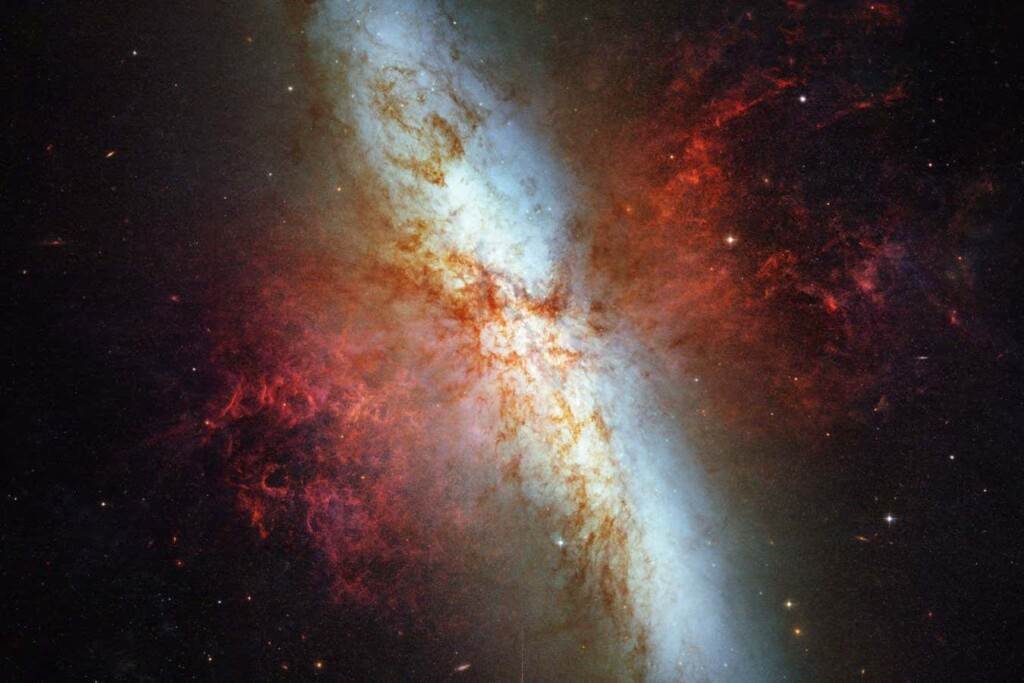
Nestled approximately 12 million light-years away in the constellation Ursa Major lies the Cigar Galaxy, also known as Messier 82 (M82). This galaxy is renowned for its intense star-forming activity, classifying it as a starburst galaxy. Unlike the Milky Way, where star formation occurs at a steady pace, M82 produces stars at a rate ten times higher, resulting in a vibrant cosmic spectacle.
The extraordinary starburst activity in M82 is largely attributed to its gravitational interaction with nearby galaxy Messier 81 (M81). These gravitational forces trigger massive clouds of gas to collapse, igniting furious bouts of star birth. The result is a galaxy glowing with scarlet plumes of hydrogen gas, visible in detailed images captured by the Hubble Space Telescope.
Hubble’s sharpest wide-angle view of M82 combines infrared and visible light to reveal intricate details of the galaxy’s energetic core. The image showcases the turbulent regions where newly formed stars emit intense radiation, pushing gas and dust outward in spectacular cosmic winds. This dynamic environment offers valuable insights into star formation and galactic evolution.
The Cat’s Eye Nebula: A Cosmic Masterpiece
The Cat’s Eye Nebula (NGC 6543) is one of the most visually stunning planetary nebulae in our galaxy, located about 3,300 light-years from Earth. Despite its name, planetary nebulae have no relation to planets; instead, they form when medium-sized stars like our Sun shed their outer layers during the final stages of their life cycles.
This nebula’s complex structure features concentric shells of gas and dust, which were expelled in episodic pulses separated by roughly 1,500 years. The pastel-colored rings and intricate filaments create a mesmerizing, eye-like appearance, giving the nebula its evocative name. These shells glow due to the intense ultraviolet radiation emitted by the central dying star.
Images from the Hubble Space Telescope have revealed astonishing details within the Cat’s Eye Nebula. The high-resolution views expose knots, jets, and bubbles of gas, hinting at the complex physics governing the star’s death throes. Studying such nebulae helps astronomers understand stellar evolution and the recycling of cosmic material.
The Pillars of Creation: Iconic Stellar Nurseries
The Pillars of Creation, located within the Eagle Nebula about 7,000 light-years away, are towering columns of interstellar gas and dust where new stars are born. These structures, captured famously by Hubble, stretch several light-years and are illuminated by nearby young, massive stars.
These pillars are dense regions where gravity pulls gas and dust together, initiating the collapse that leads to star formation. The intense radiation and stellar winds from nearby stars sculpt the pillars, eroding their surfaces and triggering further star birth within their cores.
The breathtaking imagery of the Pillars of Creation offers a glimpse into the universe’s ongoing creative processes. Observations across various wavelengths have revealed the embedded protostars within these columns, providing astronomers with a live view of star formation in action.
The Andromeda Galaxy: Our Nearest Spiral Neighbor
The Andromeda Galaxy (M31) is the closest spiral galaxy to our Milky Way, situated about 2.5 million light-years away. It is a massive galaxy containing over a trillion stars, making it a prominent subject of astronomical study and a stunning sight in the night sky.
Detailed observations reveal Andromeda’s spiral arms rich with star-forming regions, dust lanes, and clusters of young stars. Its bright core houses a supermassive black hole, which influences the dynamics of the galaxy. Images captured by space telescopes showcase its graceful spiral structure in exquisite detail.
Andromeda is on a slow collision course with the Milky Way, expected to merge in about 4 billion years. This future cosmic event will reshape both galaxies, offering astronomers a unique opportunity to study galactic interactions and evolution on a grand scale.
Supernova Remnants: Echoes of Stellar Explosions
Supernova remnants are the glowing debris left behind after massive stars explode at the end of their life cycles. These remnants are rich in heavy elements and energy, playing a crucial role in seeding the interstellar medium with materials necessary for new star and planet formation.
One iconic example is the Crab Nebula, the remnant of a supernova observed in 1054 AD. Its intricate filaments and expanding shockwaves are visible in multi-wavelength images, offering insights into the mechanisms of stellar death and the physics of extreme environments.
Studying supernova remnants helps astronomers understand the life cycles of stars and the chemical enrichment of galaxies. These cosmic explosions also generate cosmic rays and magnetic fields, influencing the broader galactic ecosystem.
The Whirlpool Galaxy: A Cosmic Dance of Two Galaxies
The Whirlpool Galaxy (M51) is a striking spiral galaxy located about 23 million light-years away, famous for its interaction with a smaller companion galaxy. This gravitational dance has triggered waves of star formation visible in the prominent spiral arms.
Hubble’s detailed images reveal the Whirlpool Galaxy’s well-defined structure, showcasing bright star clusters and glowing nebulae along the spiral arms. The tidal forces from the companion galaxy distort the spiral pattern, creating spectacular features and enhancing cosmic activity.
This galactic encounter exemplifies how interactions shape galaxy morphology and star formation rates. Observing such systems provides clues about the dynamic and evolving nature of galaxies throughout the universe.
The Orion Nebula: A Stellar Nursery in Our Backyard
The Orion Nebula (M42) is one of the brightest and closest star-forming regions, located about 1,350 light-years from Earth. Visible to the naked eye, it offers an unparalleled view of the birth of stars and planetary systems.
This nebula is a massive cloud of gas and dust where young stars are emerging from dense molecular clouds. It contains a rich population of protostars, young stellar objects, and protoplanetary disks, providing astronomers with a natural laboratory to study early stellar evolution.
Images from the Hubble Space Telescope have unveiled the Orion Nebula’s complex structure, including shockwaves, jets, and glowing gas clouds. Its proximity and brightness make it a cornerstone for understanding star formation processes in the Milky Way.
The Sombrero Galaxy: A Stunning Cosmic Hat
The Sombrero Galaxy (M104) is a striking spiral galaxy located about 31 million light-years away, named for its distinctive shape resembling a wide-brimmed hat. Its bright nucleus and prominent dust lane make it a favorite target for both professional and amateur astronomers.
The galaxy’s bulging central region contains a dense concentration of old stars and a supermassive black hole, while the surrounding disk features extensive dust and star-forming regions. Its unique appearance is enhanced by the angle at which we view it, edge-on from Earth.
Studying the Sombrero Galaxy helps astronomers explore the relationship between galactic structure, star populations, and central black holes. Its spectacular form offers a vivid example of the diversity of galaxy shapes and compositions across the universe.
Conclusion
The universe offers an endless gallery of breathtaking sights, from explosive starbursts and intricate nebulae to majestic galaxies engaged in cosmic dances. Thanks to the remarkable capabilities of space telescopes like Hubble, we can explore these stellar vistas in unprecedented detail, deepening our appreciation for the vastness and complexity of the cosmos. Each image not only captivates the imagination but also advances our understanding of the celestial processes that shape the universe. As technology progresses, future observations promise to unveil even more spectacular views and mysteries awaiting discovery.
Originally reported by newscientist.com. Adapted for our readers.
Recent advances in machine perfusion technology are not only preserving donated livers but also making them biologically younger at a molecular level. This breakthrough…
What happens when human imagination, artificial intelligence, art and technology come together? From September 1 to 6, Samsung Electronics presented a special exhibition themed…